
Wiki Shoulder Assessment

Passive Distraction Test | SLAP Lesions

Check our shop
Passive Distraction Test

Learn

Passive Distraction Test | SLAP Lesions | Shoulder Assessment

According to a study done by Schlechter et al. (2009), the passive distraction test has a low sensitivity of 53% and a high specificity of 94% in the detection of superior labral tears. This means that this test has a moderate clinical value for the inclusion of superior labral tears.

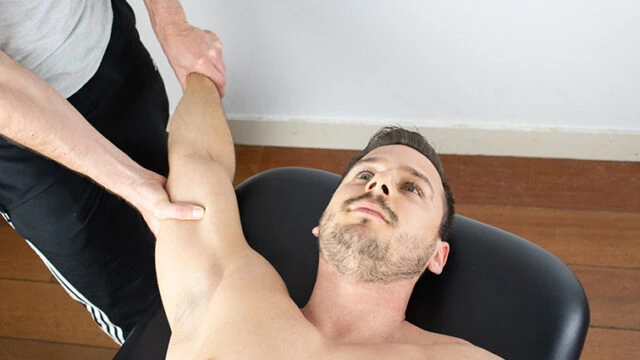
To perform this test, have your patient in supine-lying position at the edge of the table. Then elevate the affected arm to 150° in the coronal plane with the elbow in extension and the forearm in supination and the upper arm stabilized to prevent humeral rotation. Then gently pronate the forearm.

This test is considered positive if the pain is reported deep inside the glenohumeral joint either anteriorly or posteriorly.

It is postulated that this maneuver rotates the radial tuberosity, placing traction on the biceps, which in turn tensions the proximal head long head of the biceps anchor at the superior labrum, causing a “peel back” or “fishing mouthing” of the labrum.

Other orthopedic tests to assess biceps pathology & SLAP lesions are:


Treating athletes’ shoulders?

Watch Edel Fanning’s free masterclass on rehab after shoulder stabilisation surgery in athletes.

  • This field is for validation purposes and should be left unchanged.
Free sporting shoulder masterclass

Like what you’re learning?

Get the full Physiotutors Assessment Book

  • 600+ pages on orthopedic assessment
  • Video demonstrations and direct links to the PubMed studies
  • Statistical values for every special test, from the latest research
  • Free lifetime updates
  • Available in English, German, French, Spanish, Italian, Portuguese and Turkish
Big print bock 5.2
Check out our all in one book!