
Learn
Crank Test | Shoulder SLAP Lesion Assessment | Biceps Tendinopathy
The Crank Test is an orthopedic test to assess for SLAP lesions (superior labral tear from anterior to posterior) & proximal biceps tendinopathy. Gismervik et al. in the year 2017 performed a meta-analysis of shoulder tests for SLAP lesions and found that the Crank test had a sensitivity of 46% and a specificity of 72%. For this reason, the Crank Test has a weak clinical value in the detection of SLAP tears.
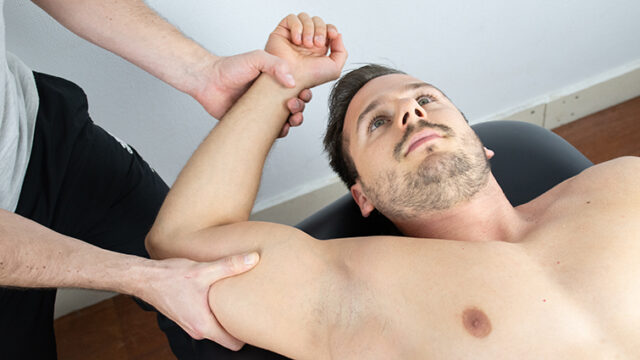
The Crank Test can either be conducted with the patient in sitting or supine position. Then bring his shoulder into 160° of elevation in the scapular plane and flex the elbow 90°. Then apply an axial load with one hand and bring the patient’s shoulder into repeated internal rotation, followed by external rotation in an attempt to pinch the torn labrum.
This test is positive in the case of clicking with or without pain or apprehension by the patient.
Other common tests to screen for SLAP lesions are:
- Active Compression Test of O’Brien
- Yergason’s Test
- Speed’s Test
- Biceps Load I Test
- Biceps Load II Test
- Passive Compression Test
- Compression Rotation Test
- Passive Distraction Test
- Dynamic Labral Shear Test
- Upper Cut Test
- Supine Flexion Resistance Test
- Anterior Slide Test
- Resisted Supination External Rotation Test
- Labral Tension Test
- 3- Pack Examination
References
Treating athletes’ shoulders?
Watch Edel Fanning’s free masterclass on rehab after shoulder stabilisation surgery in athletes.
Like what you’re learning?
Get the full Physiotutors Assessment Book
- 600+ pages on orthopedic assessment
- Video demonstrations and direct links to the PubMed studies
- Statistical values for every special test, from the latest research
- Free lifetime updates
- Available in English, German, French, Spanish, Italian, Portuguese and Turkish