
Learn
Gaze Stability | Traumatic Neck Pain & Dizziness Assessment
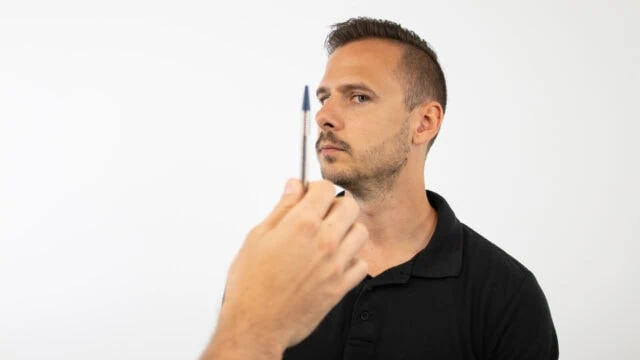
Deficits in cervical joint position sense, eye movement control, and postural stability are often noted in patients with traumatic neck pain and cervicogenic dizziness due to abnormal cervical afferent input. Gaze stability describes the ability to maintain gaze while moving the head.
To start the assessment, the patient is in sitting position. The therapist instructs the patient to maintain his eyes on a fixed target while the patient actively moves his head into rotation to the right….followed by rotation to the left. Afterward, the same procedure is repeated for flexion and extension. Inability to maintain focus on the target, over- or undershooting, reduced or awkward cervical motion, or reproduction of symptoms such as dizziness, blurring of vision, or nausea are signs of an abnormal response. It can be helpful to look at one eye at a time to be able to spot deviations from the norm.
Next to gaze stability assessment, your dizziness exam should include the following assessments:
- Saccadic Eye Movement
- Eye-Head Coordination
- Postural Stability Assessment
- Joint Position Sense Error
- Smooth Pursuit Neck Torsion Test
- Cervical Torsion Test
- Head-Neck Differentiation Test
Want to master BPPV?
Get Firat Kesgin’s free 3-part video series on BPPV: history, examination and treatment, straight to your inbox.
Like what you’re learning?
Get the full Physiotutors Assessment Book
- 600+ pages on orthopedic assessment
- Video demonstrations and direct links to the PubMed studies
- Statistical values for every special test, from the latest research
- Free lifetime updates
- Available in English, German, French, Spanish, Italian, Portuguese and Turkish