

Learn
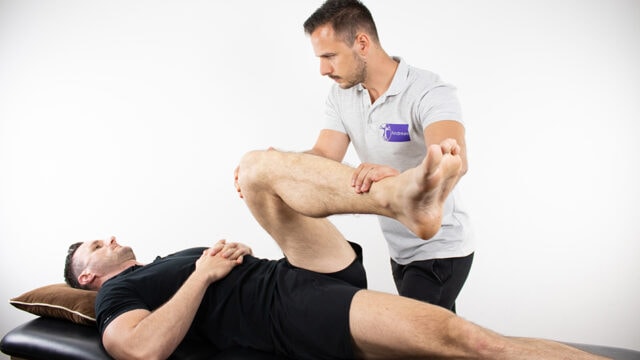
FADER Test / FADER-R Test | Gluteal Tendinopathy (GTPS)
Gluteal tendinopathy which falls under the nowadays used umbrella term greater trochanteric pain syndrome or GTPS is part of the differential diagnosis in patients with lateral hip pain.
Grimaldi et al. (2016) conducted a diagnostic accuracy study on different diagnostic tests that were contrasted to MRI findings indicative of gluteal tendinopathy. The FADER test, which refers to Flexion Adduction and External rotation, had a sensitivity of 30% and a specificity of 86,7%. When resisted isometric internal rotation was added, the sensitivity rose to 44% and specificity to 93.3% A positive test can improve your confidence that gluteal tendinopathy is present but a negative result will not alter your post-test probability much, which is why we give it a moderate clinical value.
To conduct the test the patient lies supine. Then flex the hip to 90°, adduct the hip and add external rotation to end of range. Now, ask the patient to perform isometric internal rotation against your resistance, which will increase both tensile and compressive forces on the tendon of the gluteus medius and minimus. A positive test is the reproduction of the patient’s lateral hip pain in the region of the greater trochanter of at least 2/10 on the NPRS.
Other orthopedic tests that assess for gluteal tendinopathy are:
- Resisted External Derotation Test
- Single Leg Stance Test
- Greater Trochanter Palpation
- ADD / ADD-R/ Modified Ober’s Test
Treating groin pain in athletes?
Watch Enda King’s free masterclass on groin injury prevention in athletes.

Like what you’re learning?
Get the full Physiotutors Assessment Book
- 600+ pages on orthopedic assessment
- Video demonstrations and direct links to the PubMed studies
- Statistical values for every special test, from the latest research
- Free lifetime updates
- Available in English, German, French, Spanish, Italian, Portuguese and Turkish


