
Learn
Closed Fist Percussion Test | Thoracic Compression Fracture
If you see a patient with sudden back pain, that comes to you without a referral from the GP or a specialist, the first thing you want to do is to screen for serious pathologies. Osteoporotic compression fractures are the most common red flag in the vertebral spine with a prevalence of 25% in women over the age of 65 and 40% over the age of 80.
According to Langdon et al. (2010), the closed-fist percussion test has a sensitivity of 87,5% and a specificity of 90% in the detection of symptomatic fractures of the spine.
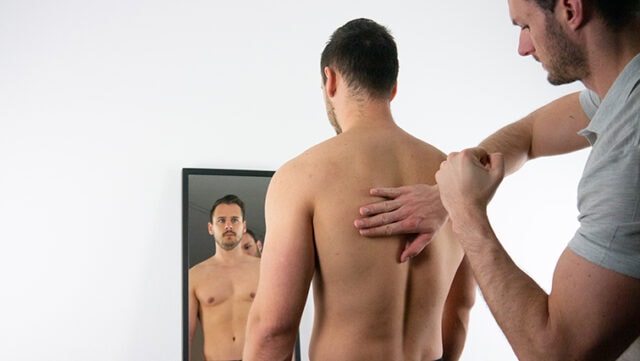
To perform the test, stand behind your patient and have him stand in front of a mirror so you can gauge their reaction. Then place one hand on your patient’s spine and perform closed-fist percussions with the other hand along the spine. This test is positive if your patient complains of sharp, sudden pain. Another common test for thoracic compression fractures is the Supine Sign.
If you want to screen for fractures in other body parts, check out the list below:
- Caradeniz Wrist Rules (Wrist)
- Elbow Extension Test (Elbow)
- Patellar Pubic Percussion Test (Hip)
- Fulcrum Test (Femur)
- Ottawa Knee Rules (Knee)
- Ottawa Ankle Rules (Ankle & Foot)
Want to master the upper limb?
Watch a free masterclass from Andrew Cuff on exercise prescription for shoulder pain, followed by a second one from Thomas Mitchell on wrist pain.
Like what you’re learning?
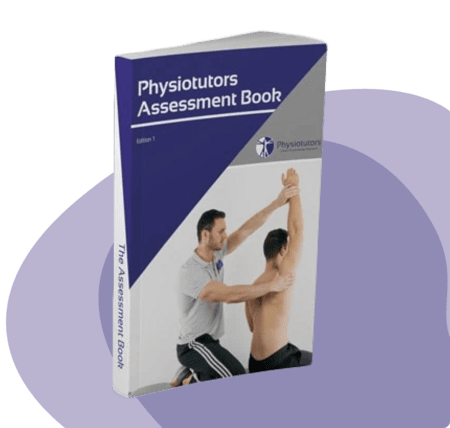
Get the full Physiotutors Assessment Book
- 600+ pages on orthopedic assessment
- Video demonstrations and direct links to the PubMed studies
- Statistical values for every special test, from the latest research
- Free lifetime updates
- Available in English, German, French, Spanish, Italian, Portuguese and Turkish