

Learn
Neurological Thoracic Outlet Syndrome | nTOS
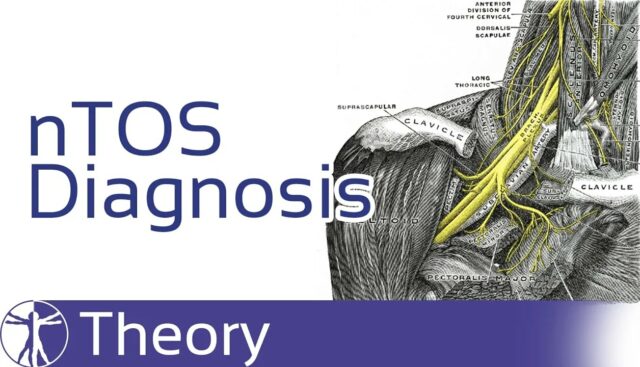
The treatment of neurogenic thoracic outlet syndrome, abbreviated as nTOS has been hampered by inconsistent definitions and diagnosis which leads to uncertainty regarding treatment options and a lack of consistent outcome measures Illig et al. (2016) of the Society for Vascular Surgery published reporting standards for TOS with the primary aim to provide a clear and consistent understanding and definition of what constitutes a diagnosis of nTOS. Following these criteria, nTOS should be defined by the presence of three of the following four:
- LOCAL FINDINGS:
a.History: Symptoms consistent with irritation or inflammation at the site of compression either at the scalene triangle or the pectoralis insertion along with symptoms due to referred pain in the areas near the thoracic outlet. Patients may complain of pain in the chest wall, axilla, upper back, shoulder, trapezius region, neck, or head (including headache). b.Examination: Pain on palpation of the affected area as above - PERIPHERAL FINDINGS:
a.History: Arm or hand symptoms consistent with central nerve compression. Such symptoms can include numbness, pain, paresthesias, vasomotor changes, and weakness (with muscle wasting in extreme cases). These peripheral symptoms are often exacerbated by maneuvers that either narrow the thoracic outlet (lifting the arms overhead) or stretch the brachial plexus (dangling; often driving or walking/running).
b. Examination: Palpation of the affected area (scalene triangle or pectoralis minor insertion site) often reproduces the peripheral symptoms. Peripheral symptoms are often produced or worsened by provocative maneuvers that are believed to narrow the scalene triangle like the Roos Test also known as the elevated arm stress test or to stretch the brachial plexus like in the ULTT1 - ABSENCE of other reasonably likely diagnoses like cervical disk disease, shoulder disease, carpal tunnel syndrome, chronic regional pain syndrome, brachial neuritis that might explain the majority of symptoms
4. In those who undergo it, the response to a properly performed TEST INJECTION is positive.
In addition, most patients have prolonged symptoms for more than 6 months, deteriorate over time, and have a history of trauma, although these factors are not required for diagnosis.
It has to be said that the subjective nature of many of these diagnostic findings contributes to the controversy surrounding the validity of the diagnosis of nTOS.
Get the 21 most useful orthopedic tests
Download our free e-book with the 21 most useful orthopedic tests per body region, to help you reach the right diagnosis.
Like what you’re learning?
Get the full Physiotutors Assessment Book
- 600+ pages on orthopedic assessment
- Video demonstrations and direct links to the PubMed studies
- Statistical values for every special test, from the latest research
- Free lifetime updates
- Available in English, German, French, Spanish, Italian, Portuguese and Turkish


