

Learn
Sulcus Sign | Inferior Shoulder Instability Assessment
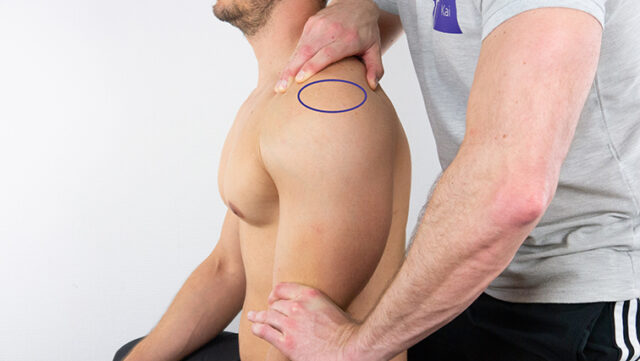
The Sulcus Sign is an orthopedic test to assess inferior shoulder instability or laxity of the inferior capsule of the glenohumeral joint. Eshoi et al. (2018) have evaluated the inter-rater reliability of this test and the authors have found a moderate degree of reliability with a Kappa k of 0.48.
Performance: The Patient stands or sits with the arm by the side and shoulder muscles relaxed. Then you grasp the patient´s forearm below the elbow and pull distally.
This test is positive in case of the appearance of a little dip under the acromion or the feeling of subluxation which indicates inferior instability or glenohumeral laxity.
Be careful though if you have a positive sulcus sign on both sides as this outcome is not as clinically relevant as only unilateral laxity on the affected side.
Other common tests to assess shoulder instability are:
- Gagey Test (Inferior Shoulder Instability)
- Apprehension Test (Anterior Shoulder Instability)
- Relocation Test (Anterior Shoulder Instability)
- Release / Surprise Test (Anterior Shoulder Instability)
- Load and Shift Test (Anterior + Posterior Instability)
Treating athletes’ shoulders?
Watch Edel Fanning’s free masterclass on rehab after shoulder stabilisation surgery in athletes.
Like what you’re learning?
Get the full Physiotutors Assessment Book
- 600+ pages on orthopedic assessment
- Video demonstrations and direct links to the PubMed studies
- Statistical values for every special test, from the latest research
- Free lifetime updates
- Available in English, German, French, Spanish, Italian, Portuguese and Turkish


