

Patellar Tendinopathy / Jumper's Knee | Diagnosis & Treatment
Patellar Tendinopathy / Jumper’s Knee | Diagnosis & Treatment
Introduction & Epidemiology
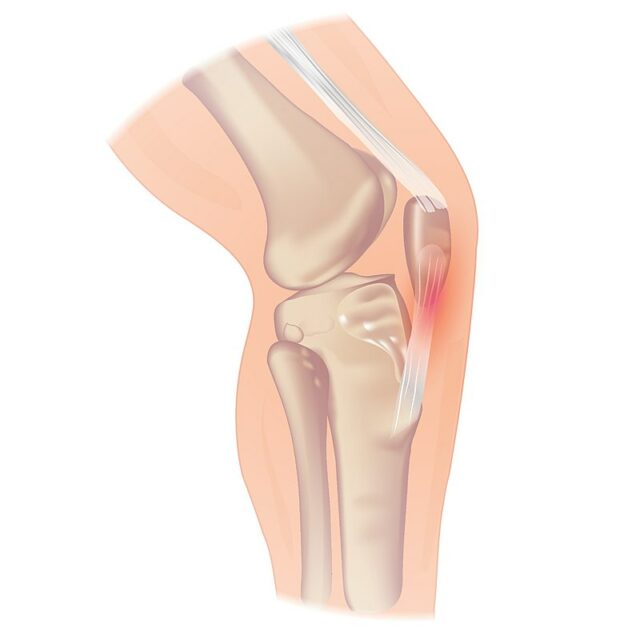
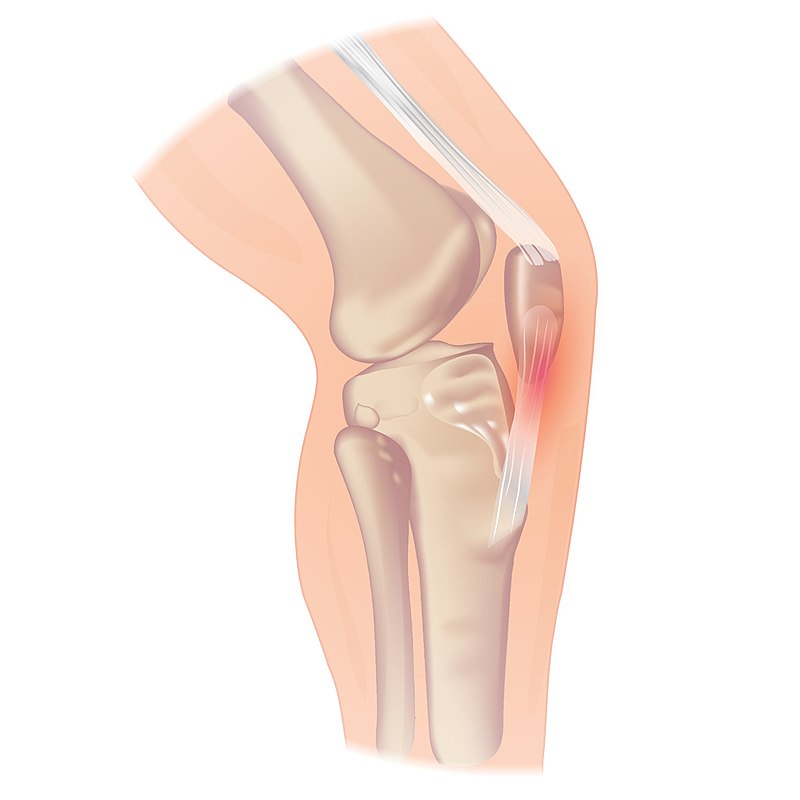 Patellar tendinopathy is one of the most common sources of anterior knee pain and is most prevalent in young jumping men between 15 and 30 years of age. Paradoxically, the athletes who can jump the highest and run the fastest are the ones who are at the highest risk to suffer from patellar tendinopathy. According to Cook et al. (1997) one-third of athletes suffering from it were unable to return to sport within 6 months and an astonishing 53% with patellar tendinopathy were even forced to retire from sport.
The tendinopathy develops as a continuum where normal (in case of unloaded knees) or excess loads (in case of loaded knees) may induce reactive tendinopathy which initiates tendon disrepair and degeneration. Repetitive loading with insufficient rest may also induce pathology. The tendon’s mechanical properties change, with increases in tenocytes and ground substance and this leads to swelling, matrix degradation, and neovascular ingrowth, making the tendon vulnerable.

Treatment
Traditionally, eccentric exercise has been recommended in the rehab of tendinopathies. However, a study by Kongsgaard et al. (2009) found equal results in terms of disability and pain after 12 weeks when they compared a group performing an eccentric decline squat program to a heavy slow resistance program in patients with patellar tendinopathy. Interestingly, only the heavy slow resistance group demonstrated pathology improvement and increased collagen turnover, and more importantly, 70% of all participants of the group were satisfied with their program at 6 months compared to 22% in the eccentric group.
The findings are confirmed by a systematic review from Malliaras et al. (2013) who found that heavy-slow loading for the patellar tendon had an equivalent or higher level of evidence than isolated eccentric loading.
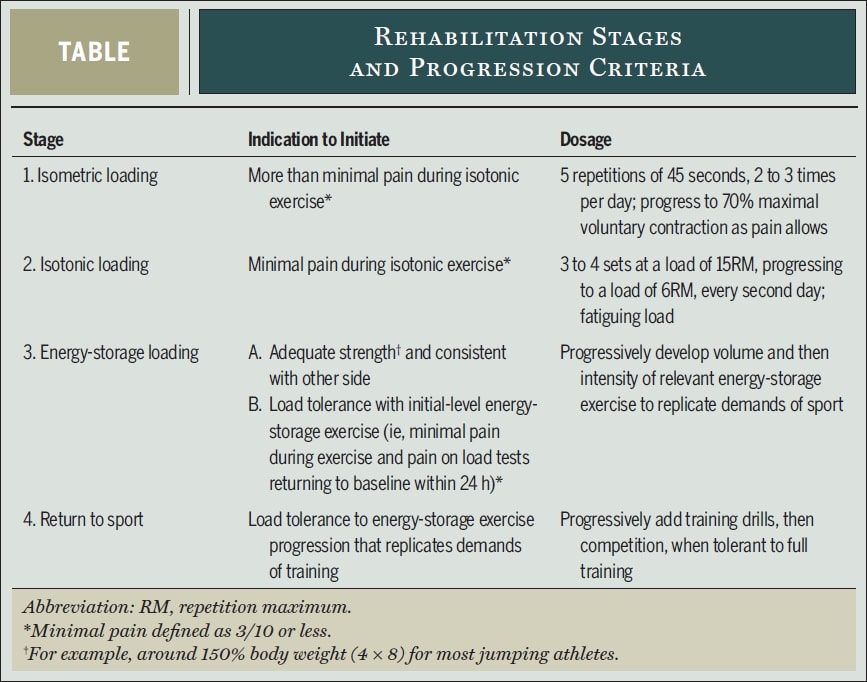
So how could such a heavy-slow resistance program look like? Tendinopathy top researchers Peter Malliaras, Jill Cook, Craig Purdam and Ebonie Rio propose the following evidence-based 4 –stage rehabilitation protocol in their paper from 2015:
First of all loading modification of high-load energy storage activities that aggravate the pain should be used. In the case of athletes in mid-season volume and frequency of those activities should be reduced in consultation with the athlete and coach. Some pain was deemed acceptable during and after the exercises, but symptoms should have settled within 24 hours post. In their paper, Malliaras used one repetition of single-leg decline squat to 90 degrees of knee flexion or maximum angle allowed by pain as a pain-provocation test to determine load tolerance on a daily basis. If the pain score on the load test has returned to baseline within 24 hours of the activity or rehabilitation session, the load has been tolerated. If the pain is worse, load tolerance has been exceeded.
Let’s have a closer look at each rehabilitation stage:
Stage 1 – Pain reduction: Isometric loading
- 5 repetitions of 45s isometric mid-range (30-60° of knee flexion) single leg quadriceps exercise at 70% of MVIC 2-3x/day.
- Resistance should be increased as quickly as tolerated.
- Spanish squat
- Address other strength deficits along the kinetic chain
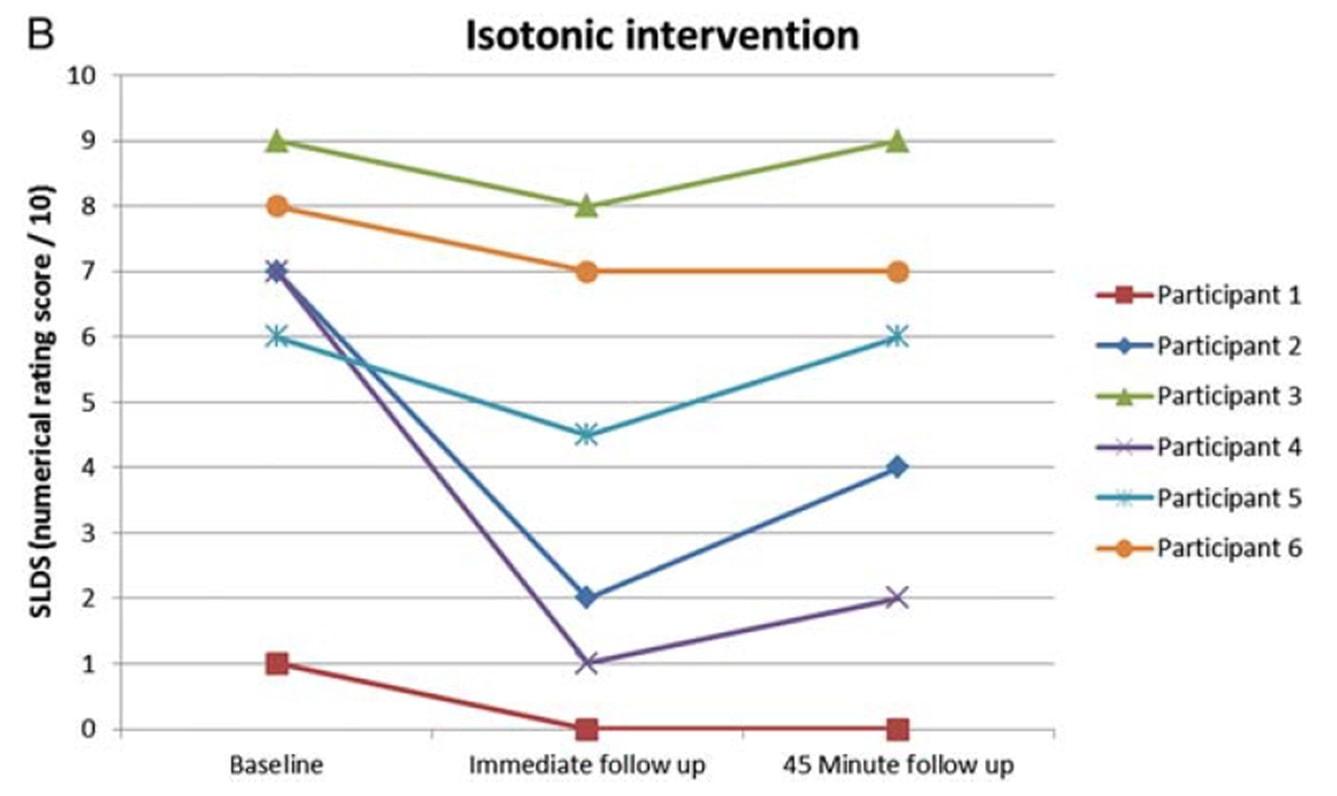
Rio et al. (2015) started a bit of a trend when they conducted a cross-over trial on 6 volleyball players with patellar tendinopathy. Their results were astonishing with all players experiencing an immediate decrease in pain from an average of 7/10 on the NRS to 0 with only one of the 6 reporting a remaining pain of 1– for at least 45 minutes after the isometric contractions. The protocol they used was 5 sets with 45 seconds contraction in a leg extension machine and an effort of 70% of the maximal voluntary effort. They also found that isometrics were able to decrease cortical inhibition and increase strength by 19%. They compared the isometric intervention with an isotonic intervention and the effects seen in the isometric group could not be achieved in the isotonic group:
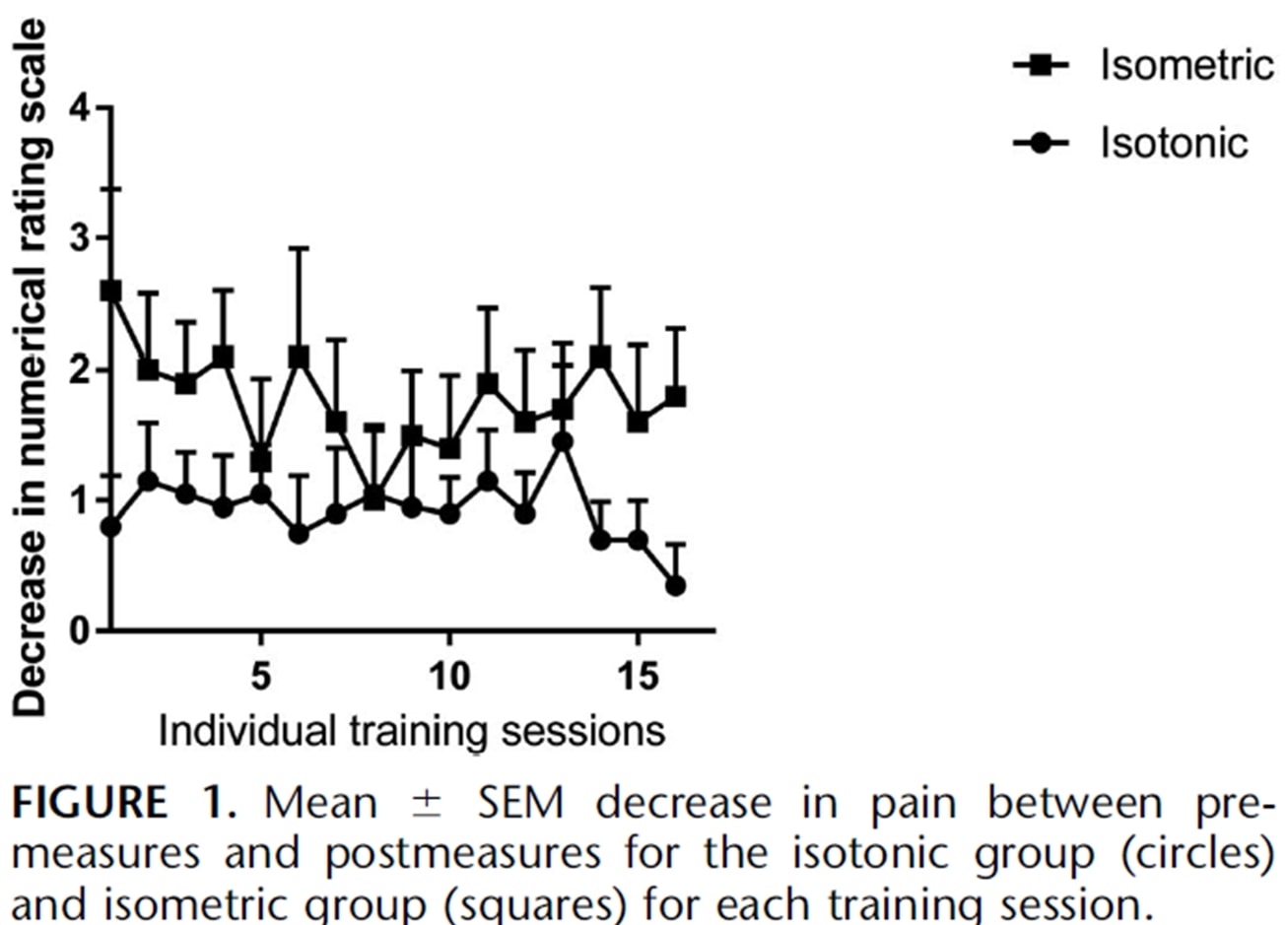
The same authors did a follow-up in-season study with jumping athletes two years later (Rio et al. 2017) in which they compared an isometric program and an isotonic program to each other. In this study the results were a bit more heterogeneous with both groups with a greater immediate pain decrease in the isometric group:
A recent study by Holden et al. (2019) looked at the effect of isometrics in patellar tendinopathy as well and did not find any analgesic effect:
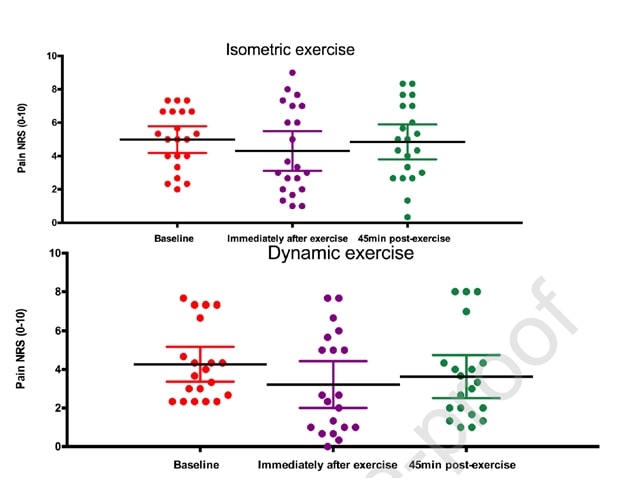
Figure from Holden et al. (2019)
However, a high percentage of women and a relatively high average age is untypical for patellar tendinopathy, which is usually a disease of young jumping men. So it could be that the diagnosis of patellar tendinopathy was not correct in some cases. Now while those two studies were conducted for patellar tendinopathy, let’s look if we can transfer these results to other tendons.
Stage 2 – Restoration of muscle bulk and strength and induce tendon adaptation: Isotonic loading
- When the quads can be loaded isotonically with no pain exceeding NRS 3/10, this stage can be initiated.
- Heavy slow resistance activities between 10° and 60° of knee flexion initially and progressed toward and beyond 90° of flexion as pain permits. These include leg presses, squats, hack squats, split-squat, and seated knee extensions. Double-legged initially and progress towards single-leg as soon as pain allows. Kongsgaard et al. used 3 to 4 sets every second day at a resistance corresponding to 15RM and progressed to 6RM. Continue stage 1 exercises on the days in between the heavy slow resistance exercises are performed.
Stage 3- Energy-storage loading: Increase load tolerance and improve power
- When good strength is achieved and the athlete tolerates single-leg loads with around 150% of body weight (for example 4 sets of 8 reps of a single-leg press), this phase can be initiated if no pain beyond NRS 3/10 is seen within the 24 h post-training.
- The initiation can be a bilateral leg press with loads of 3 times body weight (or 1.5 times in case single leg) as this exerts a patellar force corresponding to the forces seen during landing from a vertical jump
- Jump sequences with stop lands, jumping and landing, acceleration and deceleration, cutting and directional changes
- Volume (the number of jumps, contacts) progressed before the intensity (height, speed)
- Perform every third day and continue isometric loading and isotonic loading every second and third day.
Stage 4 – Return to sport
- Graded return to training and competition where initially the training matches the volume and intensity of the stage 3 exercises and progresses to a volume and intensity as required by the sport-specific situation.
- Maintenance of stage 2 exercises at least twice a week and eventually the stage 1 exercises prior to or after training.
Be aware that the whole rehab process can be slow and sometimes take more than 6 months. A study by Bahr et al. (2014) found that only 46% of athletes with patellar tendinopathy were able to return to full training and were pain-free after an eccentric training program for 12 months.
Do you want to learn more about how to treat tendons? Then check out our blog articles:
- 6 Risk factors for tendinopathy You Need to Know (#5 might surprise you!)
- Isometrics – A Wonder Weapon to Decrease Pain?
- 7 Crucial Facts You Didn’t Know about Tendons
References
Want to get better at muscle and tendon rehab?
Watch Enda King’s free webinar on hamstring, calf and quad pathomechanics, in three short parts.