
Colles' Fracture | Diagnosis & Treatment
Colles’ Fracture | Diagnosis & Treatment
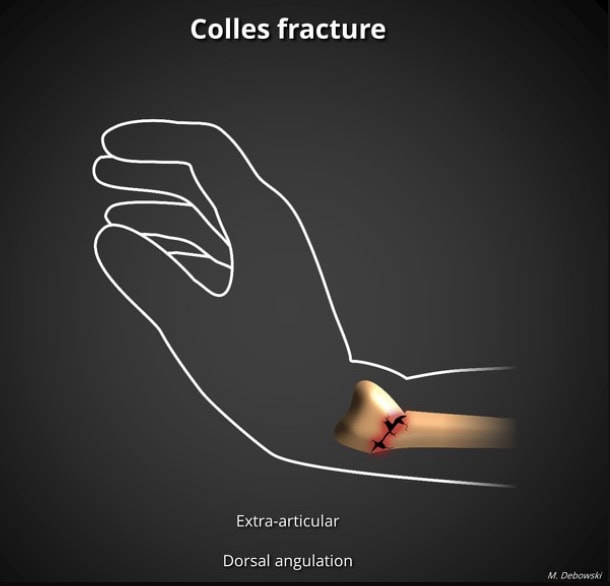
A Colles’ fracture is a distal radius fracture named after Abraham Colles, who first described it in 1814. The mechanism of injury is a Fall On the OutStretched Hand (FOOSH injury) and it is frequently seen in the emergency department. The fractured segment is extra-articular but dorsally angulated and displaced.
Epidemiology
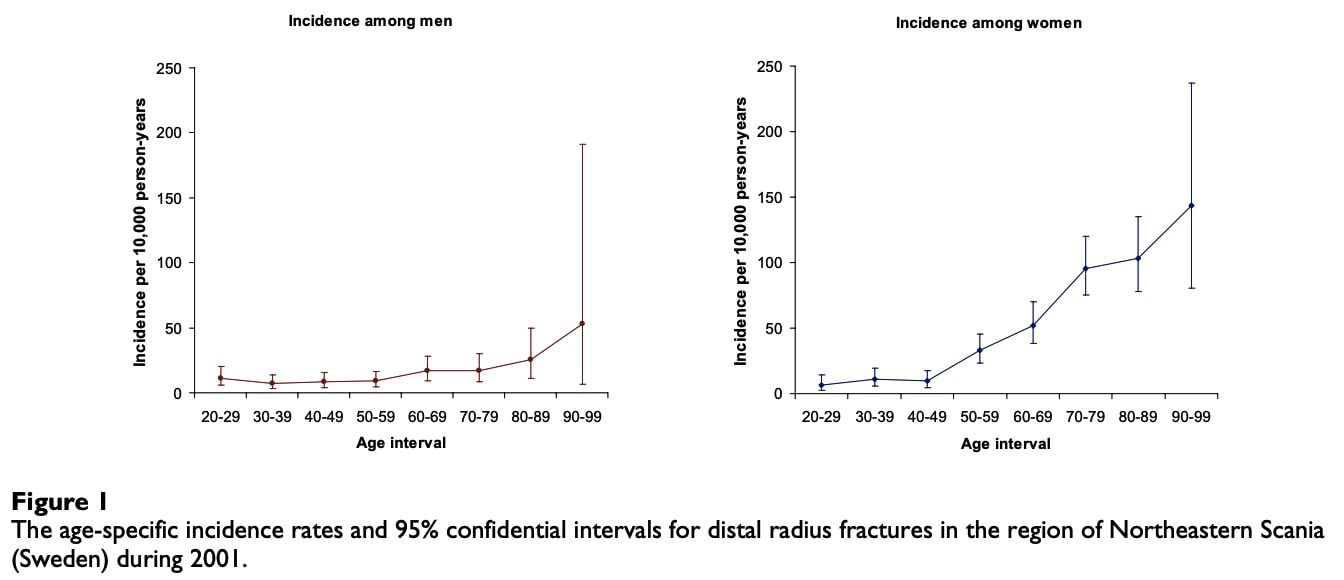
Colles’ fractures occur in 2 groups of people generally. In the young active or athletic population, it is often associated with high-energy trauma. The elderly population most often contracts this type of fracture by a low-energy fall from standing height, in part by having osteoporosis. The incidence of Colles’ fractures is nearly 20% in people over the age of 65 years. In the young population, fractures most often occur in children around puberty, also because in this period, their bone mineralization is relatively low. The incidence rates are low in the age group of people from 19 years to 49 years old. In men, this risk rises only slightly over the years while the incidence in women rises dramatically. Note that the picture discusses distal radius fractures in general but is not limited to Colles’ fractures alone.

Clinical Picture & Examination
Signs and Symptoms
- Wrist pain and tenderness to palpation
- Dorsiflexion deformity or antalgic position. A “dinner fork deformity” may be visible
- Bruising and swelling of the wrist and hand
- Restriction of range of motion
Examination
When you suspect a wrist fracture, the Caradeniz wrist rule can be used to determine the need for radiographs. When you have a high likelihood of a fracture being present, you should refer your patient.
The examination will reveal movement and functional limitations in the active functional assessment and passive assessment. The strength of the wrist and hand may be impaired. The integrity of the neurovascular structures should be assessed by assessing the pulse, sensation, and motor function of the hand and wrist. Here the Allan test can be of value. Associated injuries can encompass intra-articular fractures, distal radio-ulnar joint injuries, radial styloid fractures, or injuries to the soft tissues (think of the TFCC, scapholunate, and lunotriquetral ligament injuries).
WATCH TWO 100% FREE WEBINARS ON SHOULDER PAIN AND ULNA-SIDE WRIST PAIN