
BPPV / Benign Paroxysmal Positional Vertigo | Diagnosis & Treatment

BPPV / Benign Paroxysmal Positional Vertigo | Diagnosis & Treatment
Benign paroxysmal positional vertigo, abbreviated as BPPV is the most common inner ear problem and cause of vertigo, or a false sense of spinning. Common causes are head trauma or ear infections, although most cases appear to be idiopathic.BPPV can be caused by debris in the semicircular canal of the ear, which continues to move after the head has stopped moving. This causes ongoing movement that conflicts with other sensory information.
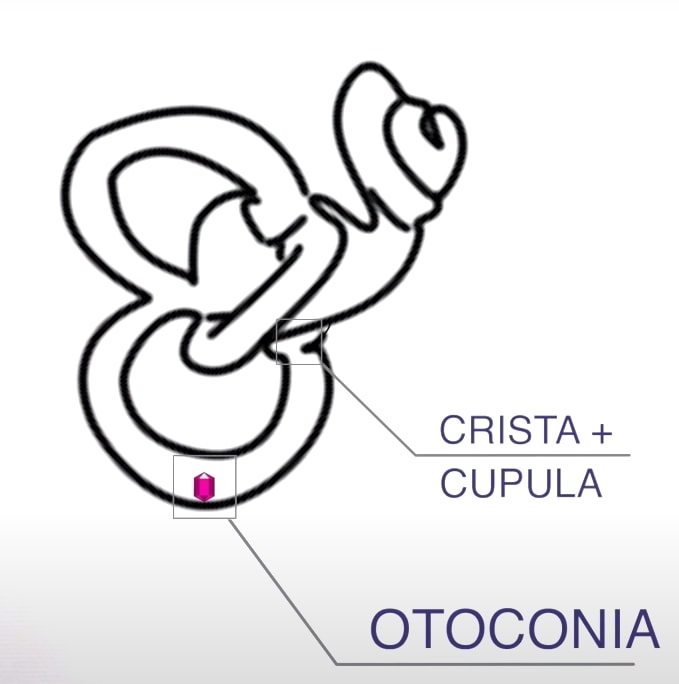
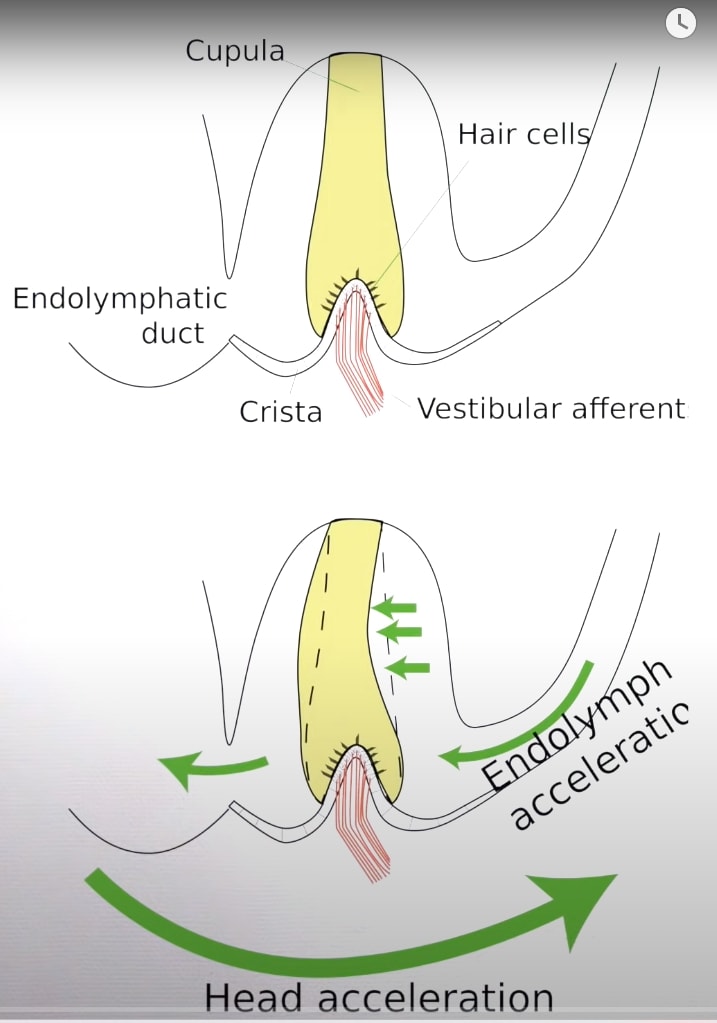
The semicircular canals are filled with a fluid called endolymph. The main sense organ in each canal is called the crista, which is stimulated by the movement of the cupula. Head rotation causes relative movement of the endolymph in the semicircular canal, which bends the cupula and the embedded hairs of the hair cells and causes stimulation of the relevant vestibular nerve. The cause of BPPV is believed to be canalithiasis, affecting the posterior semicircular canal in 85 to 95% of all cases. In canalithiasis, free-floating debris in the semicircular canal is hypothesized to act like a plunger, causing continuing movement of the endolymph even after head movement has ceased. This causes movement of the cupula and bending of the hairs of the hair cells and provokes vertigo.
Around 20% of BPPV cases are said to resolve within 4 weeks and up to 50% up to 3 months without treatment, but recurrence is reported between 10-18% after 1 year.
Clinical Picture
It can be helpful to recall that vertigo requires an imbalance between the two sides (Molnar et al. 2014). Initially, clinicians should categorize the patient’s dizziness into 1 of the following 3 types:
1) Vertigo
2) Light-headedness
3) Disequilibrium
This approach is based on early investigations of chronic dizziness (Drachman et al. 1972). The following table shows the three main types of dizziness including their specific underlying diseases:
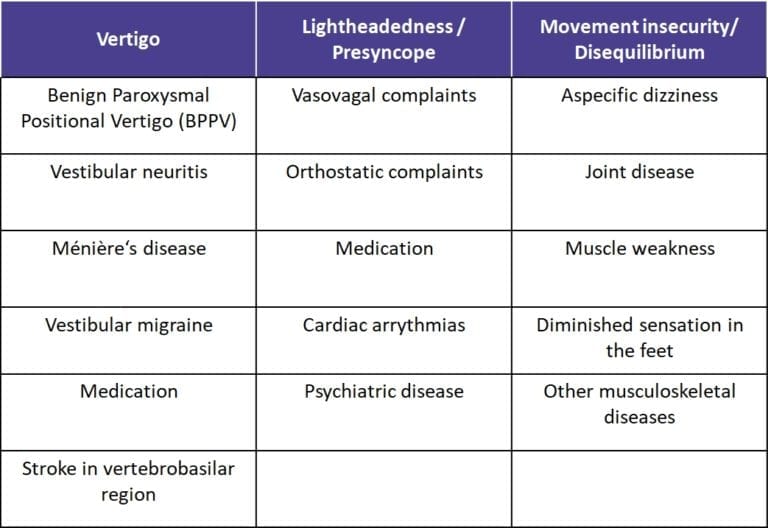
Vertigo is a sensation of movement such as twirling or tilting perceived in the head, a symptom implying either peripheral or central vestibular disorder. All vertigo is abrupt in onset, episodic, and aggravated by head movements. Different types can be distinguished by duration, setting, and associated symptoms (Molnar et al. 2014).
Light-headedness is a feeling of faintness or graying of vision, implying hypotension and poor perfusion of the brain. Disequilibrium is a sensation of unsteadiness not in the head, implying proprioceptive or cerebellar disease (Molnar et al. 2014). However, a substantial overlap of dizziness types exists (Kerber et al. 2017).
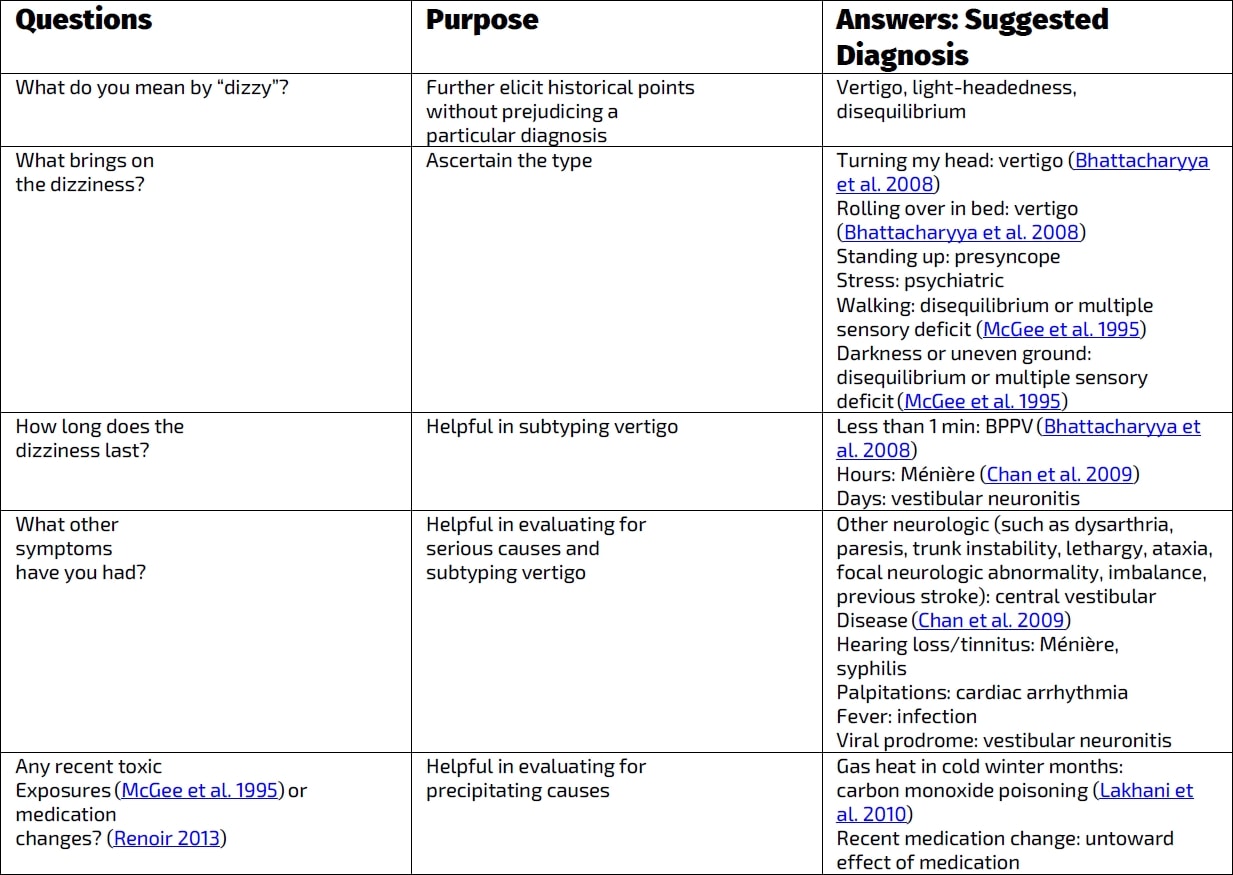
The following questions can be helpful to further distinguish between the 3 main types of dizziness:
Examination
Posterior Canal BPPV
The Dix-Hallpike maneuver is considered the gold standard for the diagnosis of posterior canal BPPV. The lack of alternative external gold standards limits the availability of sensitivity and specificity data. As the Dix-Hallpike maneuver is the best test we have and is regarded as the gold standard, we are giving this test a high clinical value in practice.
Before you conduct the test, the patient should be counseled that his symptoms of vertigo will be reproduced and that he might feel nauseous. So make sure you have a bucket at hand, in case your patient might need it.
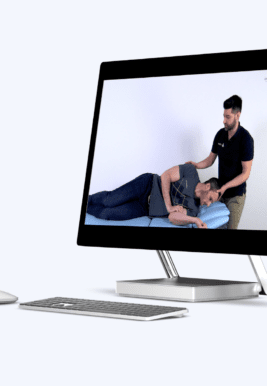
To perform the Dix-Hallpike test have your patient sit on the treatment bench in long-sit with a pillow on the table that will make sure that the patient’s head is extended to 20° in a second. Stand on the side to be examined and firmly hold your patient’s head in 45 degrees of rotation towards the side to be tested. In this case, the left posterior semicircular canal of the patient is aligned with the Sagittal plane. Instruct the patient to keep his eyes open and take the patient backward in a quick movement so that your patient’s head is still rotated and extended to 20° by the pillow.
Observe the patient’s eyes for the latency, duration, and direction of the nystagmus. The nystagmus typically usually has a latency of around 5-20 seconds and fatigues within 60 seconds after onset. In a positive test, the patient will experience vertigo during this test.
In the case of posterior canal BPPV, the nystagmus will be upbeating and torsional, meaning that the upper pole of the eye is beating toward the dependent ear, and the vertical component beating toward the forehead.
After the resolution of subjective vertigo and nystagmus, if present, the patient may be slowly returned to the upright position. The nystagmus might be seen again in the reverse direction after the patient returns to the upright position and should be allowed to resolve. If the initial result is negative, the Dix-Hallpike test should be repeated for the other side.
If the nystagmus presented with a lateral beat or a downbeat, lateral or anterior BPPV should be suspected. On top of that, If you suspect BPPV in your patient and this maneuver is negative in both directions, you should assess the lateral canal with the Supine Head Roll maneuver. The anterior canal is rarely affected with 1-3% of all BPPV cases and its pathophysiology is poorly understood. In these cases, you should refer to a specialist.
Lateral Canal BPPV
To perform the Supine Head Roll test have your patient lie supine on the treatment bench and bring his head into 30 degrees of flexion to align the lateral semicircular canal in the horizontal plane. Then quickly rotate 90 degrees to one side and observe your patient’s eyes for nystagmus, which usually has a latency of 5-20 seconds and fatigues within 60 seconds after onset. After the nystagmus subsides (or if no nystagmus is elicited), the head is then returned to the straight faceup supine position. After additional elicited nystagmus has subsided, the head is then quickly turned 90 degrees to the opposite side and the eyes are once again observed for nystagmus
In a positive test, the patient will experience vertigo during this test. In the case of lateral semicircular canal BPPV, the nystagmus will be predominantly horizontal. Two potential nystagmus findings might occur:
- Geotropic type of nystagmus is marked by very intense horizontal nystagmus beating towards the earth on the affected side and usually less intense beating to the earth on the healthy side. It seems probable that in this form of nystagmus, the calcium carbonate debris is located in the long arm of the semicircular canal
- Apogeotropic type: Less common with a horizontal nystagmus beating towards the uppermost ear on both sides. In this case, it is reasoned that the calcium carbonate debris is located adherently or close to the ampulla of the semicircular canal. In this case, the side opposite the strongest nystagmus is the affected ear.
LEARN TO TREAT THE MOST COMMON CAUSE OF VERTIGO IN THIS FREE MINI-VIDEO-SERIES