

Learn
Valsalva Maneuver | Cervical Radicular Syndrome Assessment
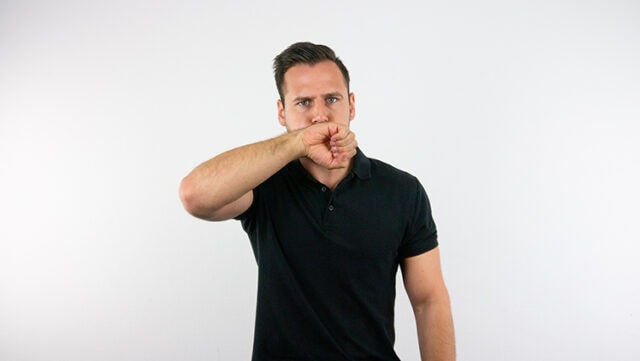
The Valsalva maneuver increases the intraspinal pressure which in turn can exacerbate neuropathies or radicular pain.
According to Wainner et al. (2003), it has a sensitivity of 22% and a specificity of 94%in the detection of Cervical Radicular Syndrome. It can therefore be used to increase the post-test chance of having cervical radiculopathy but still has a rather weak clinical utility as a stand-alone test.
To perform the test have your patient in sitting position. Then ask your patient to take a deep breath and hold the breath while attempting to exhale over a two to three-second period with gradually increasing force. Some people might find it easier to blow against the back of the hand or think of bearing down as in performing a toilet procedure or equalizing ear pressure during diving.
This test is positive if the patient’s arm pain or paresthesia is reproduced.
Other common tests to assess cervical radicular syndrome are:
Get the 21 most useful orthopedic tests
Download our free e-book with the 21 most useful orthopedic tests per body region, to help you reach the right diagnosis.
Like what you’re learning?
Get the full Physiotutors Assessment Book
- 600+ pages on orthopedic assessment
- Video demonstrations and direct links to the PubMed studies
- Statistical values for every special test, from the latest research
- Free lifetime updates
- Available in English, German, French, Spanish, Italian, Portuguese and Turkish


