

Lateral Epicondylalgia / Tennis Elbow | Diagnosis & Treatment

Lateral Epicondylalgia / Tennis Elbow | Diagnosis & Treatment
Introduction & Epidemiology
Lateral Epidondylalgia is a frequent patient complaint, commonly referred to as tennis elbow (Pitzer et al. 2014). The association with the name tennis elbow for lateral epicondylalgia (LE) is due to the fact that the condition has long been associated with racquet sports and an estimated 10-50% of tennis players develop LE during their careers (Van Hoofwegen et al. 2010).
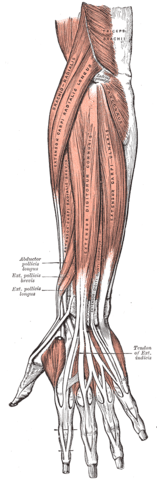
Tennis elbow is thought to result from overuse of the extensor carpi radialis brevis (ECRB) muscle by repetitive microtrauma resulting in primary tendinosis of the ECRB, with or without the involvement of the extensor digitorum communis (De Smedt et al. 2007).
The term epicondylitis was questioned over time as histological studies have failed to show inflammatory cells (macrophages, lymphocytes, and neutrophils) in the affected tissue. These studies showed fibroblastic tissue and vascular invasion that lead to the term ‘tendinosis’. This rather defines a degenerative process characterized by an abundance of fibroblasts, vascular hyperplasia, and unstructured collagen (De Smedt et al. 2007).
Tichener et al. (2013) conducted a large case-control study with 4998 patients who were retrospectively screened for risk factors for the development of LE.
They found that rotator cuff pathology (OR 4.95), De Quervain’s disease (Or 2.48), carpal tunnel syndrome (OR 1.50), oral corticosteroid therapy (OR 1.68), and previous smoking (OR 1.20) were risk factors associated with the development of tennis elbow. Diabetes, current smoking, trigger finger, rheumatoid arthritis, alcohol intake, and obesity were not found to be associated with LE.
A study by Sanders et al. (2015) found that the annual incidence of LE decreased over time from 4.5 per 1000 people in 2000 to 2.4 per 1000 people in 2012 in the US population. They report a recurrence rate within two years is as high as 8.5% and remained constant over time. The proportion of surgically treated cases within two years tripled from 1.1% in 2000 to 3.2% after 2009. About 1 in 10 patients with persistent symptoms at six months required surgery.
In this study, the average age for the diagnosis was at 47 ±11 years of age with equal distribution amongst genders. The age group between 40 and 49 years thus has the highest incidence with 7.8 per 1000 in male patients and 10.2 per 1000 female patients.
The most commonly reported professions were office workers/secretaries followed by health care workers, mostly nurses. The right elbow was affected in 63% (vs. 25% left) with 12% of patients having both elbows affected. On the basis of this data, one might assume that the dominant arm is affected more often given the fact that an estimated 70-95% of the world’s population is right-handed (Holder et al. 2001)
Work restrictions were reported in 16% of patients with 4% missing 1-12 weeks of work.
In a study of the US military, incidence rates for LE were 2.98 per 1000 person-years (Wolf et al. 2010).
Another study by Leach et al. (1987) mentions that LE is 7-10 times more common than medial epicondylalgia.
Clinical Presentation & Examination
Elbow pain is the presenting complaint in patients with epicondylalgia. While this pain can be acute in onset due to trauma or injury it is more likely to develop gradually.
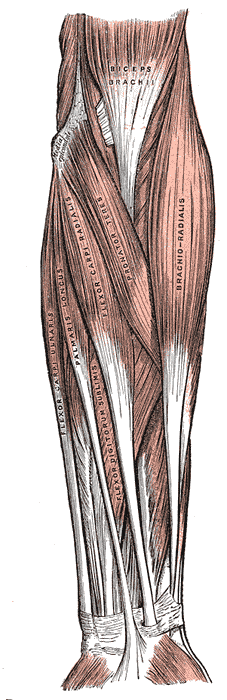
Patients typically present with a history of repetitive gripping and loading of the forearm (Orchard et al. 2011). The pain is usually worse with activity and relieved by rest and may or may not radiate down the forearm along the wrist extensor (LE) muscles. On top of that, patients might experience weakness in the hand and difficulty carrying items (Pitzer et al. 2014).
Examination
For a thorough assessment and differential diagnosis, the cervical spine, shoulder, elbow, and wrist should be examined in both conditions. Next to excluding cervical radiculopathy of C5-C6 as a possible competing diagnosis, neck, and shoulder impairment have been found to be negative prognostic factors for recovery in lateral epicondylalgia (Smidt et al. 2006). Patients with lateral epicondylalgia present with tenderness at the origin of the ECRB, at or just distal to the lateral epicondyle. Although patients usually have a normal range of motion, some might have limitations of active elbow extension due to lateral elbow pain. Mild soft tissue swelling over the extensor origin is not uncommon and some patients have fullness in the anconeus triangle (Orchard et al. 2011).
Watch the videos below in order to learn how to conduct those tests:
WATCH TWO 100% FREE WEBINARS ON SHOULDER PAIN AND ULNA-SIDE WRIST PAIN