
Learn
Patellofemoral Pain Diagnosis | PFPS Diagnosis & Assessment
Patellofemoral pain syndrome or PFPS typically refers to anterior knee pain usually occurring during activities such as running, squatting, or walking up and downstairs.
Patients of all age categories are affected and the condition can persist for multiple years in up to 60% of cases.
So, what is causing the pain? Loading of the patellofemoral joint during weight-bearing activities on a flexed knee is thought to be altered due to various reasons leading to pain.
One hypothesis is abnormal patellofemoral joint alignment and morphology of the trochlear. Consequently, the patella can’t track smoothly up and down, which over time can cause irritation of the joint surfaces and trigger nociception.
Secondly, muscle weakness of the quadriceps and glutes is a potential risk factor associated with PFPS. This is because poor strength and function in the quads will influence how the patella tracks in the trochlea and how load is distributed across the patellofemoral joint. Weak glutes on the other hand can alter the leg axis if the femur adopts a more internally rotated position with regards to the tibia again impairing smooth movement of the patella within the femoral trochlea.
On our channel, you will find proposed diagnostic clusters for PFPS but all of them only demonstrate weak clinical value. You can find the clusters by clicking the info icon in the top right corner. Essentially, asking a patient whether they have anterior knee pain while squatting is the best available test to date as PFPS will be evident in 80% of people with this finding. But PFPS has to be seen as a diagnosis of exclusion meaning the diagnosis is formed after all other possible pathologies have been excluded.
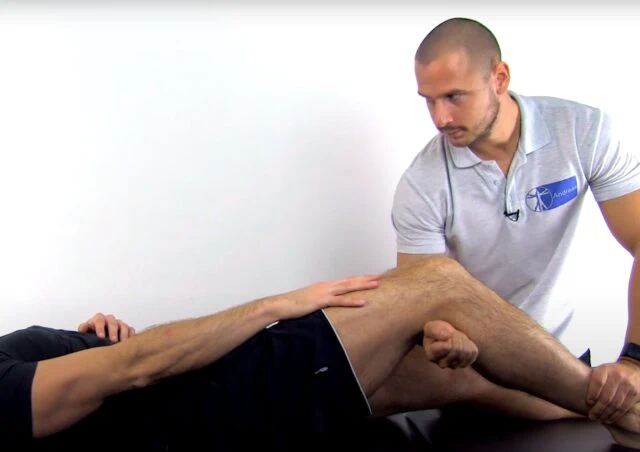
Common orthopedic tests to assess for patellofemoral pain syndrome are:
Seeing patients with anterior knee pain?
Watch Claire Robertson’s free 2-part video lecture on the VMO and its role in patellofemoral pain.
Like what you’re learning?
Get the full Physiotutors Assessment Book
- 600+ pages on orthopedic assessment
- Video demonstrations and direct links to the PubMed studies
- Statistical values for every special test, from the latest research
- Free lifetime updates
- Available in English, German, French, Spanish, Italian, Portuguese and Turkish