

Learn
Phalen’s Test for Carpal Tunnel Syndrome
Traditionally, stand-alone tests have no added value compared to a thorough history in the diagnostic process of carpal tunnel syndrome. Phalen’s test was also excluded in a clinical prediction rule of Wainner as its predictive ability was too low. You can find a video on the CPR of Wainner in the top right corner. Furthermore, Valdes et al from 2013 report a positive likelihood ratio of 2.68 and a negative likelihood ratio of 0.54 for the test which renders its clinical value rather weak.
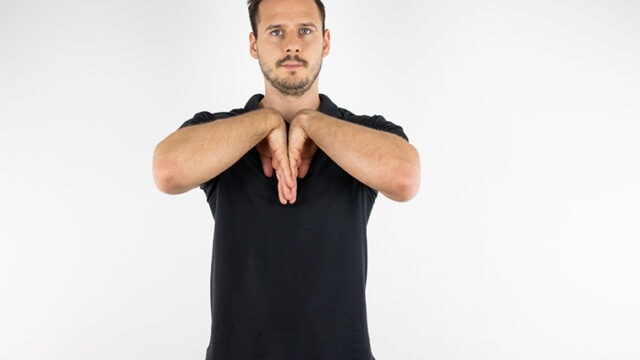
To conduct the test, the patient is in standing or sitting position and is asked to maximally flex both wrists while pressing the dorsal side of both hands against each other and to hold this position for one minute.
In a positive test, the patient’s paresthesia in the distribution of the median nerve will be reproduced, namely tingling in the thumb, index, and middle finger and/or the medial half of the ring finger.
Other common tests to assess Carpal Tunnel Syndrome are:
References
Want to master the upper limb?
Watch a free masterclass from Andrew Cuff on exercise prescription for shoulder pain, followed by a second one from Thomas Mitchell on wrist pain.

Like what you’re learning?
Get the full Physiotutors Assessment Book
- 600+ pages on orthopedic assessment
- Video demonstrations and direct links to the PubMed studies
- Statistical values for every special test, from the latest research
- Free lifetime updates
- Available in English, German, French, Spanish, Italian, Portuguese and Turkish


