

Learn
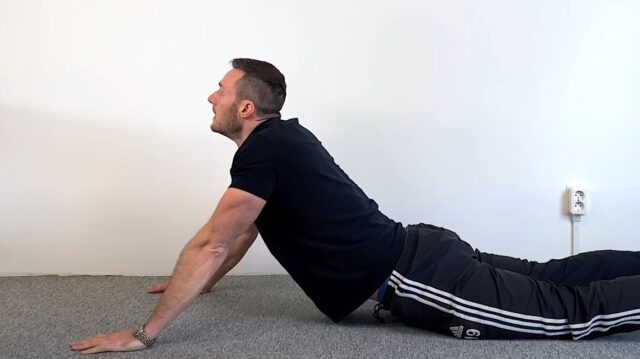
Direction-specific exercises for low back pain
Directional preference and centralization are two phenomena described in the “derangement” classification of the McKenzie concept. Directional preference means that repeated movements in one direction, so either flexion, extension, or lateral flexion of the lumbar or cervical spine are able to progressively abolish symptoms and or increase lumbar range of motion. A systematic review of May et al. In the year 2012 found the 70% of patients did exhibit such a directional preference.
The McKenzie concepts also talk about the phenomenon of centralization. Centralization is a symptom response to repeated movements that is characterized by the abolition of spinal pain and referred spinal pain symptoms in a distal-to-proximal direction. According to the review of May, 44% of patients presented with centralization. The prevalence was higher among younger patients and in acute low back pain (74%) in comparison with patients above 65 or if back pain was persistent (42%). The presence of centralization was also a useful treatment effect modifier in 7 out of 8 included studies.
In the case of directional preference and/or centralization, a patient’s symptoms can often be modified by performing repeated movements in the preferred direction.
In the following, we will show you a couple of examples for the lumbar spine that we find useful in practice for patients with acute low back pain with or without radiculopathy. Be aware that this is absolutely no strict application of the McKenzie concept whatsoever:
References:
References:
Jarod Hall: https://www.youtube.com/watch?v=OmVla0VdunA
References
Jarod Hall: https://www.youtube.com/watch?v=OmVla0VdunA
Want to get better at treating low back pain?
Take our free 5-day email course on low back pain, from imaging to the best exercise, straight to your inbox.
Like what you’re learning?
Get the full Physiotutors Assessment Book
- 600+ pages on orthopedic assessment
- Video demonstrations and direct links to the PubMed studies
- Statistical values for every special test, from the latest research
- Free lifetime updates
- Available in English, German, French, Spanish, Italian, Portuguese and Turkish


