Condition Head & Spine Headache 23 Feb 2023

Cluster Headache | Diagnosis & Treatment All you need to know

Cluster Headache | Diagnosis & Treatment  All you need to know

Cluster Headache | Diagnosis & Treatment All you need to know

Introduction & Epidemiology

Headaches can manifest on their own but are also a very common symptom in neck pain patients as more than 60% of patients with a primary neck pain complaint report having concordant episodes of headache. Therefore it’s essential to find out what kind of headache the patient is suffering from.

To start off let’s differentiate between primary and secondary types of headaches. But what does this mean? Simply put, primary headaches are a “disease themselves” whereas, in secondary headaches, the headache is a symptom of another condition. So primary headaches would be migraines, tension-type headaches & cluster headaches. Secondary type headaches are headaches caused by tumors, hemorrhage, other trauma, TMJ dysfunction, substance overdose, or neck pain aka. The cervicogenic headache.

Now let’s take a closer look at cluster headaches, which are primary types of headaches.
Fischera et al. (2008) conducted a meta-analysis to assess the lifetime prevalence of cluster headache and found low numbers of 0,12% with a 1-year prevalence of 53 per 100,000 persons and the overall sex ratio was 4.3 (male to female). Cluster headache had a 1-year prevalence of 0,054%  among the working-aged population in a Swedish cohort (Manzoni et al. 2019)

Epidemiology

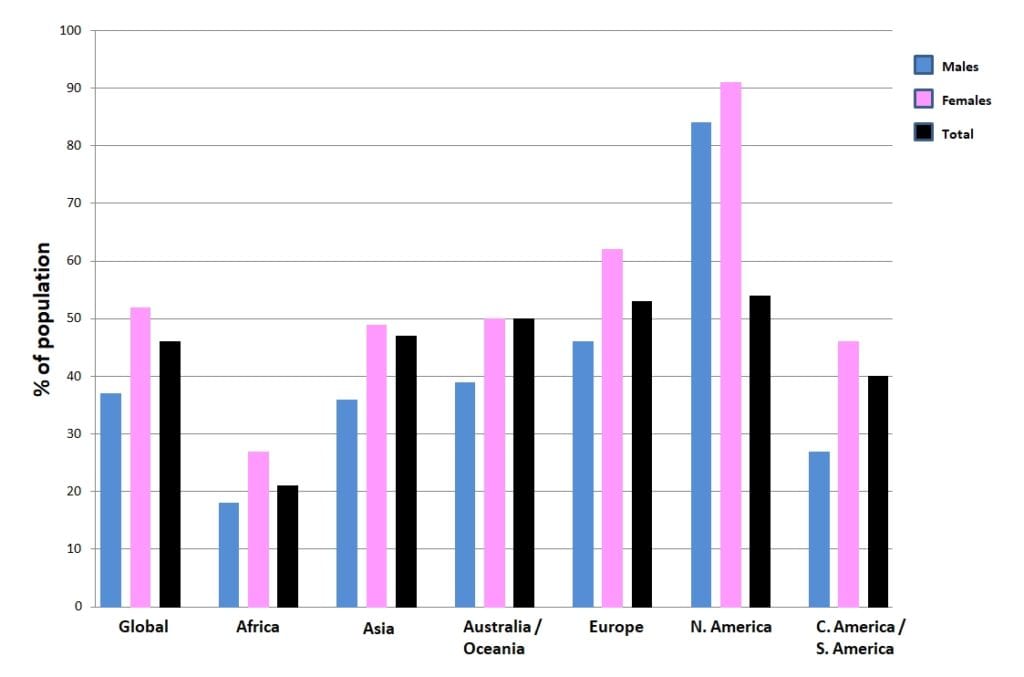
The following figure shows the prevalence of headaches on different continents around the world:

Clinical Picture & Examination

In order for a headache to qualify as a cluster headache it has to fulfill certain criteria (ICHD-III):

A. At least five attacks need to fulfill criteria B-D

B. An untreated episode lasts 15-180 minutes and shows severe or very severe unilateral orbital, supraorbital, and/or temporal pain

C. It matches either or both of the following:

  1. at least one of the following signs and symptoms, ipsilateral to the headache:
    – conjunctival injection and/or lacrimation
    – nasal congestion and/or rhinorrhoea
    – eyelid edema– forehead and facial sweating
    – miosis and/or ptosis
  2. a sense of restlessness or agitation. There are reports of patients pacing back and forth through the room, banging their heads due to the severe pain.

D. It occurs with a frequency between one every other day and 8 per day

At the first diagnosis, a neurological examination and an MRI of the brain (including the craniocervical junction) are required to rule out other causes (May et al. 2023). So if you see a patient with attacks like these in your practice, refer them for a medical work-up.

There are two forms of cluster headache (ICHD-III):

  • Episodic cluster headache: attacks occur in periods lasting from 7 days to one year, separated by pain-free periods of at least 3 months.
  • Chronic cluster headache: attacks occur for one year or longer without remission, or with remission periods shorter than 3 months.

Treatment

Treatment for cluster headache consists of medication, injections/suboccipital nerve blocks, or intracranial stimulation. We can distinguish between treatment for acute attack and preventative treatment as two facets of cluster headache management. Unfortunately, there are currently no options for physiotherapists to treat patients with cluster headaches.
Currently, only a case study has been published on the combination of endogenous neurostimulation and physiotherapy (Navarro-Fernández et al. 2019).

Acute

100% oxygen therapy is arguably the most well-known method of treating cluster headaches (Obermann et al. 2015). As compared to other types of headaches, cluster headaches are the only condition for which this strategy is a level A recommendation. A minimum of 66% of patients benefit from oxygen therapy. It takes less than ten minutes to take effect. Patients inhale 100% oxygen at a flow rate of at least 12 L/min (in some cases up to 15 L/min) through a non-rebreather mask with a reservoir bag, for 15 to 20 minutes, ideally at the start of the attack. Nasal cannulae are not sufficient (May et al. 2023). In a randomized trial, 78% of attacks treated with oxygen at 12 L/min were pain free or adequately relieved after 15 minutes, compared to 20% with air, without important adverse events (Cohen et al. 2009). Side effects are rare, which makes it a great option for treatment. Oxygen does feed fire, though, so smoking and open flames nearby must be avoided. Whether oxygen is reimbursed depends on the country and the insurer.

The only other level A-indicated therapy is triptans. Subcutaneous sumatriptan or nasal spray zolmitriptan delivery of these medications are both options (May et al. 2006). If subcutaneous injections are not tolerated, intranasal triptans might be given on the side opposite the headache. Intranasal sumatriptan (20 mg) and intranasal zolmitriptan (5 mg) are two options. As the onset period of oral medications, in whatever form, is frequently longer than the headache, they are not advised.

Alternative treatments include octreotide, ergotamine, and intranasal lidocaine (with a reported 33% response) (Matharu et al. 2004). Sadly, medication resistance develops in 10% to 20% of people with severe cluster headaches. Patients should be advised to stay away from triggers, particularly alcohol. Patients should be urged to cease smoking even though there is no evidence to suggest that doing so will reduce their likelihood of getting headaches.

Preventive Medicine

Suboccipital steroid injections (at the greater occipital nerve) are the only preventive treatment with a Level A recommendation in the American Headache Society guideline (Robbins et al. 2016). The EAN guideline recommends them as a bridge until verapamil takes effect, and they can be repeated (May et al. 2023). Note that this is a medical injection, not a manual technique. Side effects such as temporary soreness at the injection site and mild headaches are minor.
The most frequently prescribed prophylactic medication is verapamil (May 2003).
For patients with chronic cluster headache and those who have episodic cluster headaches for at least two months, it is advised as the first line of preventive treatment (Obermann et al. 2015).

For episodic and chronic cluster headache, verapamil is the preventive medication of choice. It is started at 240 mg per day, divided over three doses (3 × 80 mg), and increased by 80 mg every 3 to 4 days (May et al. 2023). An ECG is required before starting and during the dose increases. The evidence base is small, though: the placebo-controlled trial included 30 patients with episodic cluster headache, who received 120 mg three times daily (Leone et al. 2000). The EAN guideline therefore lists verapamil as a consensus recommendation, even though it is widely used.

Patients with episodic cluster headaches and active cluster periods that occur infrequently and last less than two months are advised to take glucocorticoids as a preventive treatment. A study found that 70–80% of patients responded to treatment (Ekbom et al. 2002). However, they are not given for a longer period of time when alternative therapy are effective since they have severe long-term negative effects. They are especially useful when other preventive treatments take a while to start working. There is no one regimen that has been shown to be superior to the others. Oral prednisone or prednisolone 60 to 100 mg once daily for five days, followed by a reduction of 10 mg every 4 days, is one such regimen (May et al. 2023). Combining oral and intravenous formulations is possible (Mir et al. 2003).

Lithium, valproic acid, melatonin, and intranasal capsaicin are some more pharmaceutical choices (Ekbom et al. 2002).

The effects of electrical stimulation have been extensively studied. The sphenopalatine ganglion, occipital, and vagus nerve are among the areas that are stimulated. Deep brain stimulation of the hypothalamic region is used in selected patients with chronic, drug-resistant cluster headache. In a small randomized trial with 11 patients, active stimulation did not differ from sham stimulation. In the open phase that followed, 6 of 11 patients responded, and there were three serious adverse events (Fontaine et al. 2010). A non-implanted device may offer the option of vagus nerve stimulation (Goadsby et al. 2018).

Want to learn more about headaches? Then check out our following blogs & research reviews:


References

Cohen, A. S., Burns, B., & Goadsby, P. J. (2009). High-flow oxygen for treatment of cluster headache: a randomized trial. JAMA, 302(22), 2451-2457.

Ekbom, K., & Hardebo, J. E. (2002). Cluster headache: aetiology, diagnosis and management. Drugs, 62, 61-69.

Fischera, M., Marziniak, M., Gralow, I., & Evers, S. (2008). The incidence and prevalence of cluster headache: a meta-analysis of population-based studies. Cephalalgia, 28(6), 614-618.

Fontaine, D., Lazorthes, Y., Mertens, P., Blond, S., Géraud, G., Fabre, N., … & Lantéri-Minet, M. (2010). Safety and efficacy of deep brain stimulation in refractory cluster headache: a randomized placebo-controlled double-blind trial followed by a 1-year open extension. The Journal of Headache and Pain, 11(1), 23-31.

Goadsby, P. J., de Coo, I. F., Silver, N., Tyagi, A., Ahmed, F., Gaul, C., … & Ferrari, M. D. (2018). Non-invasive vagus nerve stimulation for the acute treatment of episodic and chronic cluster headache: a randomized, double-blind, sham-controlled ACT2 study. Cephalalgia, 38(5), 959-969.

Leone, M., D’amico, D., Frediani, F., Moschiano, F., Grazzi, L., Attanasio, A., & Bussone, G. (2000). Verapamil in the prophylaxis of episodic cluster headache: a double-blind study versus placebo. Neurology, 54(6), 1382-1385.

Manzoni, G. C., Camarda, C., Genovese, A., Quintana, S., Rausa, F., Taga, A., & Torelli, P. (2019). Cluster headache in relation to different age groups. Neurological Sciences, 40, 9-13.

Matharu, M. S., Levy, M. J., Meeran, K., & Goadsby, P. J. (2004). Subcutaneous octreotide in cluster headache: Randomized placebo‐controlled double‐blind crossover study. Annals of Neurology: Official Journal of the American Neurological Association and the Child Neurology Society, 56(4), 488-494.

May, A., Leone, M., Afra, J., Linde, M., Sándor, P. S., Evers, S., & Goadsby, P. J. (2006). EFNS guidelines on the treatment of cluster headache and other trigeminal‐autonomic cephalalgias. European Journal of Neurology, 13(10), 1066-1077.

May, A. (2003). Headaches with (ipsilateral) autonomic symptoms. Journal of Neurology, 250(11), 1273-1278.

May, A., Evers, S., Goadsby, P. J., Leone, M., Manzoni, G. C., Pascual, J., … & Jensen, R. H. (2023). European Academy of Neurology guidelines on the treatment of cluster headache. European Journal of Neurology, 30(10), 2955-2979.

Mir, P., Alberca, R., Navarro, A., Montes, E., Martínez, E., Franco, E., … & Lozano, P. (2003). Prophylactic treatment of episodic cluster headache with intravenous bolus of methylprednisolone. Neurological Sciences, 24, 318-321.

Navarro-Fernández, G., de-la-Puente-Ranea, L., Gandía-González, M., & Gil-Martínez, A. (2019). Endogenous neurostimulation and physiotherapy in cluster headache: a clinical case. Brain Sciences, 9(3), 60.ISO 690

Obermann, M., Holle, D., Naegel, S., Burmeister, J., & Diener, H. C. (2015). Pharmacotherapy options for cluster headache. Expert opinion on pharmacotherapy, 16(8), 1177-1184.

Olesen, J. (2018). International classification of headache disorders. The Lancet Neurology, 17(5), 396-397.

Robbins, M. S., Starling, A. J., Pringsheim, T. M., Becker, W. J., & Schwedt, T. J. (2016). Treatment of cluster headache: the American Headache Society evidence-based guidelines. Headache, 56(7), 1093-1106.

Treating patients with headaches?

Get René Castien’s free headache home exercise program, the PDF he uses with his own patients.
Free headache home exercise program