
Learn
4-Type Classification by Kibler | Scapular Dyskinesis Assessment
Kibler et al. (2002) were pioneers in the classification of scapular dyskinesis. Up to today, the 4-type classification is the most commonly used method in scientific studies to determine if participants display scapular dyskinesis or not. The 4-type classification has been evaluated regarding its reliability by the author himself. They found an intra-rater reliability of k = 0.5 and an inter-rater reliability of k = 0.4. This means that this method is moderately reliable.
Watch the video if you want to learn more about the classification in detail:
Execution:
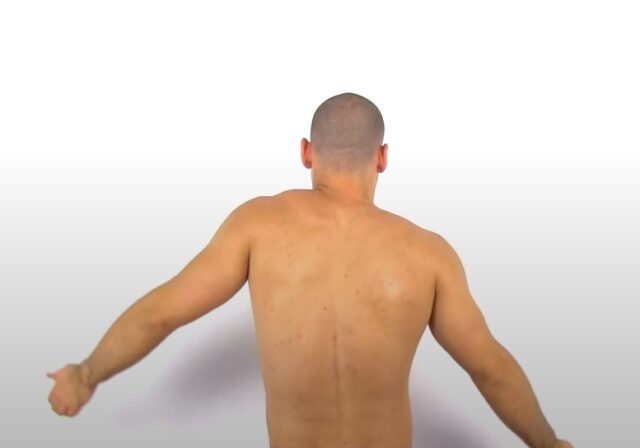
1. The patient performs 3 repetitions of bilateral shoulder elevations in the scapular plane at a speed of 45°/s
2. Afterwards, the patient performs 3 repetitions of bilateral shoulder abduction at a speed of 45°/s
3. The examiner observes for winging and/or dysrhythmia
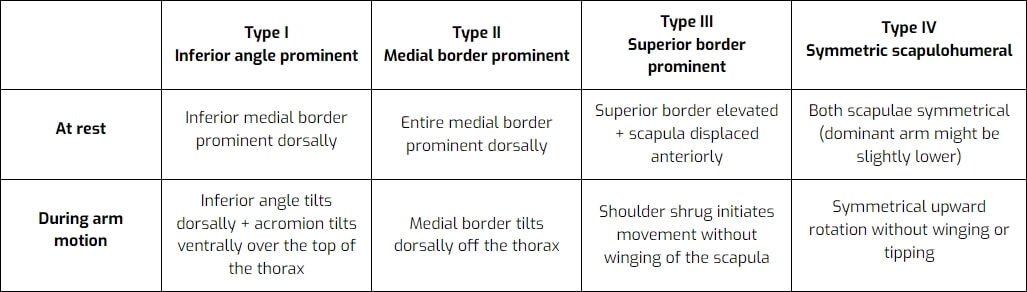
Based on the findings, Kibler divides the scapular dyskinesis into the following 4 types:
There are two alternatives for the Scapular Dyskinesis Test. Feel free to check out the two other methods below:
- Scapular Dyskinesis Test by McClure
- Yes/No Method
Get the 21 most useful orthopedic tests
Download our free e-book with the 21 most useful orthopedic tests per body region, to help you reach the right diagnosis.

Like what you’re learning?
Get the full Physiotutors Assessment Book
- 600+ pages on orthopedic assessment
- Video demonstrations and direct links to the PubMed studies
- Statistical values for every special test, from the latest research
- Free lifetime updates
- Available in English, German, French, Spanish, Italian, Portuguese and Turkish