Learn
Ober’s Test for Iliotibial Band Tightness
The Ober’s Test asses for tightness in the tensor fascia latae muscle which is responsible for a tight iliotibial band.
To perform this test, have your patient in side-lying position, with the lower leg in flexion at the hip and the knee for stability.
Then, the examiner passively abducts the upper leg and brings it into slight extension, while the other hand fixates the pelvis.
In literature, this test was first described in 90° of knee flexion but we prefer to have the upper leg completely extended to have the iliotibial band under even more stretch. Then, slowly lower the upper leg all the way down to the table.
This test would be positive if the upper leg stays in the air and does not fall down on the table, which is not the case here.
According to a study by Willett et al. (2016), they “refute the hypothesis that the ITB plays a role in limiting hip adduction during either version of the Ober test and question the validity of these tests for determining ITB tightness. The findings underscore the influence of the gluteus medius and minimus muscles as well as the hip joint capsule on Ober test findings.” So be careful with your interpretation!
Other muscle length tests at the hip are:
- Thomas Test
- Ely’s Test
- Kendall Test
- 90-90 Straight Leg Raise Test
- Backsaver Sit and Reach Test
- Tripod Sign
- Phelp’s Test
Treating runners?
Get Benoy Mathew’s free 12-part video series on running injuries, one short lecture a day.
Like what you’re learning?
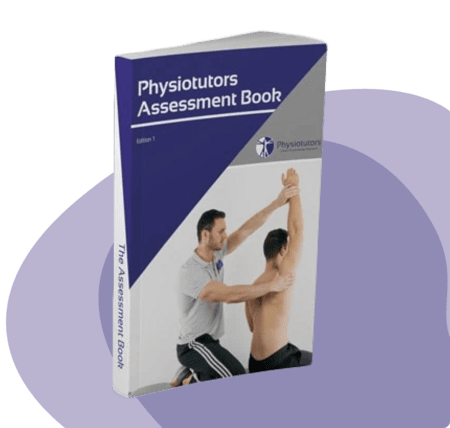
Get the full Physiotutors Assessment Book
- 600+ pages on orthopedic assessment
- Video demonstrations and direct links to the PubMed studies
- Statistical values for every special test, from the latest research
- Free lifetime updates
- Available in English, German, French, Spanish, Italian, Portuguese and Turkish