


Research
Elbow
August 4, 2026
Tendon Neuroplastic Training for Lateral Epicondylalgia: Is Neural Adaptation the Blind Spot of Exercise-Based Rehabilitation?

This double-blind randomized controlled trial investigated whether tendon neuroplastic training leads to better outcomes compared to stretching and myofascial release in lateral epicondylalgia
The study found that tendon neuroplastic training demonstrated greater outcomes in terms of pain and disability at 4 weeks
However, several study limitations limit a definite conclusion regarding tendon neuroplastic training for epicondylalgia
Introduction
Lateral epicondylalgia is a common tendinopathy affecting the common extensor tendon origin at the lateral elbow. Current evidence-based management emphasizes progressive mechanical loading, with heavy slow resistance (HSR) training widely recommended because of its favourable outcomes in several tendinopathies. However, the response to HSR appears to be less consistent in individuals with lateral epicondylalgia. As discussed in a previous Physiotutors’ review, adherence to HSR programs may be challenging in this population, as heavy loading can aggravate pain and limit exercise tolerance.
Beyond tendon pathology, lateral epicondylalgia is associated with impairments in proprioception and motor control, suggesting that rehabilitation may benefit from targeting both the tendon and the nervous system. Tendon Neuroplastic Training combines progressive tendon loading with externally paced contractions to promote neuroplastic adaptations, aiming to improve proprioception, motor control, and joint stability while simultaneously loading the affected tendon. Encouraging results have been reported for tendon neuroplastic training in patellar and rotator cuff tendinopathies.
Given the limited evidence regarding tendon neuroplastic training for epicondylalgia, this study aimed to investigate its effects on pain, grip strength, and disability in individuals with lateral elbow tendinopathy.
Methods
This study is a double blind randomized controlled trial and was conducted according to the CONSORT guidelines.
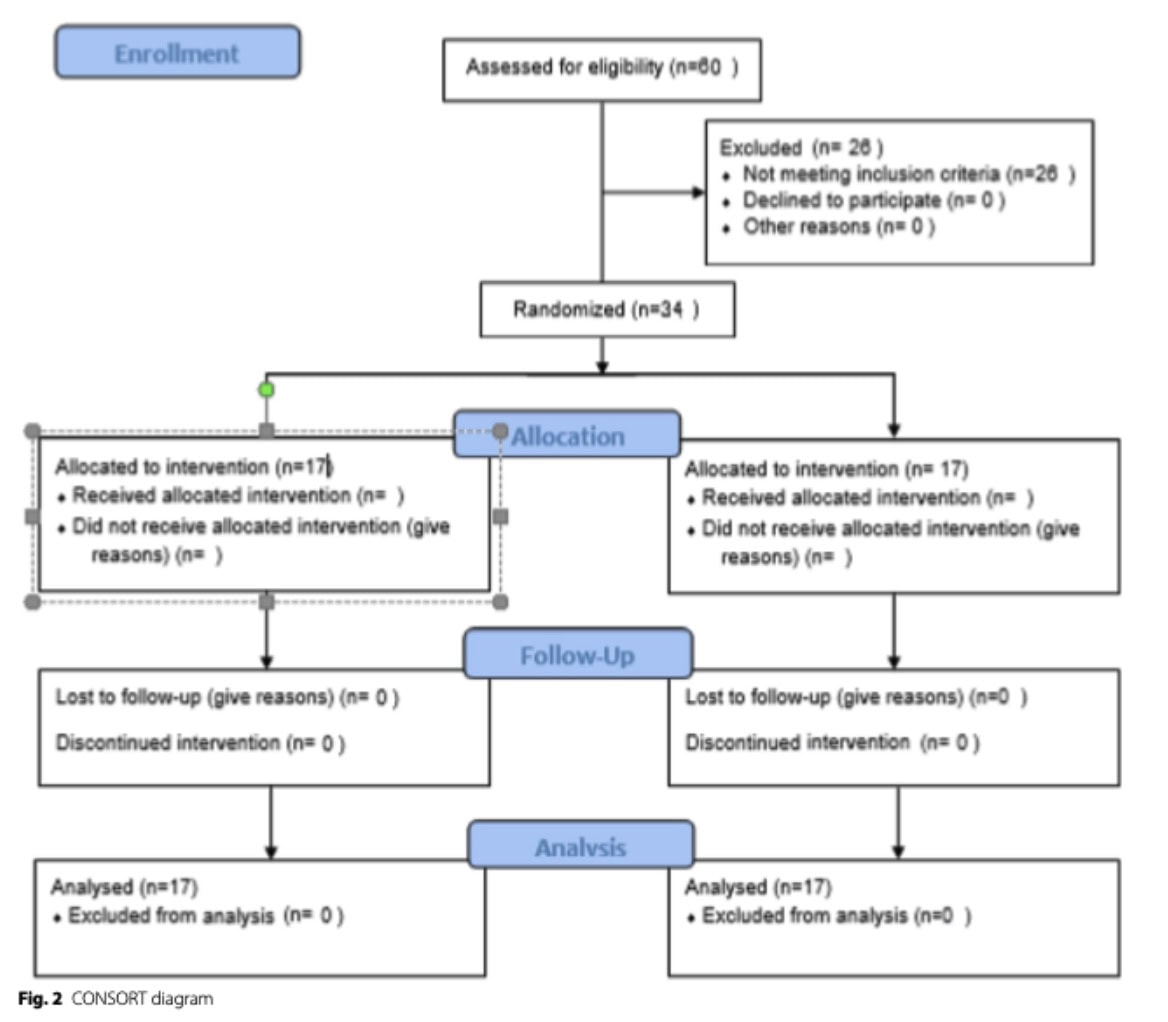
Sample size was calculated to account for the risk of dropout; the final number of patients was 34. The sampling method used was non-probability convenience sampling.
Participants were recruited using convenience sampling. Eligible participants were adults aged 25–45 years with clinically diagnosed lateral epicondylalgia, defined by pain and tenderness over the lateral epicondyle and at least two positive clinical tests (Maudsley’s, Mill’s, or Cozen’s test). Individuals with recent elbow trauma or surgery, tendon rupture, cervical radiculopathy, radial nerve entrapment, major upper limb surgery, tumors, compartment syndrome, concurrent treatment, prior treatment history, or high pain catastrophizing (PCS > 30) were excluded. The trial was double-blinded, with both participants and outcome assessors blinded.
Intervention
Both groups received a 10-minute hot pack before exercise sessions. The experimental group performed tendon neuroplastic training for epicondylalgia, consisting of paced isotonic wrist flexion and extension exercises using a dumbbell. Movement speed was synchronized with an audio-visual metronome application (20 beats/min, 3 seconds per beat), allowing 3-second concentric and eccentric phases. Participants completed 4 sets of 8 repetitions with 2-minute rest intervals. The exercise load was progressively increased from 1 lb initially (pain ≤5/10 during exercise), to 3 lb by the second session, and up to 5 kg between weeks 2 and 4. Tendon neuroplastic training was performed three times per week for 4 weeks.
The active control group received wrist extensor stretching and myofascial release targeting the lateral epicondyle region. Myofascial release was applied for 5 minutes, with two repetitions per session, while stretching was performed with the elbow extended, forearm pronated, and wrist flexed with ulnar deviation. Sessions were also conducted three times weekly for 4 weeks.
Outcome measures
Outcomes were assessed at baseline and after 1, 2, 3, and 4 weeks. Primary outcomes included:
- Pain and disability: Patient-Rated Tennis Elbow Evaluation (PRTEE; 0–100 scale)
- Grip strength: Handheld dynamometer
- Pain intensity: Numerical Pain Rating Scale (NPRS; 0–10 scale)
Statistical analyses
Data were analyzed using SPSS v26. Baseline comparability between groups and statistical assumptions (normality, homogeneity of variance/covariance, and sphericity) were assessed. A mixed-model ANOVA was used to evaluate differences between groups over the five assessment time points. Statistical significance was set at p < 0.05, with η² effect sizes calculated to estimate the magnitude of treatment effects.
Results
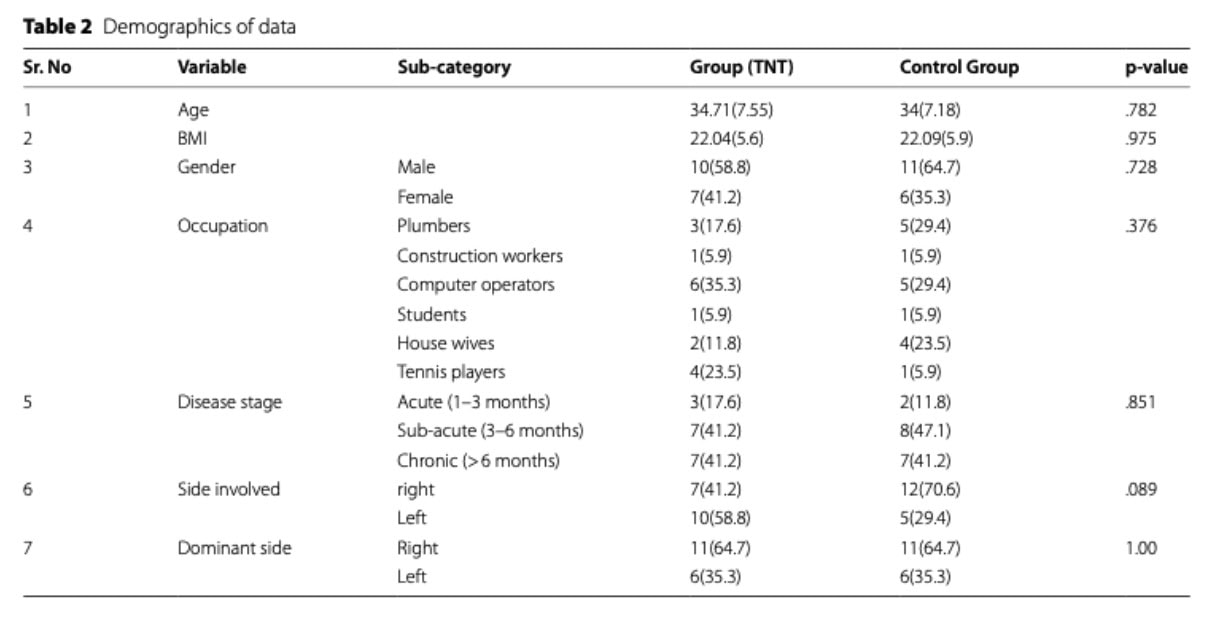
34 participants met the eligibility criteria and were included. Both groups were comparable at baseline in terms of demographic and clinical characteristics.
After 4 weeks, both groups showed significant improvements in pain, disability, and grip strength (p < 0.001). However, the tendon neuroplastic training group demonstrated greater reductions in pain and disability. Grip strength demonstrated no significant differences between groups; the two groups had similar results at week four, but the intervention group experienced a more consistent improvement in grip strength throughout the experiment.
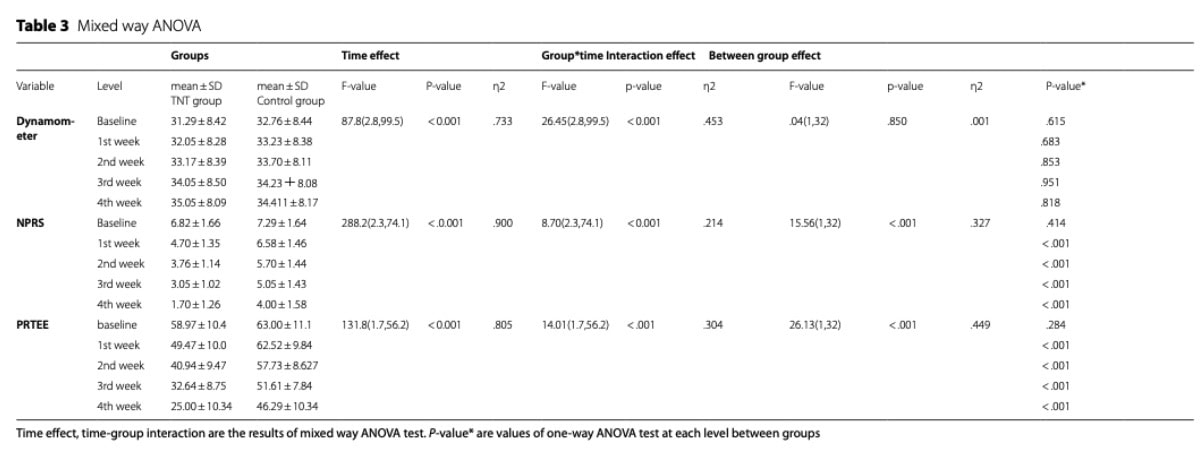
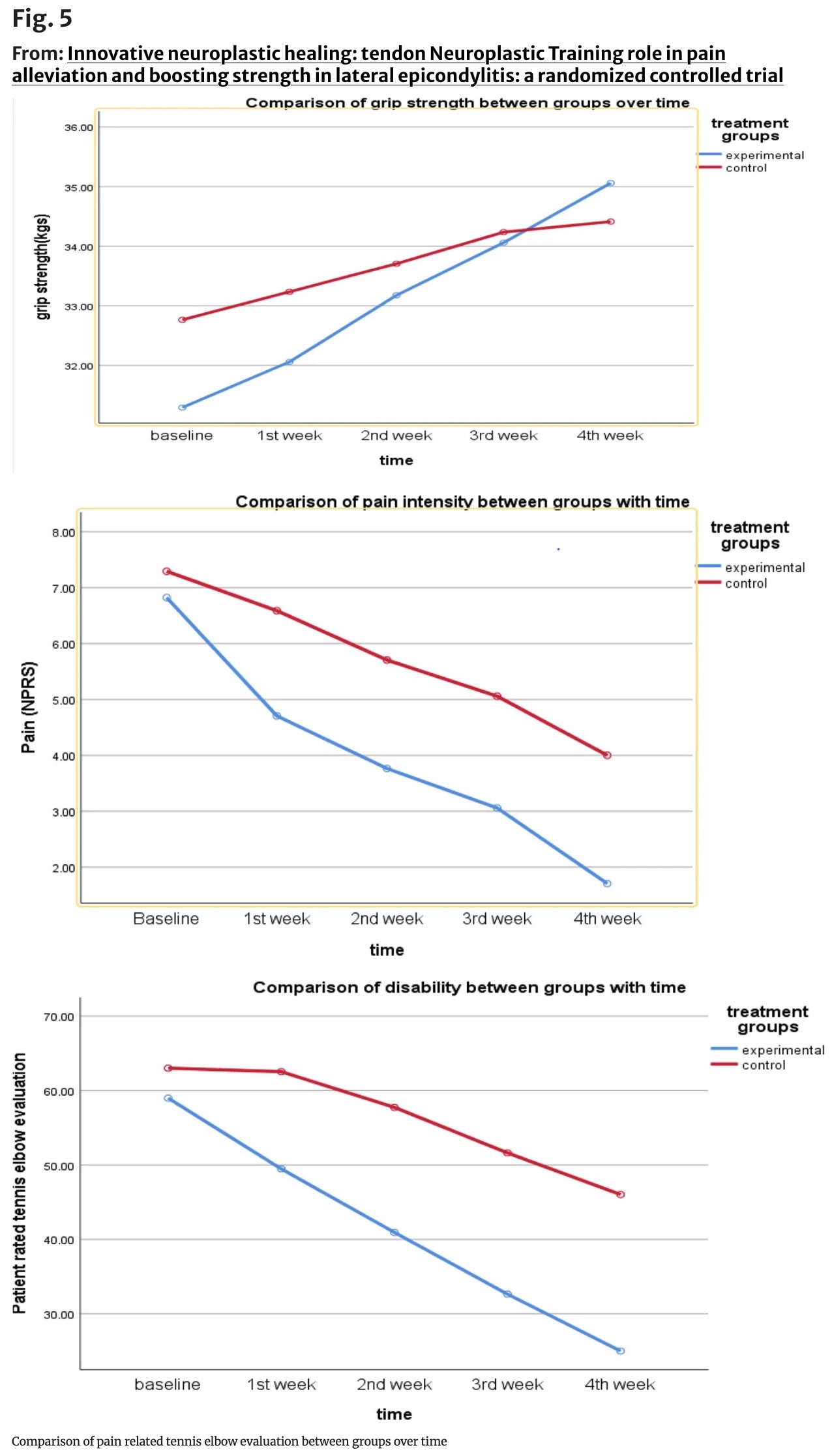
A repeated-measures ANOVA revealed a significant time × group interaction for pain, disability, and strength outcomes (p < 0.001), indicating that changes over time differed between groups. Although grip strength improved in both groups, the control group started with slightly higher baseline strength, resulting in no significant between-group difference at the final assessment. Improvements in the control group’s grip strength were also less consistent, with some intervals showing no significant change.
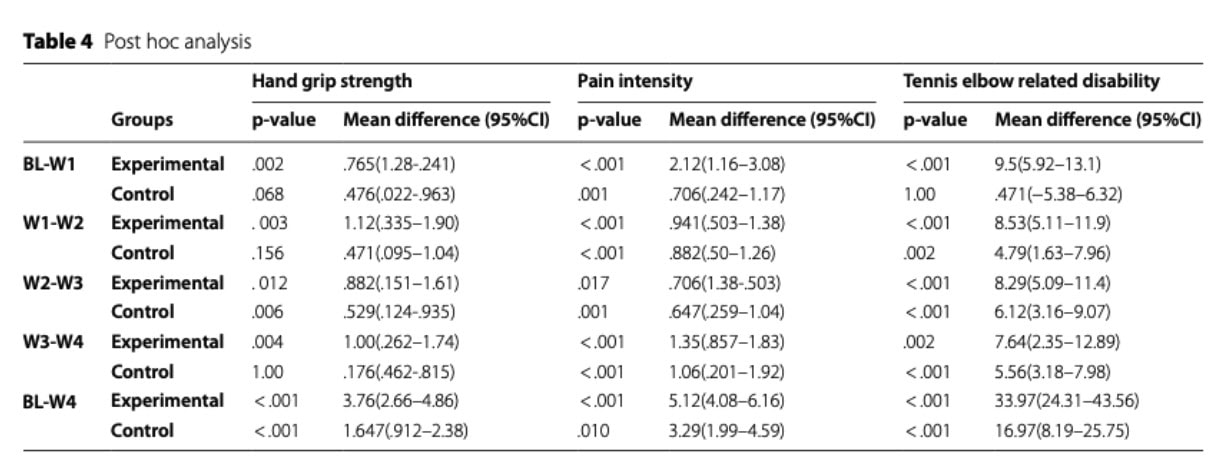
Overall, tendon neuroplastic training for epicondylalgia produced greater clinical improvements in pain, disability, and the progression of grip strength compared with conventional stretching and myofascial release.
Questions and thoughts
Although the findings of this study appear promising, several methodological limitations warrant caution when interpreting the results.
First, the study design raises concerns regarding the appropriateness of the control intervention. Participants in the control group received only wrist extensor stretching and myofascial release therapy, whereas the intervention group performed tendon neuroplastic training. To isolate the specific contribution of the neuroplastic component, the intervention should ideally have been compared with an identical loading program performed at a self-selected pace, without external pacing through a metronome. Such a comparison would have allowed the authors to determine whether any additional improvements in pain and disability were attributable to the neuroplastic component rather than to exercise itself.
Furthermore, the authors conclude that “Tendon neuroplastic training has significant effects on reducing pain and increasing cortical control of muscle groups during rehabilitation of individuals with tendon pain and tendinosis.” This conclusion appears to overstate the available evidence, as corticospinal excitability or other measures of cortical function were not directly assessed. Consequently, any proposed neurophysiological mechanism remains speculative.
An alternative explanation for the observed clinical improvements could be increased muscle strength. However, a formal correlation between grip strength gains and reductions in pain or disability was not tested in this study, so this hypothesis cannot be directly evaluated. Nonetheless, the divergence observed between strength and pain/disability trajectories — most notably in the control group, where grip strength plateaued between weeks 3 and 4 while pain continued to decrease significantly — suggests that strength gains alone are unlikely to fully account for the observed clinical improvements. This apparent dissociation should be interpreted with caution, however, as it is based on group-level trends rather than a formal statistical test of association. The study therefore provides limited evidence regarding the mechanisms through which tendon neuroplastic training for epicondylalgia may influence clinical outcomes, and the proposed neuroplastic adaptations remain largely hypothetical.
The rationale supporting these proposed mechanisms is further weakened by questionable use of the supporting literature. For example, the authors state that “It has been demonstrated that externally paced, skillful movement-like eccentric training not only lessens tendon pain but also modulates the excitatory and inhibitory control of the muscle and lowers tendon stress” while citing two references. Although the first citation investigates corticospinal excitability in individuals with shoulder pain, the second study does not examine corticospinal excitability, neuroplastic adaptations, or neurological mechanisms in lateral epicondylalgia. As such, the cited evidence does not fully support the statement being made, reducing confidence in the mechanistic rationale presented.
Although altered corticospinal excitability has been reported in other tendinopathies, particularly Achilles tendinopathy, whether similar neurophysiological alterations occur in individuals with lateral epicondylalgia remains unclear. Additional mechanistic studies directly assessing cortical excitability are therefore needed before concluding that tendon neuroplastic training exerts its effects through neuroplastic adaptations. Given the methodological limitations and inconsistencies in the interpretation of the literature, the proposed mechanisms should be interpreted with caution.
Talk nerdy to me
Let’s dive deeper into the statistical analysis of the findings by interpreting Tables 3 and 4 further. First, the η² values provide insight into the effect size of the time effect, pooled across both intervention and control groups. These values show a very large effect size for dynamometer, NPRS, and PRTEE (.733, .900, and .805, respectively). However, this pooled effect size does not discriminate between the intervention and control groups; it only demonstrates that, overall, patients improved significantly over the course of the study. On its own, this parameter tells us that both groups improved over time, but not how their trajectories of improvement differed from one another.
The post hoc analyses in Table 4 provide further insight into these differing trajectories. For example, regarding pain, Table 4 shows that over the baseline-to-week-4 interval (BL-W4), the experimental group had a numerically greater pain reduction than the control group (5.12 vs. 3.29). This is consistent with the significant Group × Time interaction reported in Table 3, and suggests that, while both groups improved significantly, the intervention group experienced a larger reduction in pain. It should be noted, however, that Table 4 reports within-group comparisons across time rather than a direct statistical test between groups at BL-W4; the magnitude of the between-group difference in improvement is better supported by the significant interaction effect in Table 3 than by this comparison alone. This pattern is consistent with a treatment-specific benefit of tendon neuroplastic training, though the precise mechanism underlying this added effect cannot be determined from these analyses alone.
Given the study’s limitations — notably, if the control group lacked a matched strengthening program, this unmatched co-intervention limits our ability to isolate a tendon neuroplastic training-specific mechanism — the mechanisms underlying the intervention group’s greater improvement remain unclear. This is distinct from efficacy, however: significant Group × Time interactions and larger post hoc gains in pain, disability, and strength support that tendon neuroplastic training outperformed control in this trial. What remains unknown is why — mediation analyses and matched-control designs would be needed to clarify the mechanism.
Take-home messages
- Tendon neuroplastic training for epicondylalgia may be a promising exercise therapy for lateral epicondylalgia. Compared with stretching and myofascial release, a 4-week externally paced loading program resulted in greater reductions in pain and disability, while producing similar improvements in grip strength.
- The study supports the clinical effectiveness of tendon neuroplastic training for epicondylalgia, but not its proposed neuroplastic mechanism. Although the authors attribute the benefits to cortical adaptations, no measures of corticospinal excitability or other neurophysiological outcomes were collected. Therefore, claims regarding neuroplasticity remain speculative.
- The choice of comparator limits the interpretation of the findings. Because the control group did not perform a matched strengthening program, it is impossible to determine whether the observed benefits were due to the externally paced component of tendon neuroplastic training or simply to progressive tendon loading.
- Clinicians should focus on the intervention rather than the proposed explanation. This trial suggests that externally paced loading is a viable exercise therapy for lateral epicondylalgia, but stronger mechanistic studies comparing tendon neuroplastic training with identical loading performed at a self-selected pace are needed before attributing its effects to neuroplastic adaptations.
Reference
Watch two 100% Free Webinars on Shoulder Pain and Ulna-Side Wrist Pain
Improve your Clinical Reasoning for Exercise Prescription in the Active Person with Shoulder pain with Andrew Cuff and Navigate Clinical Diagnosis & Management featuring a Case Study of Golfer with Thomas Mitchell