


Research
Exercise
July 21, 2026
Exercises for FAI: Does Strengthening Outperform Stretching? A 6-Month Randomized Controlled Trial

This randomized controlled trial compared targeted strengthening with standardized stretching over 6 months in individuals with femoroacetabular impingement (FAI)
Both interventions resulted in significant and comparable improvements in hip-related quality of life
However, targeted strengthening produced greater reductions in pain and larger gains in hip muscle strength compared with standardized stretching
Introduction
Femoroacetabular impingement (FAI) syndrome is a common cause of hip pain and is defined by an international consensus as a triad comprising: (1) symptoms, typically hip or groin pain; (2) clinical signs, including reduced hip strength and range of motion; and (3) imaging findings demonstrating cam and/or pincer morphology. Given the frequent presence of strength and mobility impairments, biomechanical deficits are often considered key contributors to symptom presentation. This randomized controlled trial compared a targeted strengthening program with a standardized stretching program in individuals with FAI syndrome. The authors hypothesized that targeted strengthening exercises for FAI would lead to greater improvements in hip-related quality of life, pain, physical function, and psychological outcomes, including kinesiophobia.
Methods
This study follows a Randomized Controlled Trial design with blinded assessors.
Participants were randomly allocated (1:1) to either the targeted strengthening or standardized stretching group. Interventions were delivered by 18 trained physiotherapists across four clinical sites in Australia.
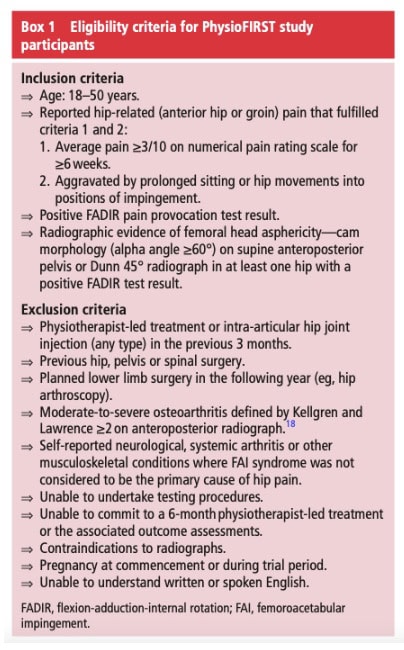
A total of 154 participants with FAI syndrome were recruited from metropolitan and regional Victoria, Australia, through community and healthcare advertisements. Eligibility was based on established clinical and radiographic criteria, with imaging confirming cam morphology (alpha angle ≥60°) and the absence of significant hip osteoarthritis (Kellgren–Lawrence grade <2). Inclusion and exclusion criteria are further described in the following box.
Interventions were delivered by physiotherapists with 5–20 years of clinical experience who received standardized training and treatment manuals. Treatment fidelity was supported through refresher training sessions, and adherence was monitored weekly throughout the trial.
Both groups followed a 6-month physiotherapy program consisting of an initial 3-month supervised phase and a subsequent 3-month self-managed phase. During the first phase, participants attended up to six physiotherapy consultations and 12 supervised exercises for FAI while completing additional home exercises. In the second phase, participants continued their program independently with a gym membership and monthly physiotherapy follow-ups. Participants affected by COVID-19 completed treatment via telehealth with home exercise equipment.
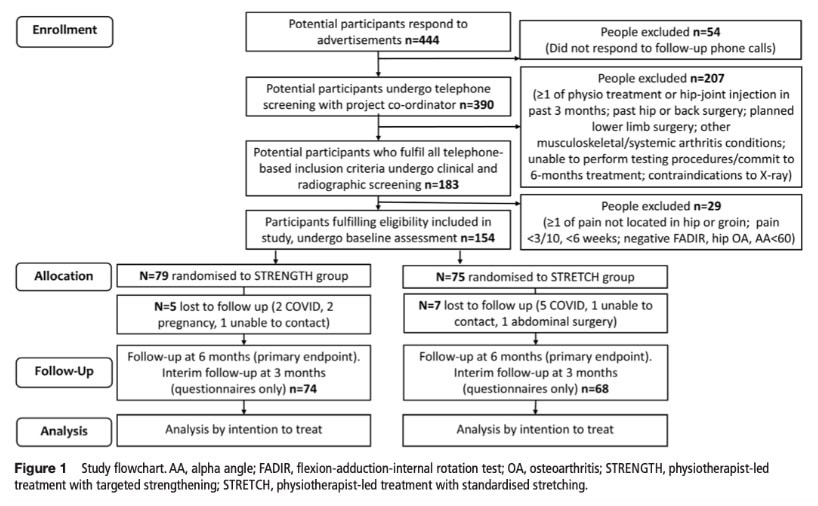
Physiotherapist-led treatment with targeted strengthening
The targeted strengthening program was individualized according to each participant’s physical impairments and functional goals. It combined progressive hip and trunk strengthening, functional and plyometric exercises, return-to-sport or physical activity progression, personalized education, and manual therapy when appropriate. Exercises for FAI followed established resistance training principles to improve strength, endurance, and power, while allowing physiotherapists to adapt the program based on symptom response. Participants also received a structured home exercise program and guidance to achieve the World Health Organization’s physical activity recommendations.
Physiotherapist-led treatment with standardized stretching
The standardized stretching program served as an active comparator and matched the strengthening group for therapist contact, reducing contextual differences between the two groups. Furthermore, the stretching program was considered a credible treatment by the participants, reducing the risk of demoralization. The intervention consisted of a standardized series of hip and lower limb stretching exercises that progressed according to a predefined protocol. Physiotherapists supervised exercises for FAI and adjusted positioning to optimize stretching while minimizing excessive pain. Participants also received general advice to meet the World Health Organization’s physical activity recommendations, although this was not individualized as in the targeted strengthening group.
Patients attended a baseline and a six-month follow-up assessment
Primary outcomes
The primary outcome was hip-related quality of life, assessed using the International Hip Outcome Tool-33 (iHOT-33), a valid and reliable patient-reported outcome measure for active adults with hip-related pain. Scores range from 0 to 100, with higher scores indicating better function and quality of life, and a minimal clinically important difference (MCID) of 9 points
Patient-perceived improvement in pain and function was assessed using the Global Rating of Change (GROC) scales, which use a 7-point Likert scale ranging from “much improved” to “much worse.” For secondary analyses, responses were dichotomized into improved (improved/much improved) and not improved (much worse/worse/no change/a little improved) categories.
Secondary outcomes
Secondary outcomes included hip and groin-related symptoms and function (Copenhagen Hip and Groin Outcome Score), kinesiophobia (Tampa Scale for Kinesiophobia), pain intensity (Numeric Rating Scale), and measures of physical impairments and functional performance.
Statistical analyses
Data were analyzed using an intention-to-treat approach. Linear mixed models were used to compare changes between groups in hip-related quality of life (iHOT-33), pain, and function at 3 and 6 months, while adjusting for age and sex. Additional sensitivity analyses were performed to assess the impact of missing data, treatment adherence, and COVID-19-related disruptions. Secondary outcomes (pain, kinesiophobia, strength, and functional performance) were analyzed using the same approach. Analyses were conducted by a blinded statistician.
Results
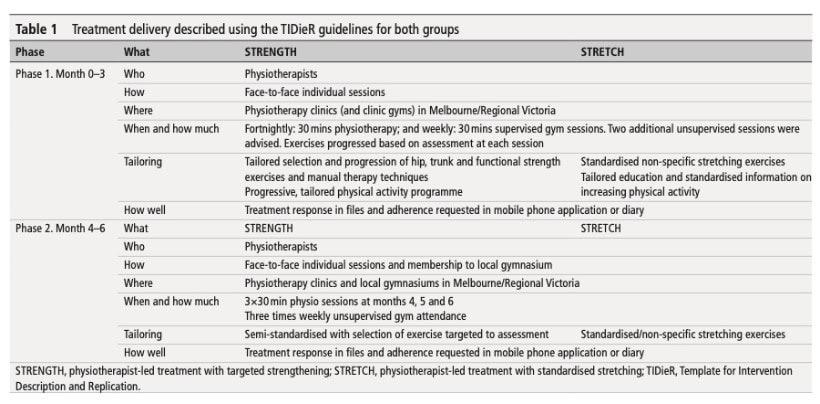
154 participants were randomly allocated to the strengthening or stretching group. As presented in Table 2, patients were similar for baseline demographic characteristics, QOL and baseline average and worst pain. 12 participants were lost to follow-up. Of the 154 participants, 122 attended at least 80% of the scheduled treatment sessions. The attendance did not significantly differ between the two groups.
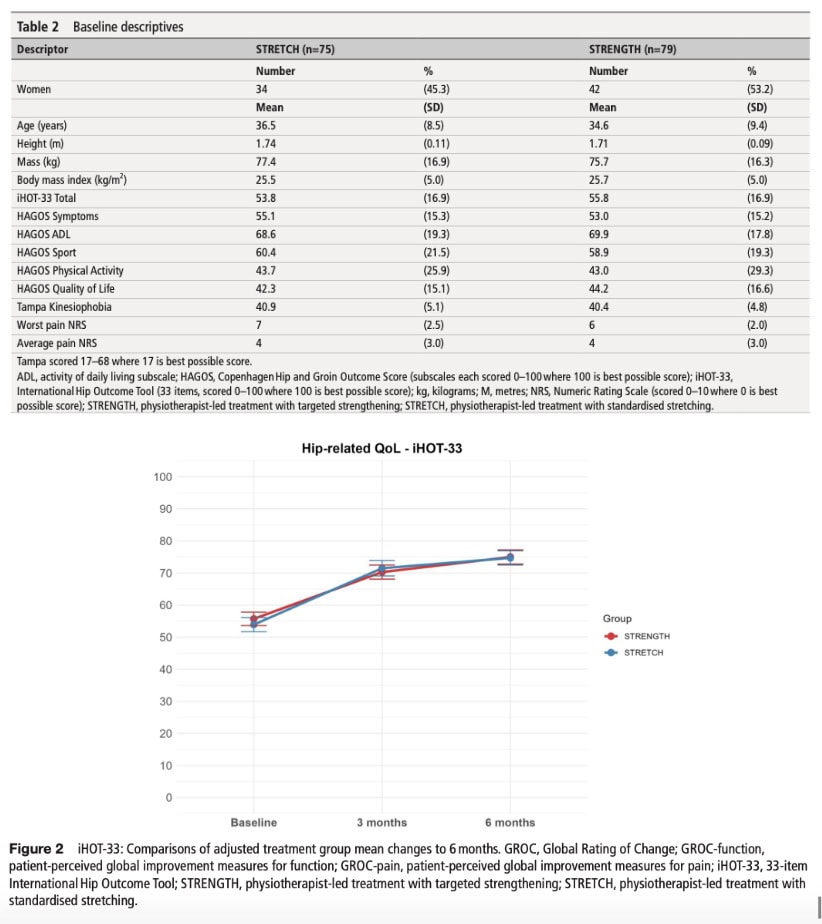
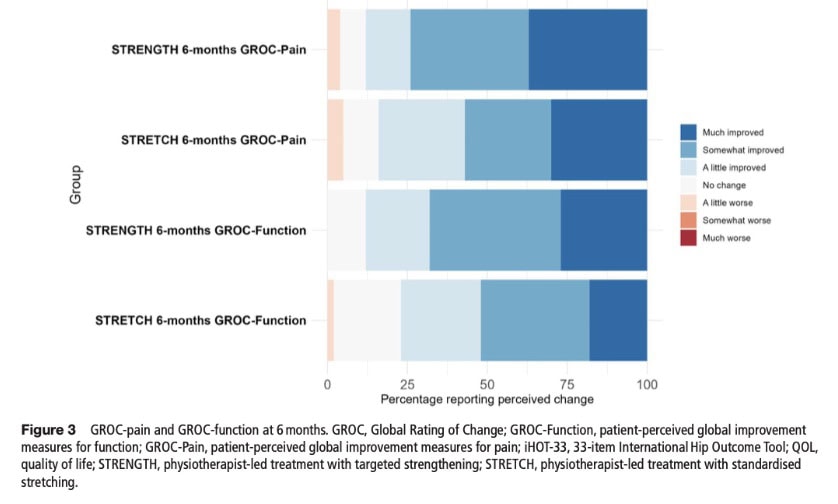
At 6 months, there were no between-group differences in hip-related quality of life (iHOT-33), with both groups demonstrating clinically meaningful improvements. Targeted strengthening resulted in a greater proportion of participants reporting improved pain when GROC was dichotomized, compared with stretching (72% vs 52%); however, overall GROC-pain scores were not significantly different. No differences were found for GROC-functional scores or other patient-reported outcomes.
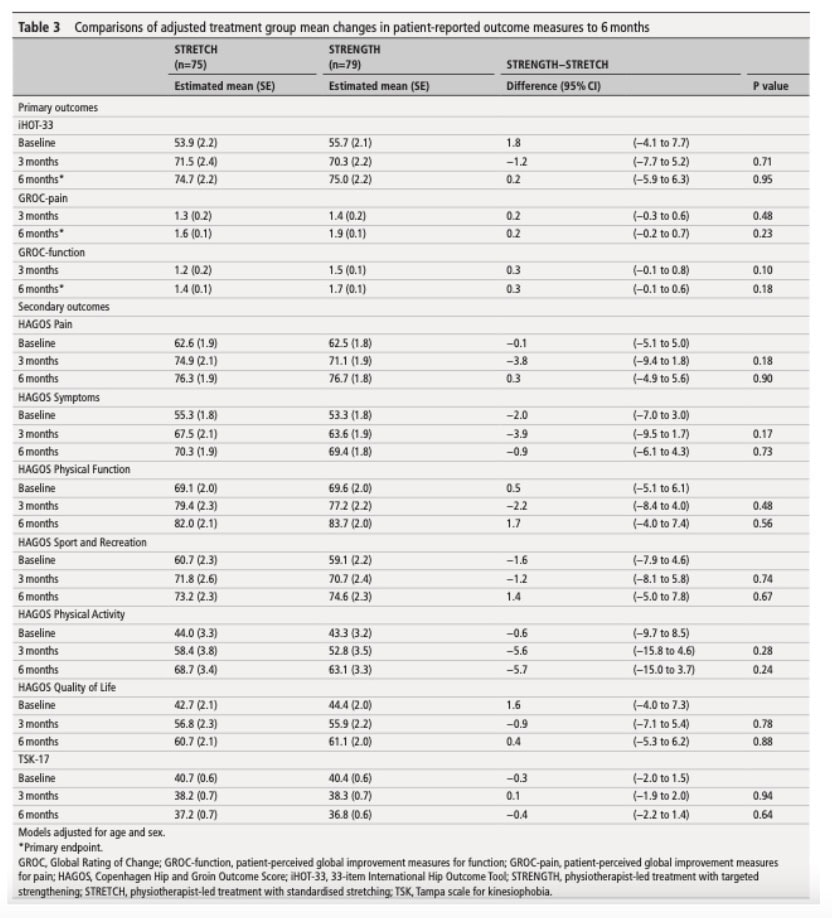
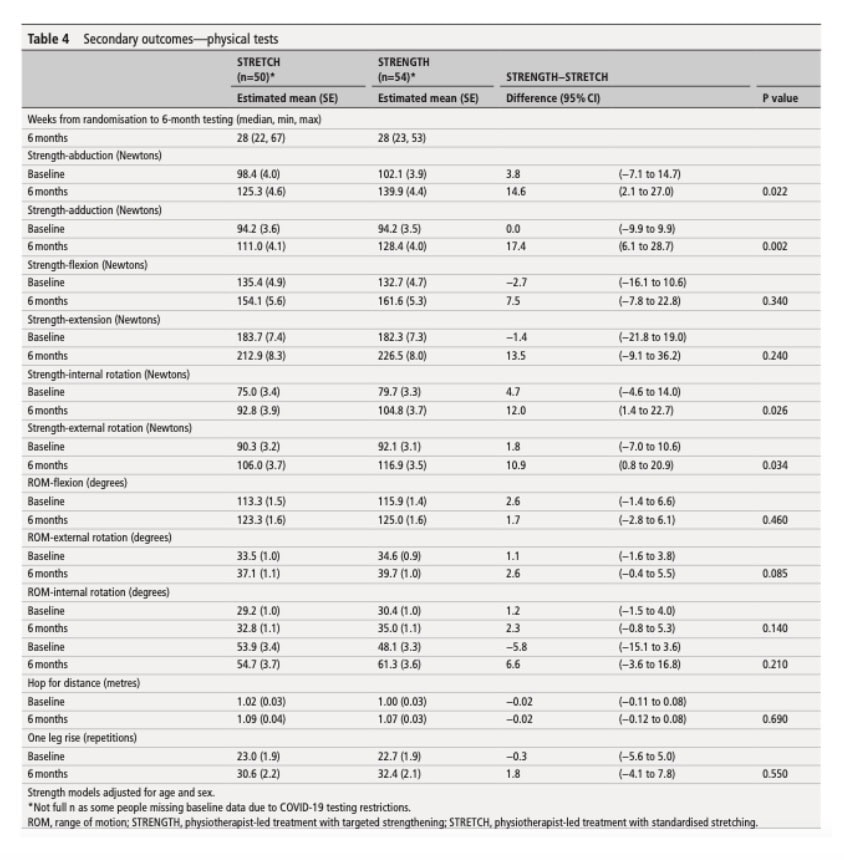
Regarding physical outcomes, the strengthening group achieved greater improvements in hip muscle strength, including abduction, adduction, internal rotation, and external rotation strength. No differences were observed for range of motion or functional performance measures.
Questions and thoughts
The study demonstrated comparable improvements between groups in terms of hip-related quality of life and pain outcomes. The only notable between-group difference emerged when GROC-pain was dichotomized, with a greater proportion of participants in the strengthening group reporting pain improvement compared with the stretching group. However, both interventions resulted in clinically meaningful improvements, particularly on the iHOT-33, although the magnitude of these changes remains difficult to interpret without reported effect sizes.
The similar outcomes observed between groups may partly reflect the influence of shared treatment components, including individualized physiotherapy contact, education, reassurance, and therapeutic interaction. These findings highlight the potential importance of contextual and non-specific mechanisms of care, such as therapeutic alliance, communication, and patient-centered education. Furthermore, manual therapy, which was provided in both groups, may have contributed to symptom modulation through neurophysiological and contextual mechanisms rather than solely through biomechanical effects.
According to the Warwick Agreement, FAIS is characterized by a triad of symptoms, clinical signs, and morphological changes, with symptoms thought to arise from “premature contact between the proximal femur and the acetabulum.” Although traditionally considered a mechanically driven condition, pain likely results from a complex interaction between joint loading, tissue sensitivity, and individual factors. Identifying patient-specific aggravating movement patterns and load-related behaviors may therefore represent an important clinical focus. A gradual reduction of provocative activities followed by progressive re-exposure and capacity building may provide a more appropriate approach than attempting to correct morphology itself. Further identification of underlying pain mechanisms may improve clinical reasoning, facilitate pain phenotyping, and allow more individualized treatment strategies.
Regarding the intervention protocol, several methodological considerations should be acknowledged. Despite being described as a targeted strengthening program, the intervention appeared relatively standardized, with all participants following similar exercise categories and progression phases. Physiotherapists primarily adjusted exercise parameters according to symptom response rather than tailoring the intervention to specific individual impairments. A more comprehensive musculoskeletal assessment identifying patient-specific deficits could potentially have allowed greater treatment personalization.
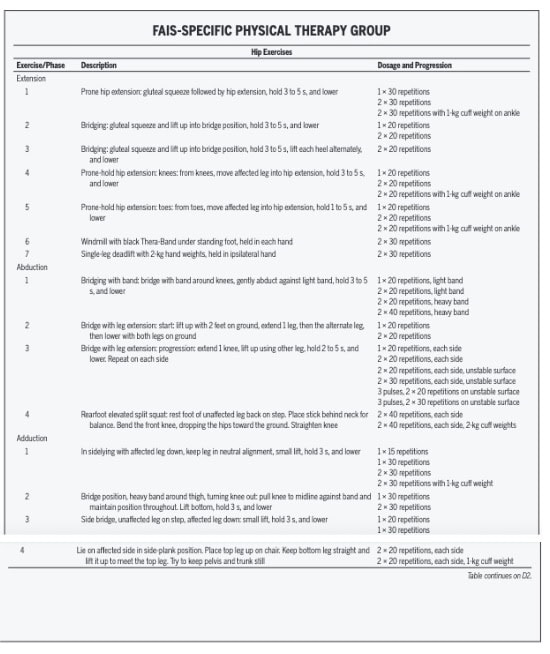
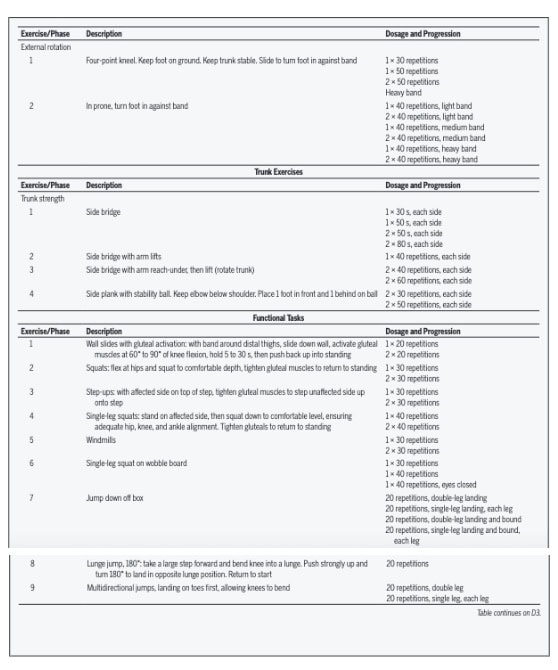
Additionally, the prescribed exercises for FAI parameters raised some questions regarding the targeted physiological adaptation. The exercises reported in the supplementary material were commonly performed for 1×20 or 1×30 repetitions, which, according to current resistance training principles, are more consistent with muscular endurance adaptations rather than maximal strength or hypertrophy development. Therefore, the extent to which this intervention truly represented a targeted strengthening program remains debatable.
Talk nerdy to me
As discussed in the Question and Thoughts section, FAI syndrome likely presents heterogeneously across patients. Under this hypothesis, a strengthening intervention would not be expected to help everyone equally. Some patients might respond well because the exercises target their specific contributing impairment, while others might not, simply because strengthening isn’t addressing what’s actually driving their symptoms. If this is true, we would expect to see heterogeneity in treatment response within the strength group, rather than a uniform effect across all patients.
To test heterogeneity, the best-suited statistical analysis tools are formal tests of variance, responder analysis, subgroup analysis, or individual patient data plots. The latter tests were not reported in this study. However, the available figures allow some exploratory reflection.
Looking at Figure 3, the 6-month GROC-pain distribution in the STRENGTH group shows a numerically larger proportion of “much improved” patients, but also a small proportion reporting worsened symptoms. This pattern could reflect a wider or even bimodal spread of responses, consistent with the heterogeneity hypothesis above. By contrast, the stretch group’s responses appear more concentrated around the intermediate categories. That said, this is a visual impression only: no formal statistical test of these proportions was reported, so it shouldn’t be treated as a confirmed finding.
If this heterogeneity is real, it offers a plausible explanation for the null result in Table 3: a more spread-out (heterogeneous) distribution of individual responses would inflate the variance around the strength group’s mean, widening its confidence interval and making it harder to detect a significant difference from stretch.
However, one inconsistency is worth noting: the standard errors reported in Table 3 are identical between groups at 6 months (0.1 for both), which doesn’t obviously support greater variability in strength and somewhat weakens this explanation. Confirming or ruling out the heterogeneity hypothesis would require the underlying standard deviations, a formal variance-comparison test (e.g., Levene’s test), an ordinal analysis better suited to Likert-type data (e.g., Mann-Whitney U), and/or a pre-specified responder analysis with a validated improvement threshold. In the absence of these, the idea that a subgroup of poor responders masked a genuine average benefit of strengthening remains a plausible but unconfirmed hypothesis, and one worth testing in future analyses of this dataset.
Take-home messages
- Exercise therapy appears beneficial for individuals with FAI syndrome, regardless of whether the program emphasizes strengthening or stretching. Both interventions produced clinically meaningful improvements in hip-related quality of life over 6 months.
- Targeted strengthening may provide additional benefits for pain reduction and hip muscle capacity, with a greater proportion of participants reporting pain improvement compared with stretching. However, this advantage did not translate into superior improvements in overall quality of life or function.
- The therapeutic process itself may be an important driver of outcomes. Similar improvements between groups highlight the potential contribution of contextual factors such as education, reassurance, therapeutic alliance, and patient-centred communication.
- Exercises for FAI prescription should go beyond correcting impairments. Rather than assuming that strength deficits are the primary pain driver, clinicians should identify individual aggravating factors, functional goals, and load tolerance to guide rehabilitation.
- Future research should focus on identifying which patients respond best to specific interventions. FAI syndrome likely represents a heterogeneous condition, and subgroup-based approaches or individualized treatment strategies may improve clinical decision-making.
Reference
LEVEL UP YOUR DIFFERENTIAL DIAGNOSIS IN RUNNING RELATED HIP PAIN - FOR FREE!
Don’t run the risk of missing out on potential red flags or ending up treating runners based on a wrong diagnosis! This webinar will prevent you to commit the same mistakes many therapists fall victim to!

