
Femoroacetabular Impingement (FAI) | Diagnosis & Treatment
Femoroacetabular Impingement (FAI) | Diagnosis & Treatment
Introduction
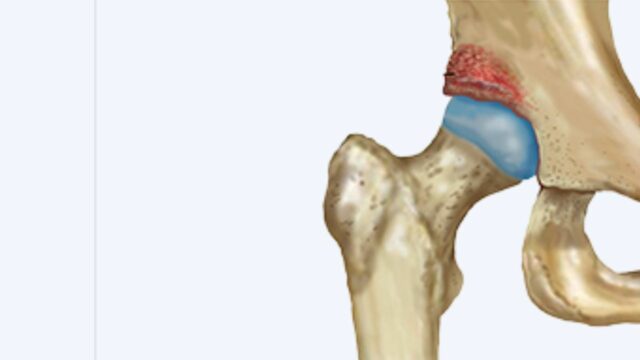
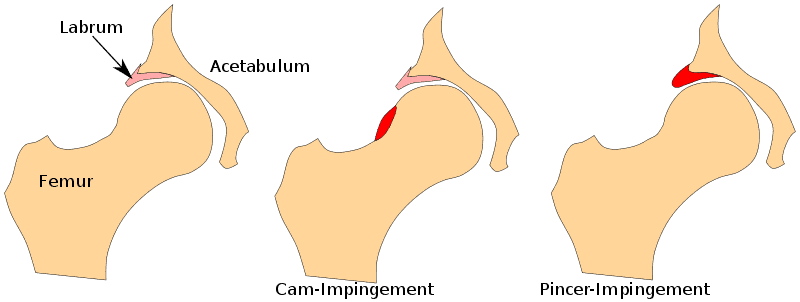
Femoroacetabular Impingement (FAI), also known as hip impingement, refers to morphological changes of the acetabulum and/or femoral neck that lead to impinging of the hip labrum during movement. We can distinguish between two main types: When the femoral head is too large, we are talking about a CAM morphology (which is more common in men) and an overextending acetabular rim is called a Pincer morphology and it’s more common in women. In a mixed type, both a CAM and a Pincer morphology are present.
Pathomechanism
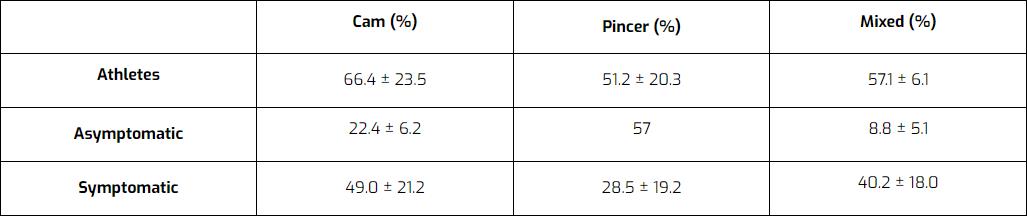
It is suggested that this morphology develops as specific adaptions imposed to demands during adolescence. It might be that the growth plate shifts which renders the head less round, but larger. Once the growth plates close, the morphology does not change anymore. FAI morphology is common in asymptomatic people and even 50-70% of athletes. So lots of people have abnormalities, but only a small fraction develops pain.
A review by Mascarenhas et al. (2016) lists the percentages of patients with either Cam, Pincer, or mixed morphology FAI in athletic, asymptomatic, and symptomatic populations. The findings:
Clinical Picture & Examination
Patients who suffer from FAI are typically patients between 20 – 40 years of age and present with deep-seated pinching groin pain, which might present with clicking and mechanical symptoms if labral pathology is present as well. A study from St. Louis however shows that some of these people also have lateral hip, buttock, SI, and low back pain, which makes a diagnosis challenging. According to the Warwick agreement (Griffin et al. 2006) there need to be 3 components: patients need to have symptoms, clinical signs, and imaging findings to diagnose FAI.
Byrd (2005) reports a common characteristic sign of patients presenting with hip disorders, called the C-Sign:
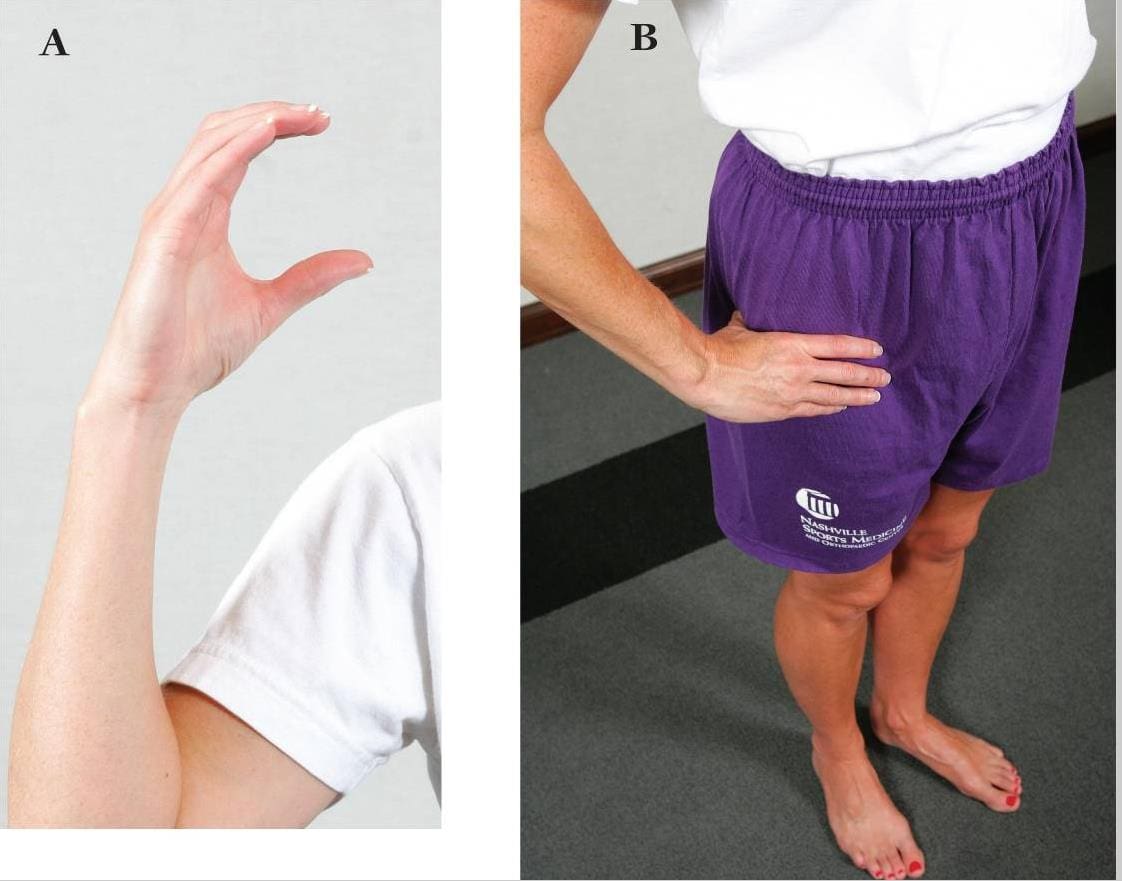
There are no specific orthopedic tests to confirm FAI. The only useful test is the FADIR test due to its high sensitivity (99%). Be aware that this test has a low specificity (7%). (Reiman et al. 2012)
The McCarthy Test might present with consistent clicking when the leg is lowered in case a labral tear is present.
LEVEL UP YOUR DIFFERENTIAL DIAGNOSIS IN RUNNING RELATED HIP PAIN – FOR FREE!