


Research
EBP & Statistics
September 19, 2026
Assessment of Mortality Risk After Hip Fracture Surgery - Who to Look Out For

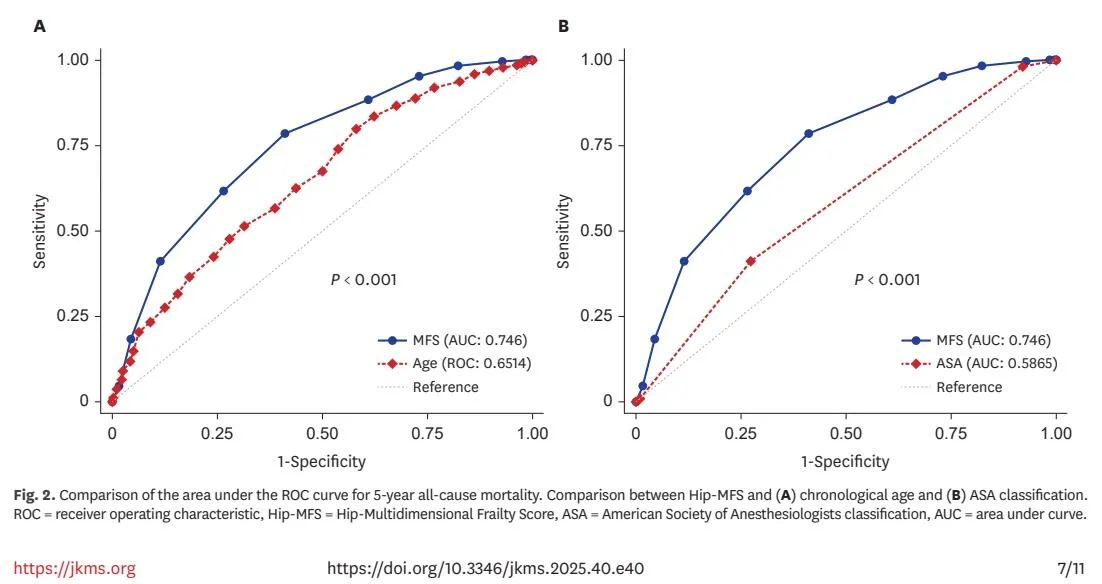
Frailty predicted five-year mortality better than chronological age or ASA classification. The Hip-MFS achieved an AUC of 0.746 compared with 0.651 for age and 0.586 for ASA
Baseline physiological reserve may matter more for long-term prognosis than an uncomplicated postoperative admission. Frail patients without complications survived less well than robust patients who experienced complications
Do not use frailty as a reason to reduce rehabilitation. The study is prognostic, not interventional. It identifies vulnerable patients but does not show that less or more physiotherapy changes mortality. For clinicians, frailty should primarily signal the need for broader multidisciplinary assessment and individualized rehabilitation
Introduction
Recently, we published a research review about pre-discharge exercise adherence and functional outcomes after femoral neck fracture surgery. As this study demonstrated that higher pre-discharge adherence was associated with better function at 3 months, the early postoperative period seems a crucial factor for regaining independence and participation. Yet, femoral fractures do not occur easily in cases of good bone health status. In older adults, an important contributor to the risk of a hip fracture is the presence of frailty. Frail elderly are at greater risk of fracturing their hip and, at the same time, their status can negatively impact their postoperative recovery. As hip fractures give rise to an elevated risk of early mortality, it is essential to identify who might be at risk for early death. Frailty status is thought to be an important contributor, together with the occurrence of postoperative complications, but the importance of those two occurring together has not yet been examined. This information can help to effectively design rehabilitation procedures and support to optimize postoperative outcomes, but also to mitigate the increased mortality risk
Methods
This was a retrospective cohort study conducted at a tertiary teaching hospital in Korea. Patients aged 65 years or older who underwent surgery for a hip fracture between January 2009 and December 2014 were included if they underwent a pre-surgical comprehensive geriatric assessment (CGA) within 90 days. From the comprehensive geriatric assessment, the Hip-Multidimensional Frailty Score (Hip-MFS) was calculated.
Comorbidity was evaluated using the Charlson Comorbidity Index. Physical function was assessed using the reported instrumental activities of daily living (IADL). Walking ability was measured using the modified Barthel Index, Lawton & Brody Index, and Koval grade. Psychosocial functioning was assessed using the Mini-Mental State Examination (MMSE) and the Geriatric Depression Scale. Nutritional status was assessed with the Mini Nutritional Assessment (MNA). The risk of postoperative delirium was assessed using the Nursing Delirium Screening Scale. The risk of falls was assessed on the basis of the Predisposition for Falling Assessment Guide.
All this information was integrated into the Hip-MFS to calculate an overall frailty score.
| Component | 0 points | 1 point | 2 points |
|---|---|---|---|
| Sex | Female | Male | — |
| Charlson Comorbidity Index | 0 | 1–2 | >2 |
| Albumin | >3.9 g/dL | 3.5–3.9 | <3.5 |
| Koval walking grade | Grade 1 | Grades 2–6 | Grade 7 |
| Cognition, MMSE-KC | Normal | Mild cognitive impairment | Dementia |
| Fall risk | At risk | Not at risk | — |
| Mini Nutritional Assessment | Normal | At risk of malnutrition | Malnourished |
| Mid-arm circumference | >27 cm | 24.6–27 cm | <24.6 cm |
The points are summed to create the Hip-MFS. A cutoff value for frailty was defined in an earlier study and was set at Hip-MFS > 8.
Outcomes
The primary outcome was the 5-year all-cause mortality after hip fracture surgery, defined as the time from the surgery date to death. Only the first operation was included when patients underwent more than one hip-fracture operation during the study period. Postoperative complications were retrospectively evaluated and included pneumonia, urinary tract infection, delirium, pulmonary thromboembolism, and unplanned intensive care unit admission after surgery.
Results
536 patients were included in the analysis. The mean age of the sample was 80.5 +/- 7 years; the majority were female (71.3%). The sample was almost equally divided into people who fractured the femoral neck (48.3%), or who had intertrochanteric fractures (51.7%). The majority of people underwent bipolar hemiarthroplasty (67.5%), followed by intramedullary nailing (22.6%), multiple pinning (4.9%), sliding hip screw (3.9%), and total hip arthroplasty (1.1%), respectively. Most patients had partial anesthesia (87.7%), compared to general anesthesia in only 12.3%.
Postoperative complications occurred in 41.6% of patients, with delirium being the most prevalent (36.2%). Other complications were pneumonia and urinary tract infections in 4.5% each, unplanned intensive care unit admission in 5%, deep vein thrombosis in 1.7%, pulmonary thromboembolism in 1.5%, and stroke in 0.7%. Some people had multiple postoperative complications combined (two complications in 13 people, three complications in 12 people, four complications in 2 patients, and one person having 5 postoperative complications.
The median observation time was around 2000 days. The primary outcome analysis revealed an overall mortality rate of 60.4% during the study period. At one year postoperatively, the mortality rate was 13.8%, and the 5-year mortality rate was 43.8%. The selected components of the comprehensive geriatric assessment were associated with the 5-year all-cause mortality, as is depicted in Table 1.
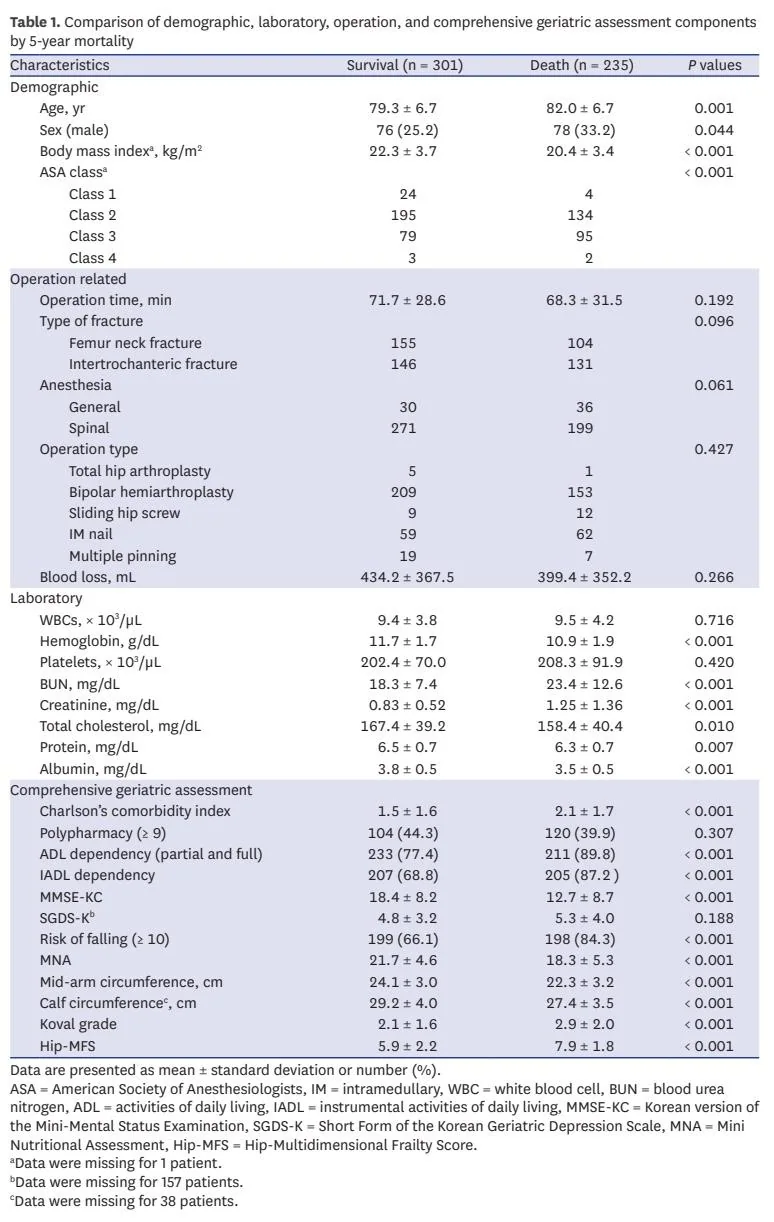
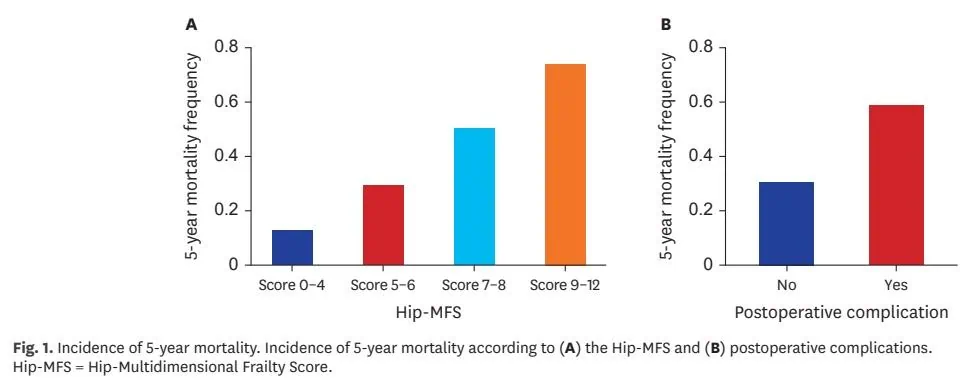
As this study was conducted to examine the risk between frailty and mortality, the mortality rates were compared across individuals with higher frailty and lower frailty scores. Likewise, for postoperative complications and mortality.
When the 5-year mortality rate was investigated in the patients who had experienced postoperative complications, versus those who hadn’t, the former had a mortality rate of 58.3% compared to 33.5% in the latter. This difference produced a hazard ratio of 2.16. The mortality rate in the low-risk Hip-MFS group was 25.4%, versus 73.5% in the group with the high-risk Hip-MFS scores. This led to a Hazard ratio of 3.154. Interestingly, the study found a dose-response relationship between the Hip-MFS and mortality at 5 years. For every 1-point increase in the Hip-MFS, a Hazard ratio of 1.388 was observed.
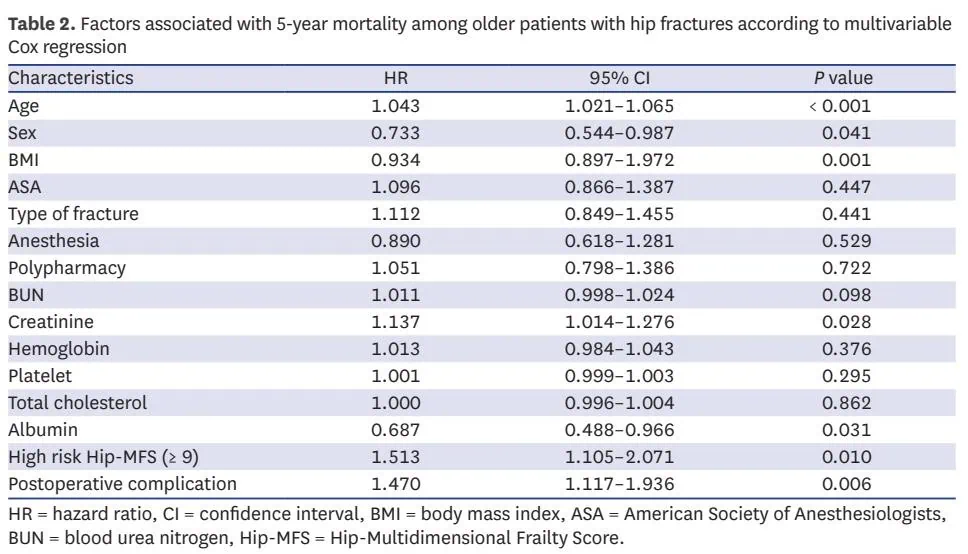
A univariate Cox regression analysis was conducted to gather the factors necessary for the multivariate adjusted model. Adjustments were made for clinical and demographic factors and led to hazard ratios of 1.513 for the high-risk Hip-MFS and 1.47 for the postoperative complication groups.
The authors made a comparison between the predictive ability of the Hip-MFS and the ASA classification in predicting 5-year all-cause mortality. The ASA classification is based on a conventional anesthesiology assessment. The Hip-MFS was a more accurate predictor of the mortality rate, as indicated by the area under the curve (AUC) of 0.746. Also, compared with chronological age, the Hip-MFS was significantly superior in predicting mortality using the AUC analysis.
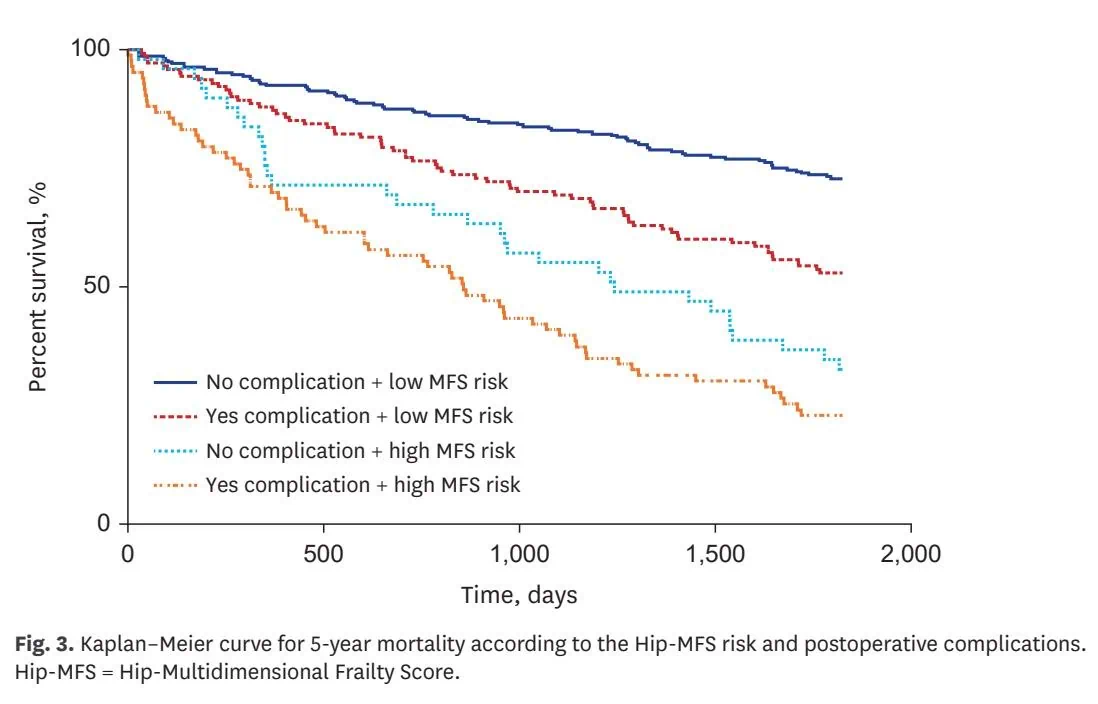
Interactions between the frailty status and postoperative complications were assessed by creating 4 groups.
Postoperative complications and a high-risk Hip-MFS
Postoperative complications and a low-risk Hip-MFS
No postoperative complications and a high-risk Hip-MFS
No postoperative complications and a low-risk Hip-MFS
These groups were compared using their Kaplan-Meier curves, and this indicated that those with postoperative complications and a high-risk Hip-MFS had the worst prognosis. At the other end of the spectrum, the group without postoperative complications and low-risk Hip-MFS had the best prognosis. Those with postoperative complications but who had a low-risk Hip-MFS had a better 5-year survival compared to those with postoperative complications and a high-risk Hip-MFS score, indicating frailty.
Questions and thoughts
Is frailty something we should simply use for prognosis, or something we should try to modify?
The study establishes that the Hip-MFS identifies people with poorer long-term prognosis. It does not establish that reducing a patient's Hip-MFS, or interventions targeting its components, will reduce mortality. Yet many of its components are at least potentially modifiable or manageable: mobility, nutritional status, muscle mass, falls risk and aspects of physical independence. That makes the score potentially more useful than age alone. Rather than saying, "This patient is 85, therefore their prognosis is poor," it encourages us to ask why this particular patient has limited physiological reserve and which components might still be addressed.
Should a high frailty score change rehabilitation intensity?
Not necessarily. These findings should not be interpreted as justification for providing frail patients with less rehabilitation because their prognosis is poorer. If anything, the findings identify a population that may require greater multidisciplinary support. The study did not compare rehabilitation strategies and provides no evidence that frail patients should receive lower exercise loads, slower mobilisation or less ambitious functional goals.
Could rehabilitation affect long-term mortality?
Possibly, but this study cannot answer that question. Pre-fracture walking ability forms part of the Hip-MFS and functional dependency was associated with mortality in the univariate analyses. However, the study did not investigate whether improving mobility after surgery changes five-year survival. That distinction is essential: a variable that predicts an outcome is not automatically a treatment target that changes that outcome.
Is there a difference between males and females?
Postoperative complications and frailty status were both associated with higher 5-year all-cause mortality, even after adjustment for relevant clinical and demographic variables. What stood out for me was the higher risk in male versus female patients. I had expected the opposite since what we most often see is frailty in elderly women. In the cohort, men made up 25.2% of the survivors versus 33.2% of those who died within five years, and sex remained statistically significant in the multivariable model. The authors also identify male sex as being associated with greater long-term mortality. Interestingly, male sex contributes 1 point to the Hip-MFS, whereas female sex contributes 0 points.
It is important to know that prevalence and prognosis are two distinct topics. Women may represent the majority of frail older adults and the majority of hip-fracture patients, yet among patients who actually sustain a hip fracture, men may have a worse survival prognosis. What was particularly interesting in this study is that the male disadvantage persisted even though the model adjusted for age and several markers of general health. That suggests that sex may be capturing something beyond simply “men were older or sicker,” although this study cannot tell us exactly what that is.
One of the follow-up questions I had was whether the higher mortality in men could partly result from frailty being more readily recognized in women, potentially leading to earlier or more targeted care. Since frailty is so often associated with older women, I wondered whether vulnerable men may sometimes be less readily identified as high risk. However, this study did not examine sex differences in the amount or type of perioperative or rehabilitative care, so this remains a hypothesis rather than an explanation for the higher mortality observed in men.
A PubMed search led me to this article by Arosio et al. (2025), who studied the so-called sex-frailty paradox. The paradox is unlikely to be explained by a single mechanism. Proposed explanations include sex-related differences in biological aging, immune and inflammatory responses, hormonal exposure, chronic disease patterns, body composition, and potentially behavioral and social factors. Their work particularly discusses “inflammaging”, the chronic low-grade inflammatory changes associated with aging, as one possible biological contributor, with aging trajectories differing between men and women. The key idea is that men may be more vulnerable to the consequences of accumulated deficits, even if women accumulate more deficits overall.
The fact that frailty is associated with substantially greater mortality after hip fracture also raises the question of whether we are intervening early enough. Patients obviously do not know that a hip fracture is coming, but fracture-risk assessment tools such as FRAX can help identify people at elevated risk before the fracture occurs. This is different from frailty screening, although the two often overlap in older adults. From a physiotherapy perspective, identifying modifiable contributors such as falls risk, reduced physical capacity, and loss of independence before a fracture occurs seems far preferable to first encountering these problems after a potentially life-changing injury. Whether such prevention strategies ultimately reduce the long-term mortality observed in this study, however, cannot be concluded from this study.
Talk nerdy to me
The authors used Cox proportional hazards regression, which examines the rate at which an event, in this case, death, occurs over time. A hazard ratio above 1 indicates that death tends to occur at a higher rate in one group. For example, the high Hip-MFS (HR 1.513) means that, depending on the model assumptions and after adjustment for the included covariates, the frail group experienced an approximately 51% higher hazard of dying at any given point during follow-up than the low-risk group. This does not mean that 51% more frail patients died.
The authors also compared the Hip-MFS with chronological age and ASA classification to see which measure was better at distinguishing patients who would survive from those who would die within 5 years. The Hip-MFS performed best, with an AUC of 0.746, compared with about 0.65 for age and 0.59 for ASA classification. This means the frailty score provided better prognostic discrimination, although an AUC of 0.746 is still only moderately accurate rather than highly precise.
An inherent limitation of the retrospective design is the risk of information bias. Because postoperative complications were identified through retrospective chart review, some events may have been missed or insufficiently documented. In addition, the authors focused on a predefined set of complications. Other clinically relevant complications may therefore not have been captured in the analysis. For example, postoperative wound complications or surgical-site infections were not reported. This does not mean that they did not occur, only that they were not included among the complications analyzed in this study.
Second, this was a single-centre Korean cohort, and the patients underwent surgery between 2009 and 2014. Surgical care, orthogeriatric management, delirium prevention, mobilisation protocols, osteoporosis treatment and rehabilitation may differ from contemporary practice and between healthcare systems.
Third, only 589 of the 1,363 surgical patients received a comprehensive geriatric assessment, and another 53 were excluded because Hip-MFS data were unavailable. The final analysis therefore involved only 536 of the original 1,363 patients. Although the authors refer to previous work suggesting no important baseline differences between participants and non-participants, selection bias remains possible.
Take-home messages
Hip-fracture prognosis appears to depend on much more than chronological age. In this cohort, patients classified as frail using a multidimensional assessment had substantially poorer five-year survival, and the Hip-MFS predicted mortality better than either age or ASA classification.
When frailty and postoperative complications occurred together, they had an additive effect on long-term mortality. Frailty, however, appeared to be the stronger prognostic factor. Even more strikingly, frail patients who avoided postoperative complications still had poorer survival than less-frail patients who experienced a complication. This suggests that the patient's underlying physiological reserve may matter considerably for long-term recovery and survival. Clinically, this may help identify patients who require closer multidisciplinary follow-up and potentially more intensive support, although this study did not investigate whether intensifying care improves survival.
Findings from the broader sex-frailty literature also suggest that frailty may not carry exactly the same prognostic meaning in men and women. A man and a woman with a similar apparent degree of frailty may therefore not necessarily have the same long-term mortality risk.
The message should therefore not be "frail patients have a bad prognosis." A more useful interpretation is that mobility fits inside a broader ecosystem of cognition, nutrition, comorbidity, muscle mass and independence. Hip-fracture rehabilitation should consequently be viewed as part of multidisciplinary frailty management rather than purely restoration of hip strength and walking ability.
Reference

