


Research
Exercise
September 3, 2026
Exercises for Headache Treatment - Do Strengthening and Stabilization Exercises Decrease Disability, Migraine Intensity and Frequency?

This systematic review and meta-analysis investigated the effects of strengthening and stabilization exercises on headache intensity, frequency, and disability
Evidence of strengthening and stabilization exercises on headache intensity and frequency remains inconclusive but they may reduce headache-related disability
Several methodological limitations limit the certainty and interpretation of these findings
Introduction
Migraine is a chronic neurological condition with a complex and incompletely understood pathophysiology. Increasing evidence suggests that migraine involves multiple central nervous system mechanisms, including alterations in cortical, thalamic, hypothalamic, and brainstem function. Cervical musculoskeletal impairments, such as neck pain, reduced cervical muscle strength, and altered muscle activation patterns, are also frequently associated with migraine.
The frequent coexistence of neck pain and migraine may reflect the involvement of the trigeminocervical complex, which integrates nociceptive inputs from the cervical spine and trigeminal system. Cervical pain may therefore contribute to, or represent an expression of, migraine symptoms, providing a potential rationale for targeting the cervical region as part of migraine management. Accordingly, physiotherapy interventions, including exercise therapy aimed at improving cervical muscle strength, motor control, and stability, are commonly used in clinical practice.
This systematic review provides an overview of the current evidence regarding the effectiveness of strength and stability exercises for headache management.
Methods
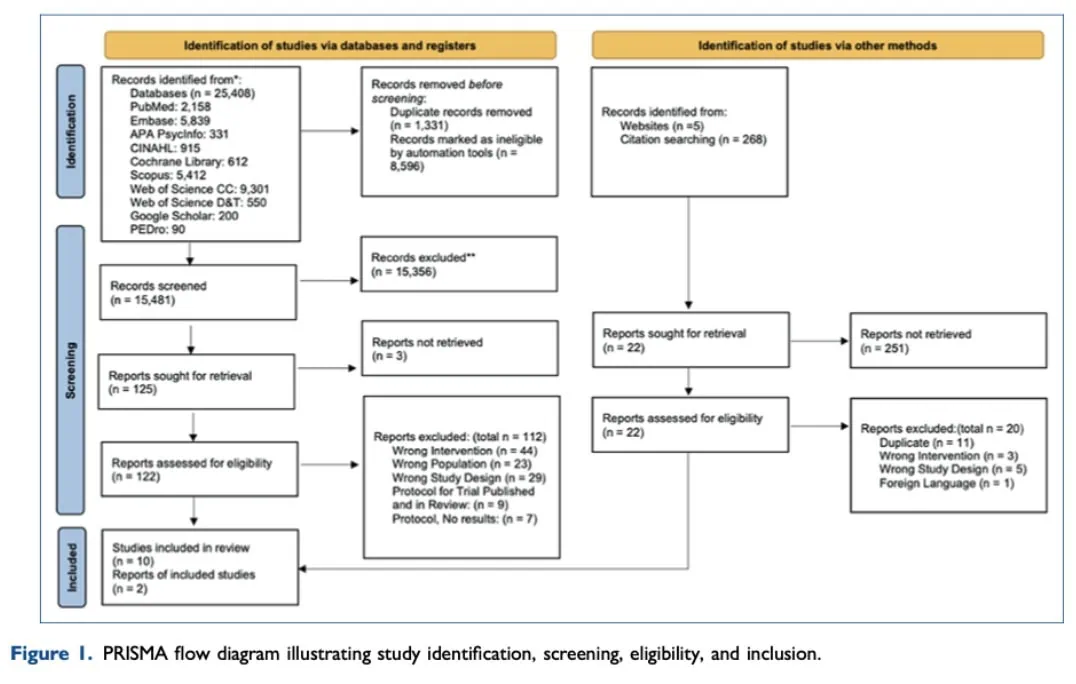
Data were systematically searched across medical databases in accordance with the PRISMA guidelines and the PRISMA search extension for literature research.
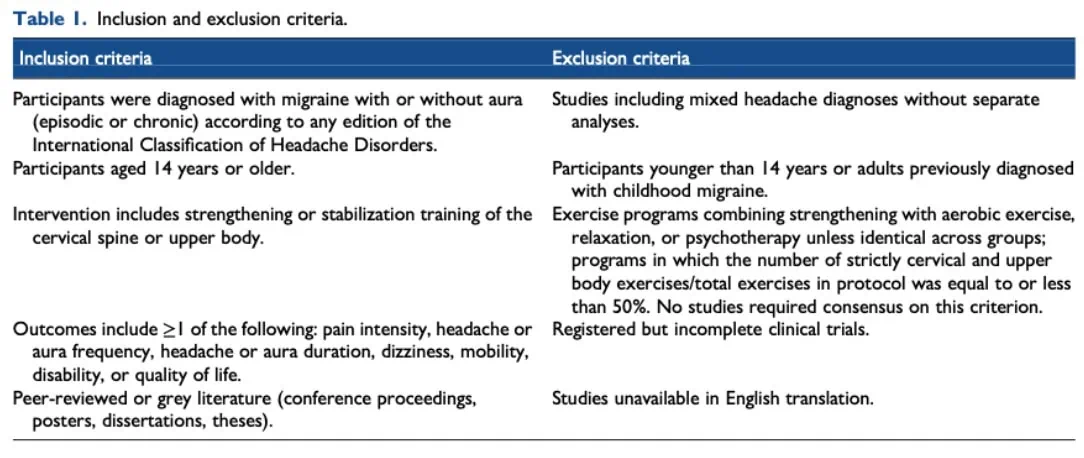
The inclusion and exclusion criteria are presented in Table 1. Regarding the exercise programs, studies were excluded when the specific effects of strengthening exercises for headache could not be isolated or extracted from the reported results.
Data extraction
12 eligible studies were included, participants characteristics, interventions details, comparator conditions and reported outcomes were independently extracted by two reviewers.
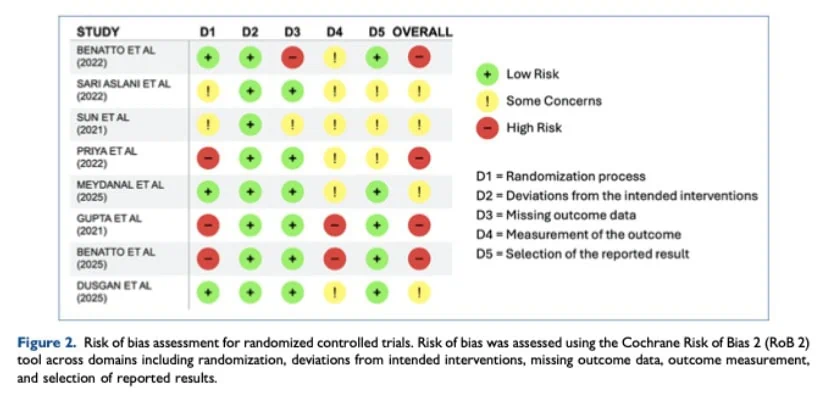
Methodological quality was assessed using the Downs and Black Checklist for clinical trial quality. For case reports, the CARE checklist was used to evaluate methodological quality. Finally, the Risk of Bias (RoB) tool was employed to assess the risk of bias in experimental studies.
Data analysis and meta-analysis
Outcomes were analyzed according to three different outcomes:
- Headache intensity
- Headache frequency
- Participants reported migraine-related symptoms
The authors extracted the mean and standard deviation before and after the intervention whenever available. Studies that did not provide sufficient data for analysis were excluded.
For experimental studies, random-effect meta-analysis was conducted, considering that the true effect of exercises for headache might vary between studies because of inherent differences. Hedges’g was used to compare effects across studies using different measurement scales with effect sizes interpreted as:
- 0.20: small effect
- 0.50: moderate effect
- 0.80: large effect
For observational studies, mean differences (MD) were used when studies employed the same measurement scales, allowing for direct comparison of outcomes.
Finally, the results were displayed in forest plots visualizing the estimated effect of each study, the pooled effect, and the 95% confidence interval.
Results
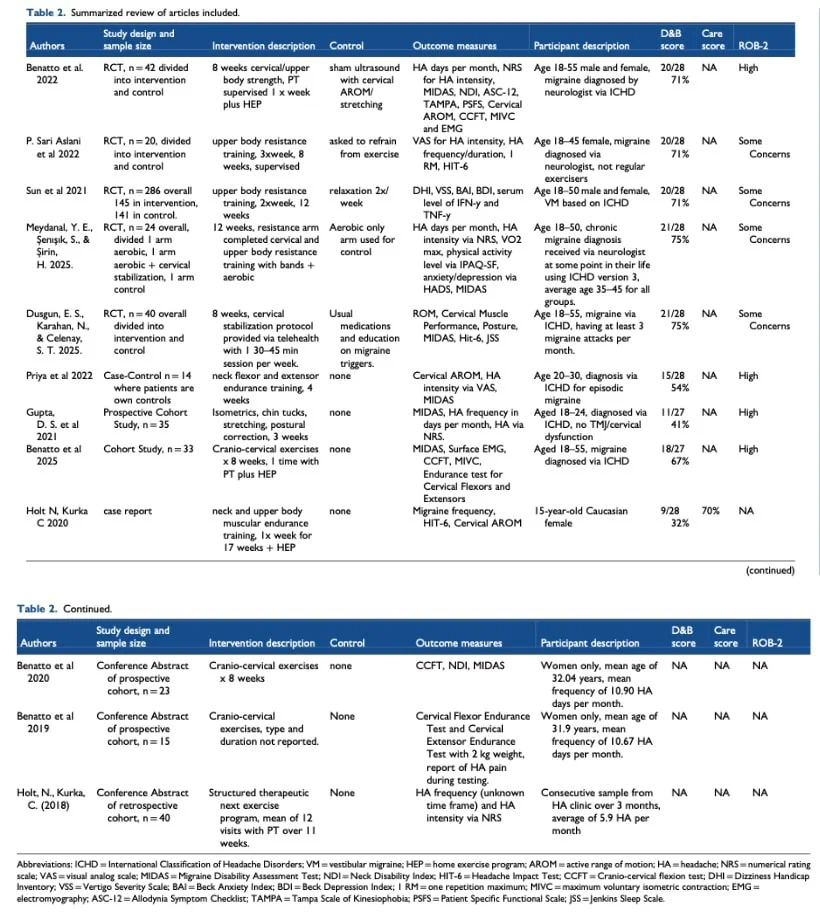
12 articles were included in the review after the identification and screening process. Among the studies, 5 were RCTs, 3 observational trials, 1 case study and 3 conference abstract. More details on the study are provided in Table 2.
Risk of bias assessment results
The methodological quality of the included studies was variable, and substantial differences existed in their control conditions and exercise protocols. Limited reporting of adverse events and participant dropouts further reduced confidence in the evidence. Additionally, the heterogeneity of exercises for headache interventions, from cervical-specific programs to broader upper-body or full-body resistance training, makes it difficult to determine which specific exercise approach is most effective for migraine management.
The main concerns regarding the randomized controlled trials were the randomization and allocation concealment processes, as well as the handling of missing outcome data. Two studies were considered at high risk of bias due to the absence of a control group. Additionally, because the interventions involved exercise therapy, participant blinding was not possible. Because participants cannot be blinded to exercise interventions, studies using patient-reported outcomes inevitably had some concerns regarding outcome measurement. However, this limitation does not necessarily invalidate the findings, since patient-reported outcomes are essential for assessing subjective migraine symptoms such as pain and aura.
Summary of effect size calculation
Headache frequency:
Headache frequency was assessed as the number of headaches or migraine attacks per month. The pooled results demonstrated a moderate effect in reducing headache frequency. However, substantial heterogeneity was observed among the RCTs, indicating considerable variability in the reported effects across studies. Observational studies also demonstrated positive effects on headache frequency, although one study had a very wide confidence interval, suggesting considerable uncertainty around the estimated effect.
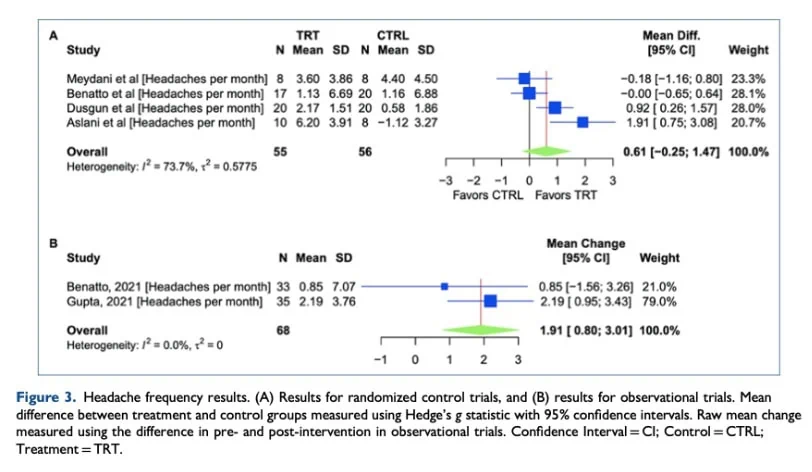
Headache intensity:
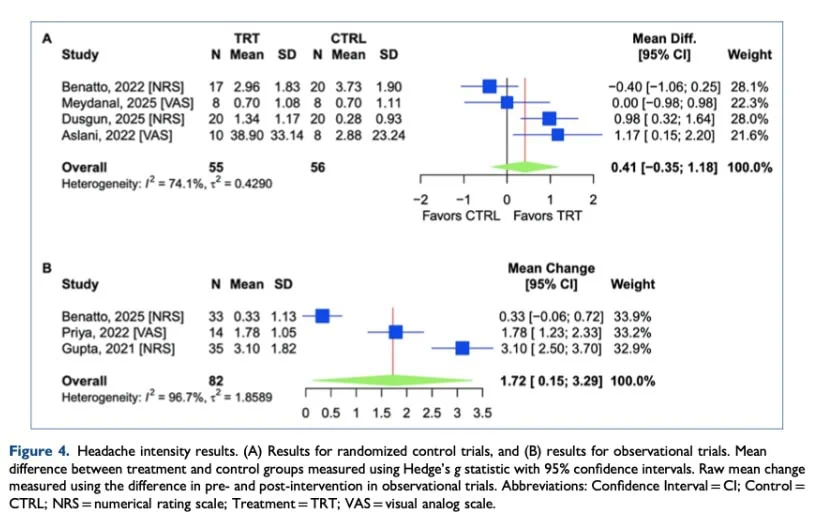
Headache intensity was assessed using either the Visual Analogue Scale (VAS) or Numeric Rating Scale (NRS). The three observational studies demonstrated positive effects on headache intensity. In contrast, the results from the RCTs were inconsistent, with confidence intervals crossing the line of no effect, indicating no statistically significant effect of strengthening and stabilization exercises on headache intensity. However, these findings should be interpreted with caution, given the substantial heterogeneity between studies and the small sample sizes, which may have limited the ability to detect clinically meaningful effects.
Disability measure:
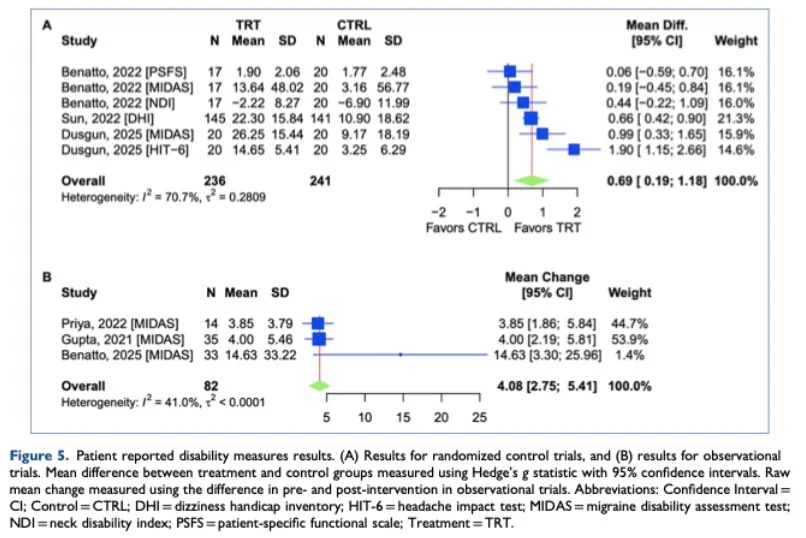
Five different measures were used to assess headache-related disability across the included studies. The pooled results demonstrated a moderate reduction in disability, although considerable heterogeneity was observed between studies. The greatest improvements were reported using the Dizziness Handicap Inventory (DHI), Migraine Disability Assessment (MIDAS), and Headache Impact Test-6 (HIT-6).
Observational studies
Observational studies demonstrated reductions in headache frequency and intensity, with headache-related disability showing the largest improvement. However, two studies reported positive mean changes for headache frequency and intensity, respectively, although their confidence intervals crossed the line of no effect.
Using the GRADE framework, the certainty of evidence was judged to be low to very low. This was primarily due to methodological limitations, including inadequate randomization procedures, incomplete outcome data, substantial heterogeneity, and imprecision, with confidence intervals crossing the line of no effect, particularly for headache frequency and intensity. Therefore, well-designed studies using standardized protocols are needed to increase confidence in the findings and draw stronger conclusions.
Questions and thoughts
One question is whether altered neck strength should be considered a consequence rather than a cause of symptoms. Reduced cervical strength may primarily reflect pain-related inhibition or altered motor control, regardless of the underlying pain mechanism. If this is the case, cervical stabilization and strengthening may mainly address a consequence of the condition rather than its underlying drivers. This hypothesis could be further supported by the findings demonstrating greater improvement in disability in comparison with headache intensity and frequency.
Another consideration is whether neck pain represents a contributing factor in only a subgroup of patients with migraine. Given the heterogeneous etiology of migraine, associated neck pain may contribute to symptoms in some patients but not others. This raises the need for better approaches to identify patient-specific contributing factors and determine which patients are most likely to benefit from exercise therapy. In some patients, exercises for headache may even exacerbate symptoms, further highlighting the importance of better patient stratification.
Finally, how were “stabilization exercises” actually defined across studies? Interventions varied considerably, including cervical flexor and extensor endurance training, craniocervical exercises, and stabilization protocols with poorly specified parameters. This lack of standardization may have diluted the pooled effects and makes it difficult to determine which specific exercise components are most effective. Such variability may also partly explain the substantial heterogeneity observed across studies.
Talk nerdy to me
Let’s start with headache intensity. In the RCTs (Figure 4A), the pooled effect was Hedges’ g = 0.41 (95% CI −0.35 to 1.18). Importantly, this is a standardized effect size rather than a raw change in NRS or VAS points. While the point estimate suggests a small-to-moderate effect, the confidence interval crosses zero, meaning that the pooled RCT evidence does not demonstrate a statistically significant difference between treatment and control. Heterogeneity was also substantial (I² = 74.1%), suggesting considerable variability between studies. As the effect is standardized, it also cannot be directly compared with a raw-score MCID without access to the individual study data.
The observational studies tell a somewhat different story (Figure 4B). Here, the pooled effect represents a raw pre–post mean change of 1.72 points (95% CI 0.15–3.29). If the included studies all used comparable 0–10 scales, this corresponds to approximately 17% of the total scale range and exceeds the commonly reported ~10% threshold for clinically meaningful improvement. However, this finding needs to be interpreted cautiously: heterogeneity was extremely high (I² = 96.7%), indicating substantial differences between studies. Moreover, because these studies were uncontrolled, the observed improvement cannot necessarily be attributed to the specific physiotherapy intervention.
So, why do the RCTs and observational studies appear to tell different stories? RCTs did not demonstrate a statistically significant pooled effect on headache intensity, whereas observational studies reported a relatively large improvement following treatment. This does not necessarily mean that physiotherapy has no effect. Rather, the difference highlights how study design influences what we can conclude. Observational studies capture what happens to patients receiving physiotherapy in practice, but cannot separate the specific effects of the intervention from contextual or nonspecific effects, natural symptom fluctuations, regression to the mean, or other factors. In contrast, RCTs provide stronger evidence regarding causality, although the nature of the control condition determines what aspect of treatment is actually being tested. Given the different effect metrics, study designs, and substantial heterogeneity, these pooled estimates should therefore not be directly compared as if they were equivalent measures of treatment effect.
The picture is somewhat different for disability (Figure 5). The authors pooled several different disability measures using Hedges’ g, which is appropriate when outcomes are assessed using different scales. This allows measures such as the PSFS, MIDAS, NDI, DHI, and HIT-6 to be combined statistically despite their different scoring systems. However, there is an important conceptual caveat: these instruments do not measure exactly the same construct. They capture aspects of physical function, migraine-related disability, neck disability, dizziness-related impact, and headache-related impact. Therefore, while the pooled standardized effect is statistically interpretable, its clinical meaning is less straightforward because quite different outcomes have been aggregated. The substantial heterogeneity (I² = 70.7%) further supports interpreting this pooled estimate with caution.
Take-home messages
- Strength and stabilization exercises for headache may help reduce related disability in people with migraine, but the evidence remains uncertain.
- The effects on headache frequency and intensity are less consistent, with RCTs failing to demonstrate a clear benefit and substantial heterogeneity across studies.
- Exercise protocols varied considerably between studies, making it difficult to determine which specific strengthening or stabilization approach, dose, or patient subgroup is most likely to benefit.
- Neck impairments may be a contributing factor rather than the primary driver of migraine symptoms, suggesting that cervical strengthening should not necessarily be viewed as a treatment for the underlying migraine pathophysiology.
- For clinicians, exercise therapy may still have a role in managing disability, but treatment should be individualized, with attention to symptom response and patient-specific contributing factors.
- Higher-quality RCTs with standardized exercise protocols and better patient stratification are needed to determine the specific effects of cervical strengthening and stabilization on migraine symptoms.
Reference
Learn more
This Physiotutors podcast episode provides greater insights on physiotherapy management of migraine.
100% Free Headache Home Exercise Program
Download this FREE home exercise program for your patients suffering from headaches. Just print it out and hand it to them for them to perform these exercises at home


