

Research
Exercise
July 27, 2026
Exercise Therapy For Groin Pain: Do Standardized Treatment Protocols Exist? A Scoping Review

This scoping review mapped the current evidence on exercise therapy for the management of groin pain
Using the Consensus on Exercise Reporting Template (CERT) and the Framework for Reporting Exercise Details (FRED), this study identified substantial limitations in the reporting quality of exercise interventions within the literature
These findings highlight important methodological challenges in musculoskeletal research and call for improved transparency and standardization when designing and reporting exercise-based interventions
Introduction
Exercise therapy is widely used and has consistently demonstrated benefits for reducing pain and facilitating return to sport in athletes with groin pain. However, as discussed in a previous Physiotutors’ review, the specific type of exercise may be less important than previously thought when designing rehabilitation programs for femoroacetabular impingement (FAI), a common source of groin pain. That randomized controlled trial found that both targeted strengthening and stretching programs produced similar improvements in hip-related quality of life after six months. Although the strengthening group experienced greater pain reduction, these findings require further confirmation. One limitation we highlighted in our previous review was that the strengthening program was not sufficiently individualized to address each patient’s specific impairments, potentially limiting the effectiveness of the intervention. Building on these findings, the present article evaluates the quality of the current evidence on exercise therapy for groin pain and provides a comprehensive overview of the exercise characteristics used across the available literature.
Methods
This article is a scoping review. A comprehensive and systematic research strategy was conducted in a medical database.
Eligibility criteria
The review included experimental, quasi-experimental, and observational studies investigating exercise-based rehabilitation for adult (≥18 years) amateur or professional athletes with long-standing (≥6 weeks) sports-related groin pain. Eligible participants had groin pain classified as adductor-, pubic-, inguinal-, or iliopsoas-related. Studies evaluating exercise therapy for groin pain alone or combined with passive treatments (e.g., shockwave therapy, injections, acupuncture, or medication) were included. Studies focusing on other causes of groin pain, such as hip osteoarthritis or fractures, as well as previous review articles, were excluded.
Data Collection and Synthesis of Evidence
Data were extracted using a standardized tool based on the Consensus on Exercise Reporting Template (CERT) and the Framework for Reporting Exercise Dosage (FRED).
The CERT is a 19-item checklist evaluating the completeness of exercise protocol reporting, including exercise description, dosage, progression, individualization, supervision, adherence, and intervention fidelity. The FRED is a 13-item checklist focusing on exercise dosage characteristics such as anatomical target, contraction duration, rest periods, and range of motion. Each item was scored as 1 when reported and 0 when not reported, allowing calculation of mean scores, standard deviations, and reporting percentages across studies. Based on previous research, CERT scores were categorized as high quality (≥75% of items reported), moderate quality (60–74%), or low quality (<60%). No quality classification was applied to FRED scores because this tool is not validated and does not provide established scoring criteria.
Results were synthesized into five categories:
- Baseline characteristics: sport type, sex, athletic level, and injury location.
- Exercise reporting: exercise description, targeted muscles, contraction type, range of motion, exercise dosage (load, repetitions, frequency), pain guidance, and progression criteria.
- Functional training: running progression, return-to-running criteria, and sport-specific or functional exercises.
- Exercise delivery: treatment setting, equipment, supervision, and adherence.
- Outcomes: return-to-sport (RTS) criteria and timing, pain, strength, and other clinical outcome measures.
Results
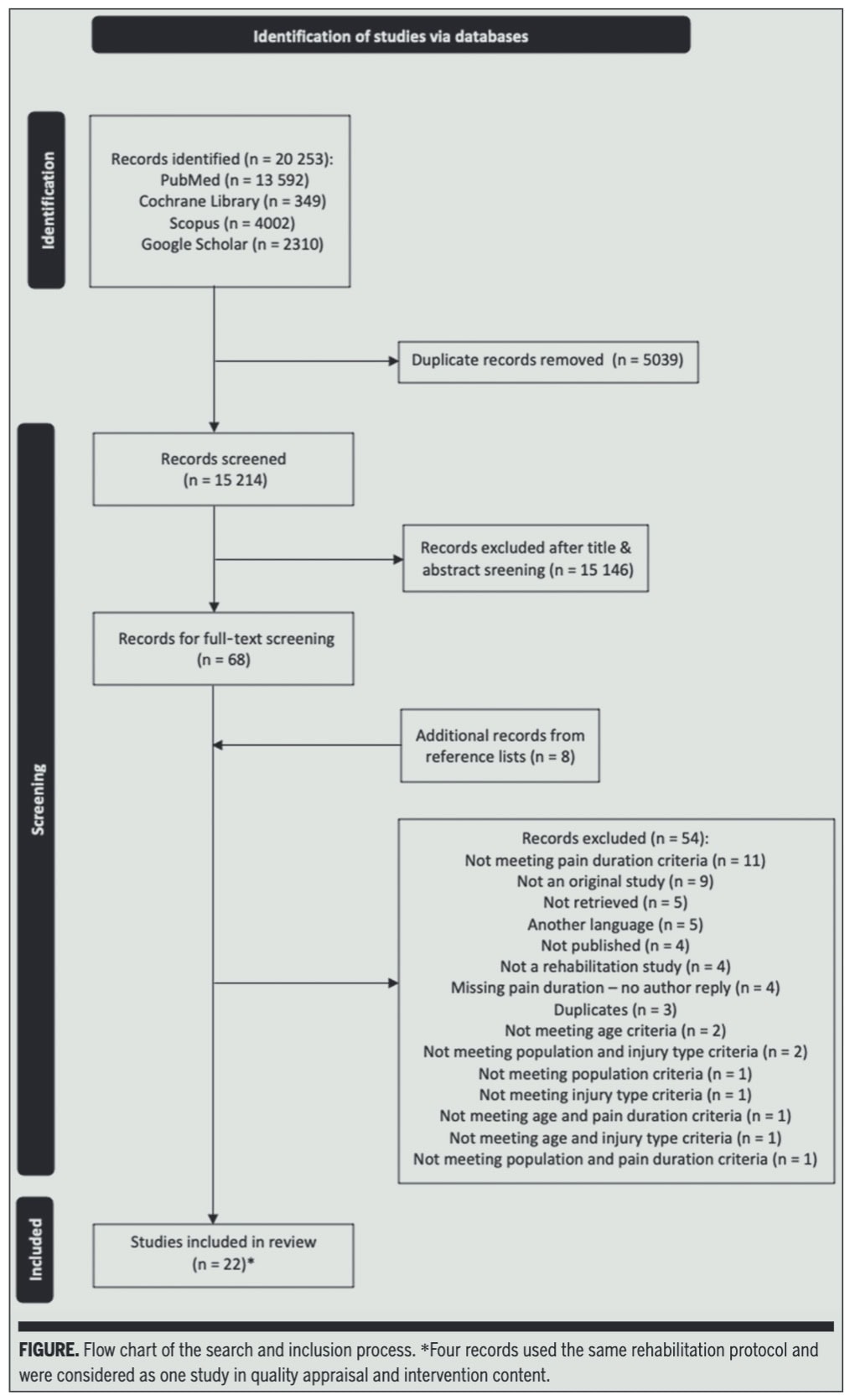
The literature search identified 20,253 records, from which 22 studies met the eligibility criteria and were included for data extraction and analysis. Four studies originating from the same research group and using the same rehabilitation protocol were considered as a single study for intervention reporting quality and exercise content analysis.
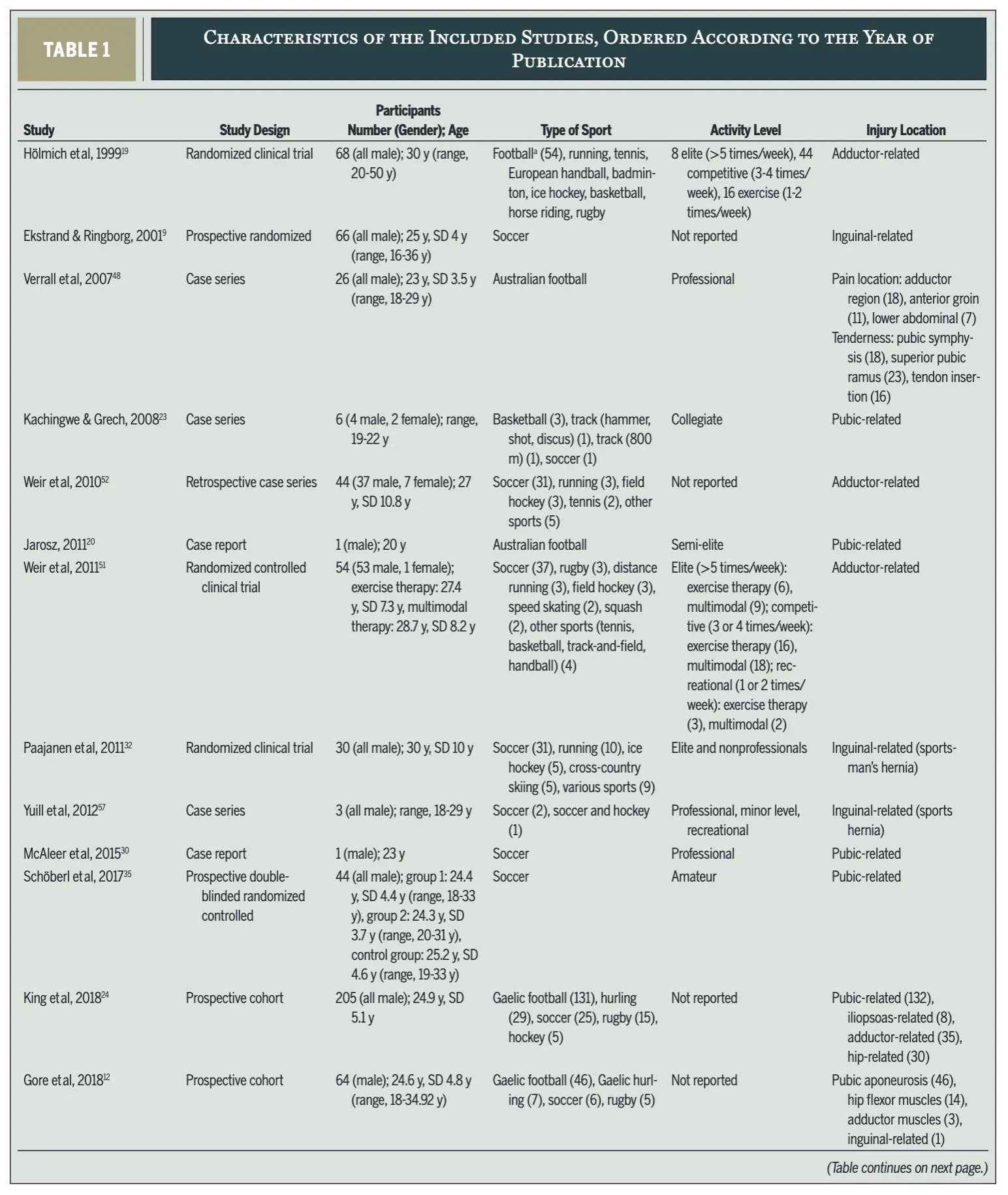
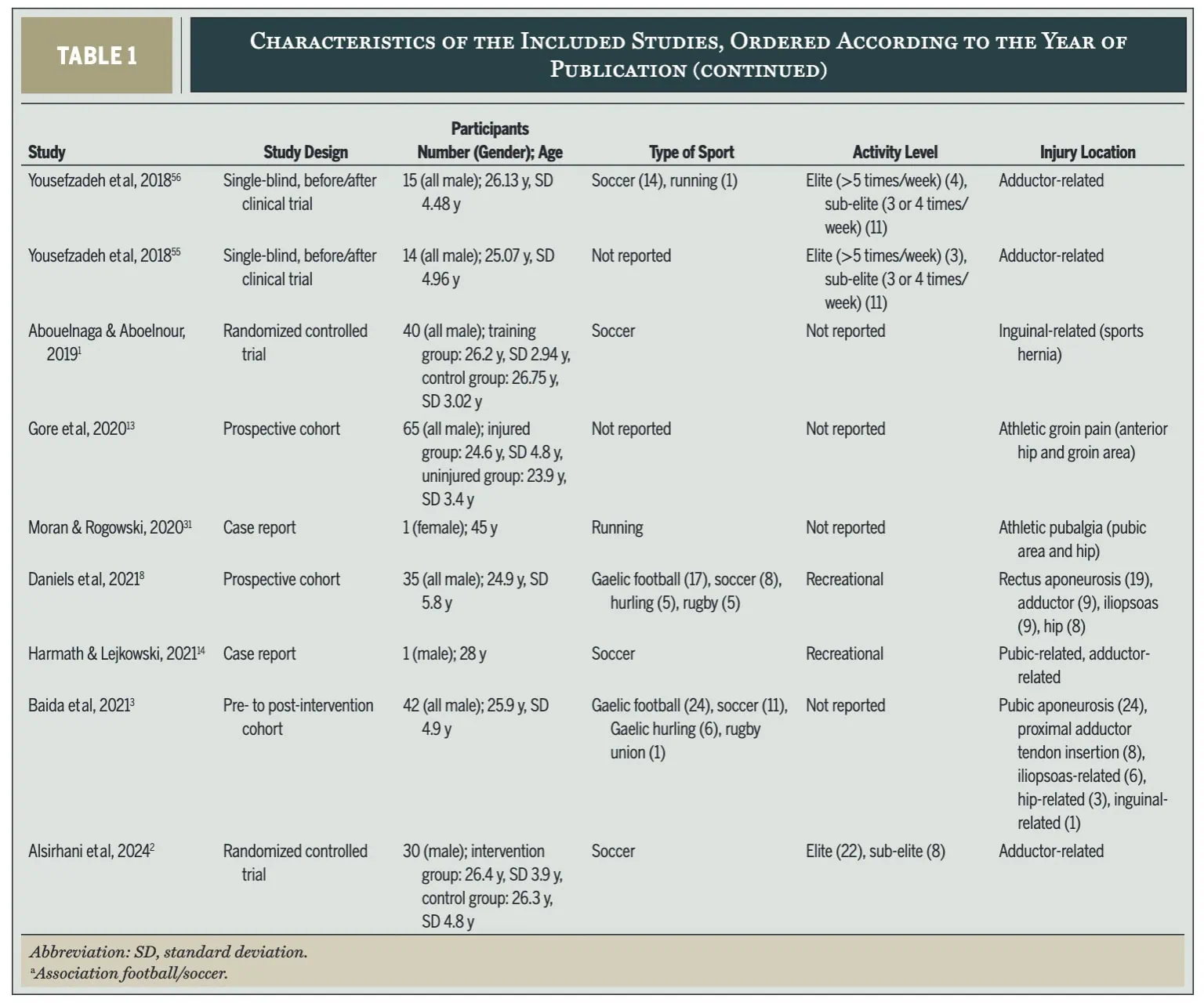
Regarding participant characteristics, the included studies involved 855 athletes, predominantly male participants. The most frequently represented sports were soccer, running, hockey, and rugby, with athletes ranging from recreational to elite/professional levels. Groin pain diagnoses were mainly classified as adductor-related and pubic-related, followed by inguinal-related, iliopsoas-related, and other hip-related presentations.
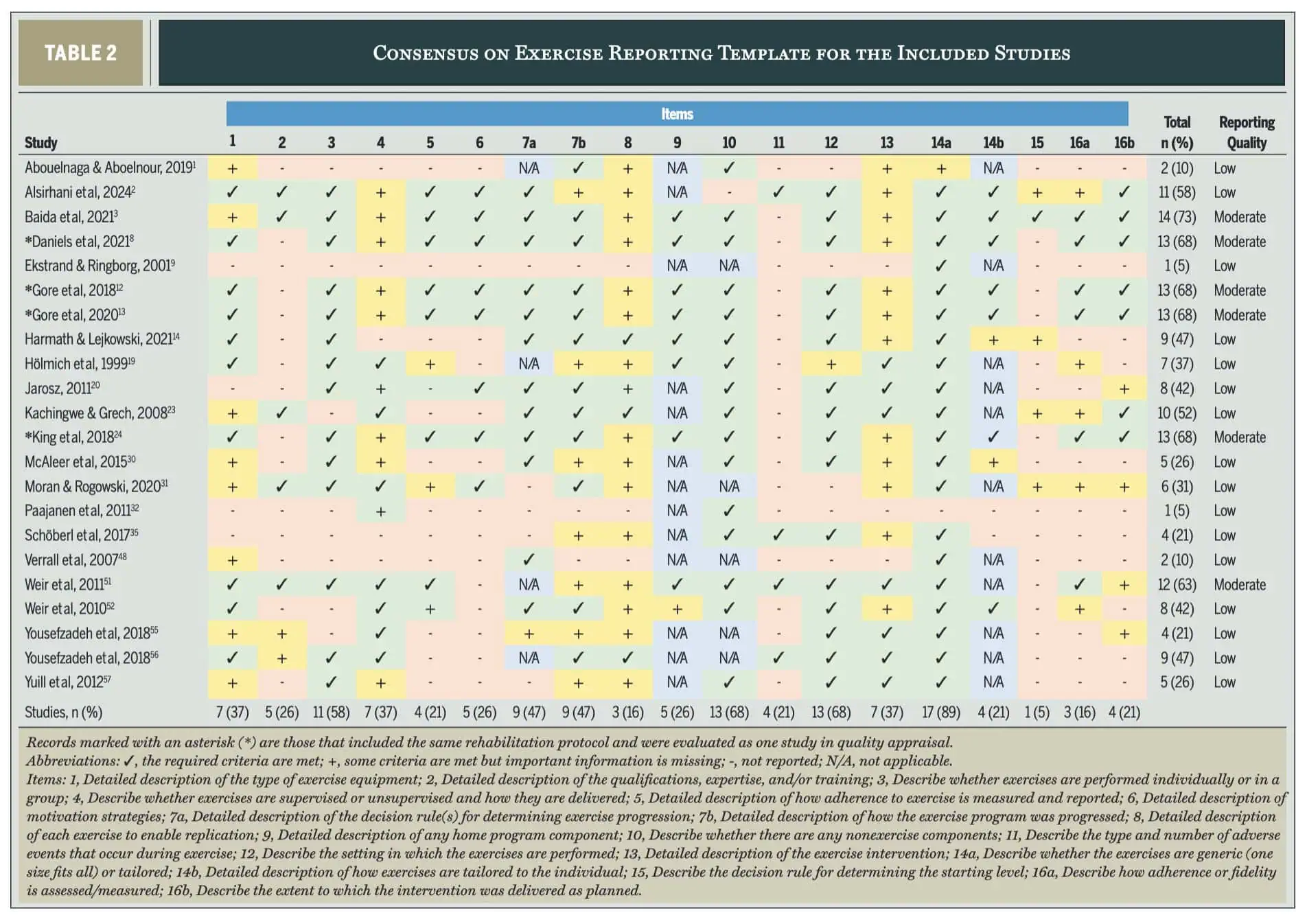
The quality of exercise therapy for groin pain reporting was generally limited. Based on the CERT checklist, the mean reporting score was 7.7/19 items, while the mean FRED score was 3.7/13 items. No study achieved high reporting quality according to CERT criteria; 3 studies were classified as moderate quality, while the majority (16 studies) were classified as low quality. The most consistently reported CERT items were whether exercises were general or individualized, the exercise setting, and the presence of non-exercise components. The least reported items included exercise description, adherence/fidelity assessment, and criteria for determining the starting level.
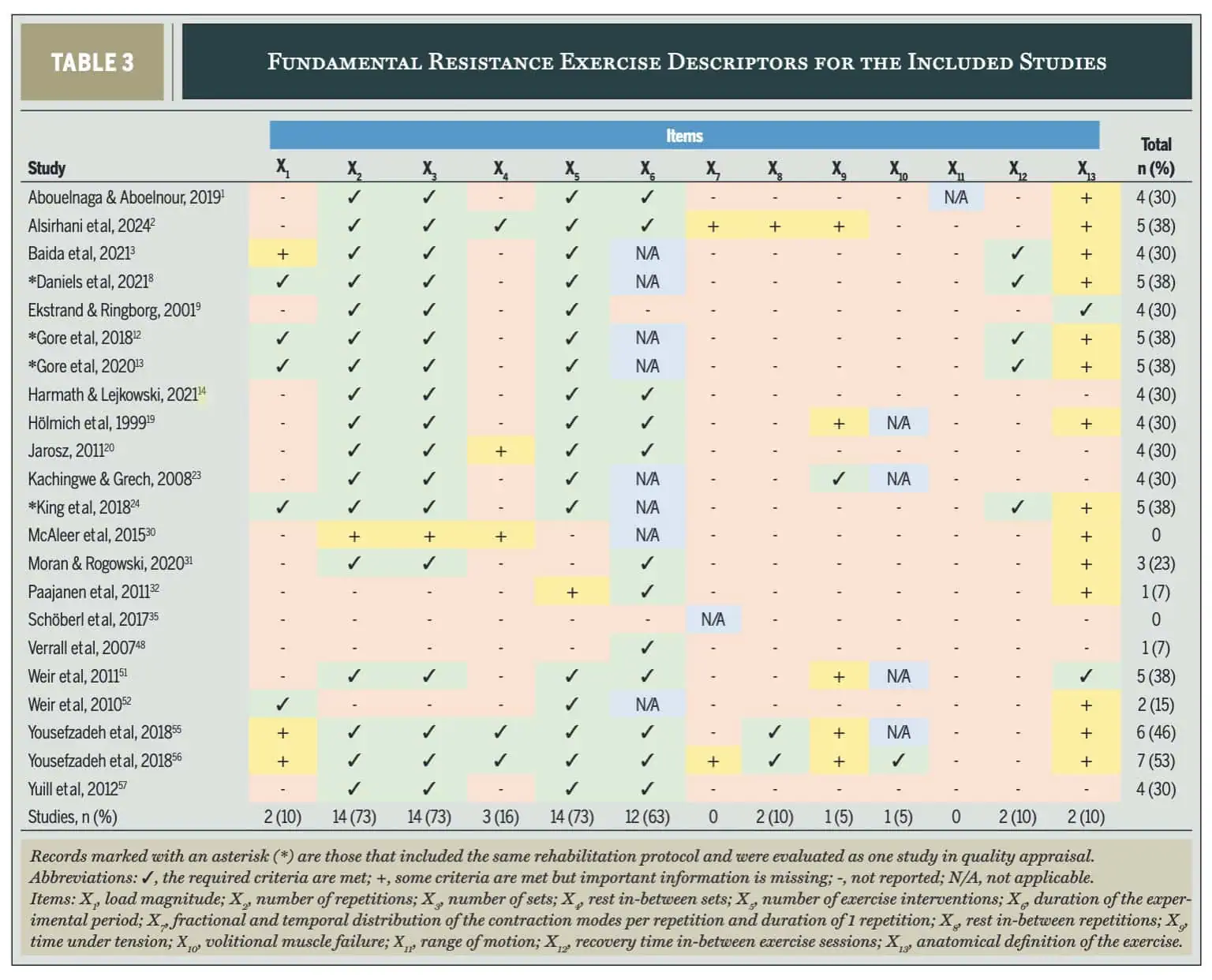
Exercise therapy for groin pain commonly included general strengthening, core stability, balance training, and lower-limb strengthening exercises. Targeted exercises frequently focused on the hip adductors, hip flexors, abdominal muscles, hip abductors, and trunk musculature. Different contraction types were used, with many studies incorporating isometric, concentric, and eccentric exercises. However, detailed reporting of exercise dosage, progression criteria, and pain monitoring strategies was inconsistent.
Functional training was included in 16 studies, with most programs incorporating sport-specific exercises, such as change-of-direction drills, ball drills, agility training, running progression, and technique drills. General conditioning activities (e.g., cycling, swimming, rowing, walking) and plyometric exercises were also commonly reported.
Questions and thoughts
The findings of this scoping review remain largely inconclusive because the available evidence on exercise therapy for groin pain is generally of poor reporting quality. Most included studies were classified as low quality according to the CERT checklist, limiting the ability to identify which exercise parameters are most effective. Consequently, evidence-based recommendations regarding the optimal exercise prescription for groin pain cannot currently be made. Nevertheless, this review provides a valuable overview of the existing literature and highlights an important gap in the evidence. Future studies should adopt more rigorous reporting standards, such as the CERT and FRED frameworks, to improve reproducibility and allow meaningful comparisons between rehabilitation protocols.
In the absence of evidence supporting specific exercise parameters, clinicians should adopt a systematic and individualized approach to exercise prescription. Every exercise should have a clear rationale by answering a simple question: Why am I prescribing this exercise? The selected exercises should align with the patient’s short- and long-term goals and target a specific clinical objective or physiological mechanism. Exercise programs should clearly define dosage, progression, and expected responses while providing patients with guidance on proper technique, common compensations, and symptom monitoring. Clinicians should also recognize that improvements may be driven not only by the specific exercise itself but also by non-specific treatment effects, such as patient expectations, therapeutic alliance, and engagement. Therefore, patient preferences should be considered alongside the best available evidence when designing rehabilitation programs. Ultimately, exercise prescription should be individualized to each patient’s presentation, impairments, and functional limitations.
Finally, these findings raise broader questions about the ability of current research methodologies to determine the true effectiveness of exercise therapy for groin pain. By averaging treatment effects across heterogeneous populations, conventional randomized controlled trials may obscure meaningful individual differences in treatment response. As a result, interventions that appear similarly effective at the group level may have markedly different effects for individual patients. These methodological considerations—and their implications for interpreting exercise research—are explored further in the Talk Nerdy to Me section.
Talk nerdy to me
One of the main findings of this scoping review is the remarkable heterogeneity across the included studies. Participants differed in sporting level, symptom duration, clinical presentation, and diagnosis, while exercise interventions varied considerably in their content. This diversity may appear to be a major limitation. However, it is worth remembering that this is also the very purpose of a scoping review: to map the breadth of the existing literature rather than determine the effectiveness of a specific intervention. The review accurately reflects the current state of exercise therapy for groin pain, a field characterized by substantial variability and incomplete reporting.
More importantly, these findings raise a broader methodological question: is the conventional research model well suited to study exercise therapy? Most randomized controlled trials are designed to estimate the average treatment effect of an intervention. While this approach is relatively well suited for pharmacological studies, it may be less informative for musculoskeletal rehabilitation, where patients often present with highly heterogeneous clinical profiles. Two athletes with the same diagnosis of groin pain may differ considerably in movement strategies, tissue capacity, training load, psychological factors, recovery, and personal goals. They may respond to the same exercise program through entirely different mechanisms, including the influence of contextual factors, or not respond at all. Consequently, on a broader scale, similar group-level outcomes may mask substantial differences in individual treatment responses.
Complementary designs may provide insights that traditional trials cannot. For example, individual participant data meta-analyses allow researchers to investigate treatment-effect modifiers across multiple studies, adaptive trial designs can better reflect clinical decision-making by modifying treatments according to patient response, and large practice-based registries may help identify patterns of recovery in real-world clinical populations. Likewise, carefully conducted case reports and case series, although lower in the hierarchy of evidence, remain valuable for generating hypotheses, describing individualized clinical reasoning, and identifying potential responder profiles that can later be tested in larger studies.
Perhaps the future of musculoskeletal research lies less in determining which exercise is best and more in understanding for whom, under what circumstances, and through which mechanisms a particular exercise is most effective. Such a shift would move rehabilitation away from searching for universally superior protocols and toward a precision rehabilitation approach that better reflects the complexity of clinical practice. Ultimately, improving intervention reporting through frameworks such as the CERT and FRED is an essential first step, but advancing the field will also require research methodologies capable of embracing, rather than eliminating, patient heterogeneity.
Take-home messages
- Exercise therapy remains a cornerstone of rehabilitation for sports-related groin pain, but the current evidence does not support one specific exercise type or dosage as universally superior.
- Most available studies have poor exercise reporting quality, limiting our ability to determine which exercise parameters (load, frequency, progression, or contraction type) are most effective.
- Rather than focusing on specific exercises, clinicians should prioritize a clear rationale for exercise prescription. Every exercise should target a meaningful clinical objective and align with the athlete’s goals, presentation, and functional limitations
- Exercise selection should be linked to the patient’s goals, impairments, sport demands, and stage of rehabilitation, with clear instructions regarding dosage, progression, technique, and symptom monitoring.
- Future research is likely to be most valuable when it improves exercise reporting (e.g., using CERT and FRED) and focuses on understanding for whom, under what circumstances, and through which mechanisms specific exercise interventions are most beneficial.
Reference
LEVEL UP YOUR DIFFERENTIAL DIAGNOSIS IN RUNNING RELATED HIP PAIN - FOR FREE!
Don’t run the risk of missing out on potential red flags or ending up treating runners based on a wrong diagnosis! This webinar will prevent you to commit the same mistakes many therapists fall victim to!