

Research
Knee
August 8, 2026
Knee Replacement Risk after ACL Reconstruction: A Population Study Using the Contralateral Knee as an Internal Control

This study found a three times higher knee replacement risk after ACL reconstruction when compared to the contralateral uninjured knee, but the 20-year absolute risk was still only 2.44%
The study describes prognosis after ACL injury and reconstruction; it does not prove that ACL reconstruction causes or prevents osteoarthritis
The findings are best used for honest prognosis rather than to promote or discourage surgery
Introduction
ACL injuries are common and frequently lead to reconstruction surgery due to knee osteoarthritis. Earlier studies on this topic have revealed that the knee replacement risk after ACL reconstruction may be seriously elevated, and as such, patients should be informed of this future risk when choosing conservative or operative care for their torn ACL. However, these studies had some inherent limitations, including a lack of awareness of the baseline risk of knee osteoarthritis requiring later knee replacement surgery. People can have different risk profiles based on their genetics, activity habits, or specific anatomy, and this baseline risk should be taken into account in these risk calculations. This study wanted to specifically tackle these shortcomings by using the contralateral knee as a comparator to examine the risk of knee replacement years following ACL reconstruction.
Methods
This was a large population-based retrospective cohort study using routinely collected National Hospital Episode Statistics data from the United Kingdom.
The researchers identified patients undergoing cruciate ligament reconstruction between April 1997 and March 2023. Patients were eligible when:
- the recorded operation was their first ACL reconstruction;
- reconstruction had occurred in only one knee;
- the contralateral knee had no previous or subsequent ACL reconstruction;
- there was no previous recorded procedure in the index knee;
- age, sex, operation date and laterality were available.
Patients were excluded for reasons including previous operations, previous or subsequent contralateral surgery, same-day bilateral surgery, ambiguous coding and missing essential data.
The comparison was performed within the same person:
- Index knee: ACL-injured knee that underwent reconstruction.
- Control knee: contralateral knee with no recorded ACL reconstruction.
This internal comparison was intended to account for person-level characteristics shared by both knees, such as genetics, general activity profile, socioeconomic background and systemic biological factors.
The researchers also compared both knees with age-specific knee-replacement rates in the general population.
Outcome
The primary outcome was subsequent knee arthroplasty, including either:
- unicompartmental knee arthroplasty; or
- total knee arthroplasty.
Knee replacement was treated as an objective surrogate for end-stage symptomatic osteoarthritis. The study did not measure radiographic osteoarthritis, pain, function, strength, return to sport or quality of life. It measured the occurrence of joint replacement.
Subgroup analyses were performed to examine whether the relative risk differed according to:
- isolated ACL reconstruction versus ACL reconstruction with concurrent meniscal surgery;
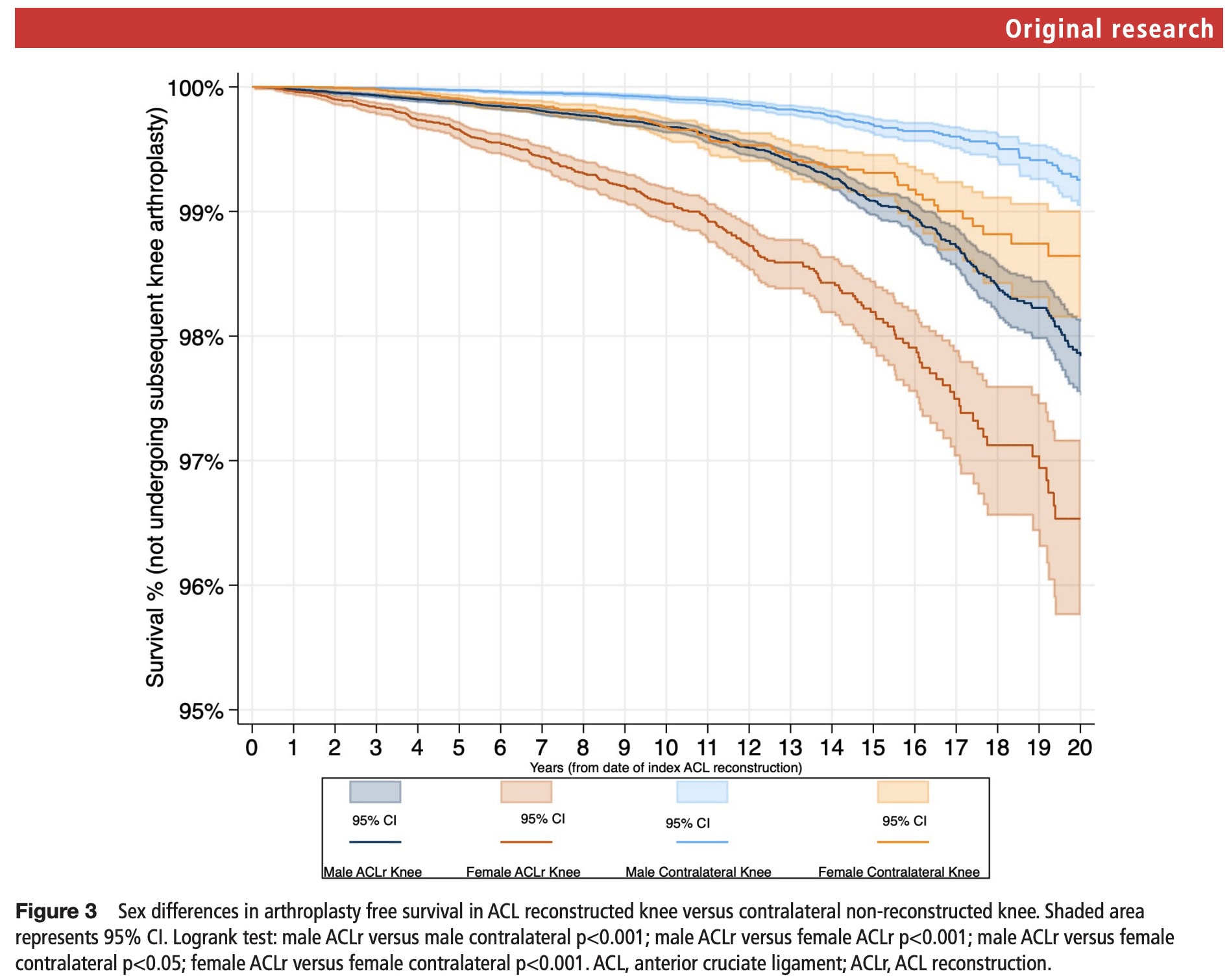
- sex;
- age at reconstruction;
- ethnicity;
- socioeconomic status, using the Index of Multiple Deprivation.
Results
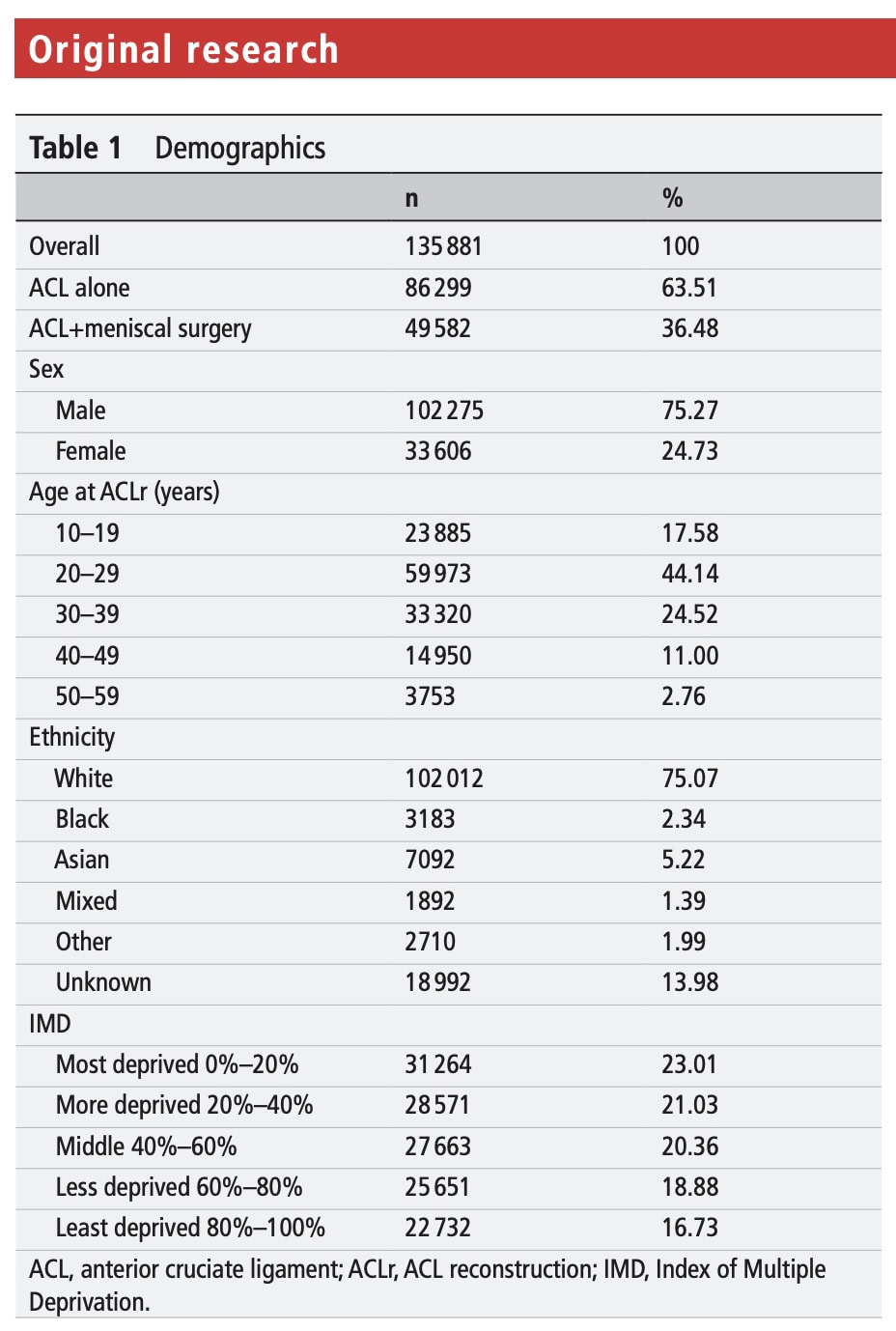
The initial database contained 179,355 patients who had undergone ACL surgery. After exclusions and data cleaning, 135,881 patients were included. The median age at reconstruction was 27 years, with an interquartile range of 21–34 years. Approximately 75% of the cohort were male. Just over 36% underwent concurrent meniscal surgery, defined as meniscal repair or meniscectomy.
Median follow-up was 8.75 years, although some patients were followed for up to 20–26 years.
Risk of knee replacement in ACL-reconstructed knees versus contralateral control knees
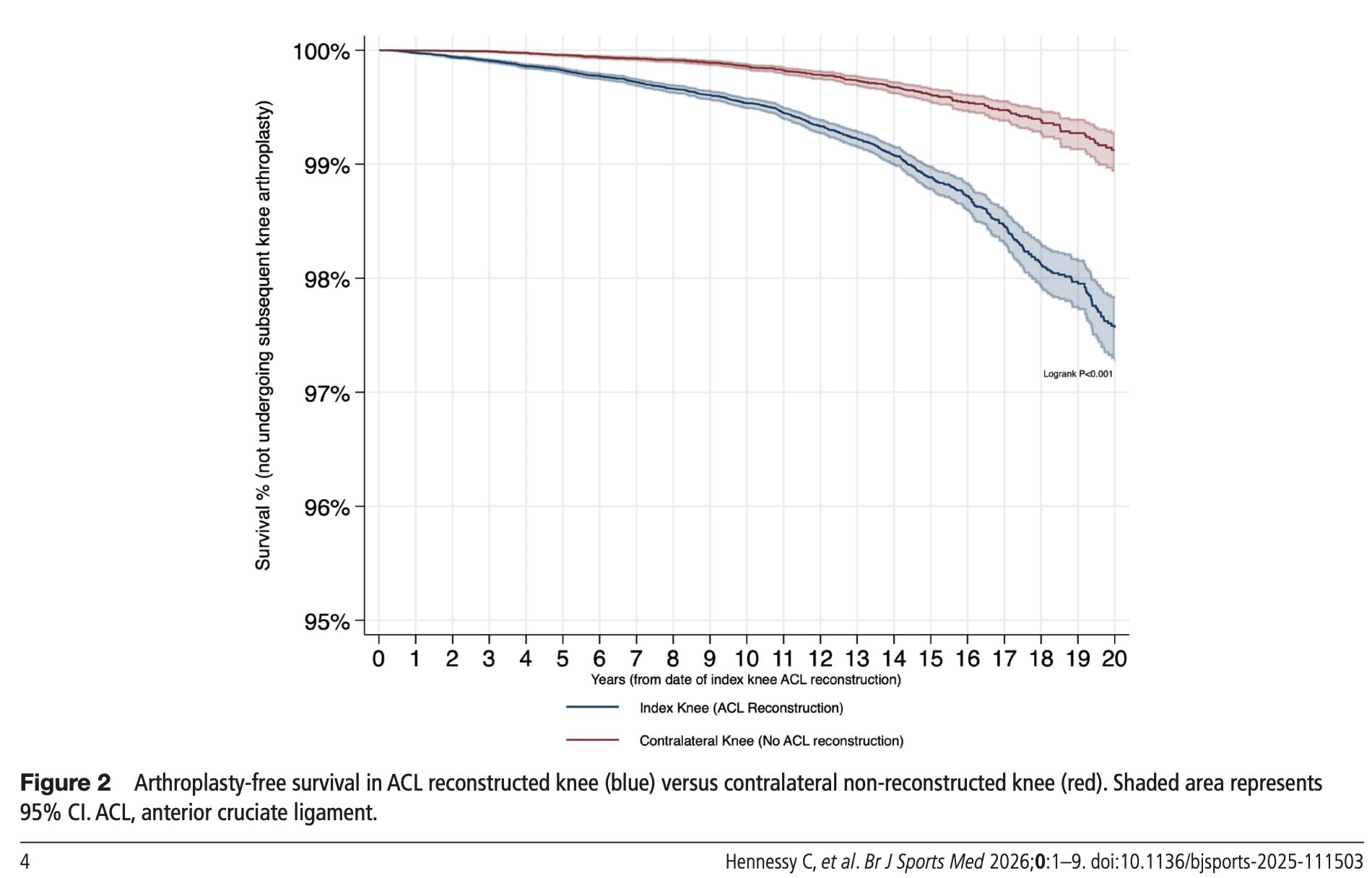
Overall, the rate of knee replacement in the ACL-reconstructed knees at 10 years was 0.46%, compared with 0.14% in the healthy contralateral knee, which represents an overall relative risk of arthroplasty of 3.25 (95% CI: 2.67 to 3.97). At 15 years post ACL reconstruction, this rate of knee replacement was 1.11% in the reconstructed knee compared to 0.39% in the contralateral knee, leading to a relative risk of 2.87 (95% CI: 2.42 to 3.41). At 20 years post-ACL reconstruction, this rate of knee replacement was 2.44% in the ACL-injured knee compared to 0.88% in the healthy contralateral knee, representing a 20-year relative risk of 2.78 (95% CI: 2.31 to 3.38).
Hazard of knee replacement in ACL-reconstructed knees versus contralateral control knees
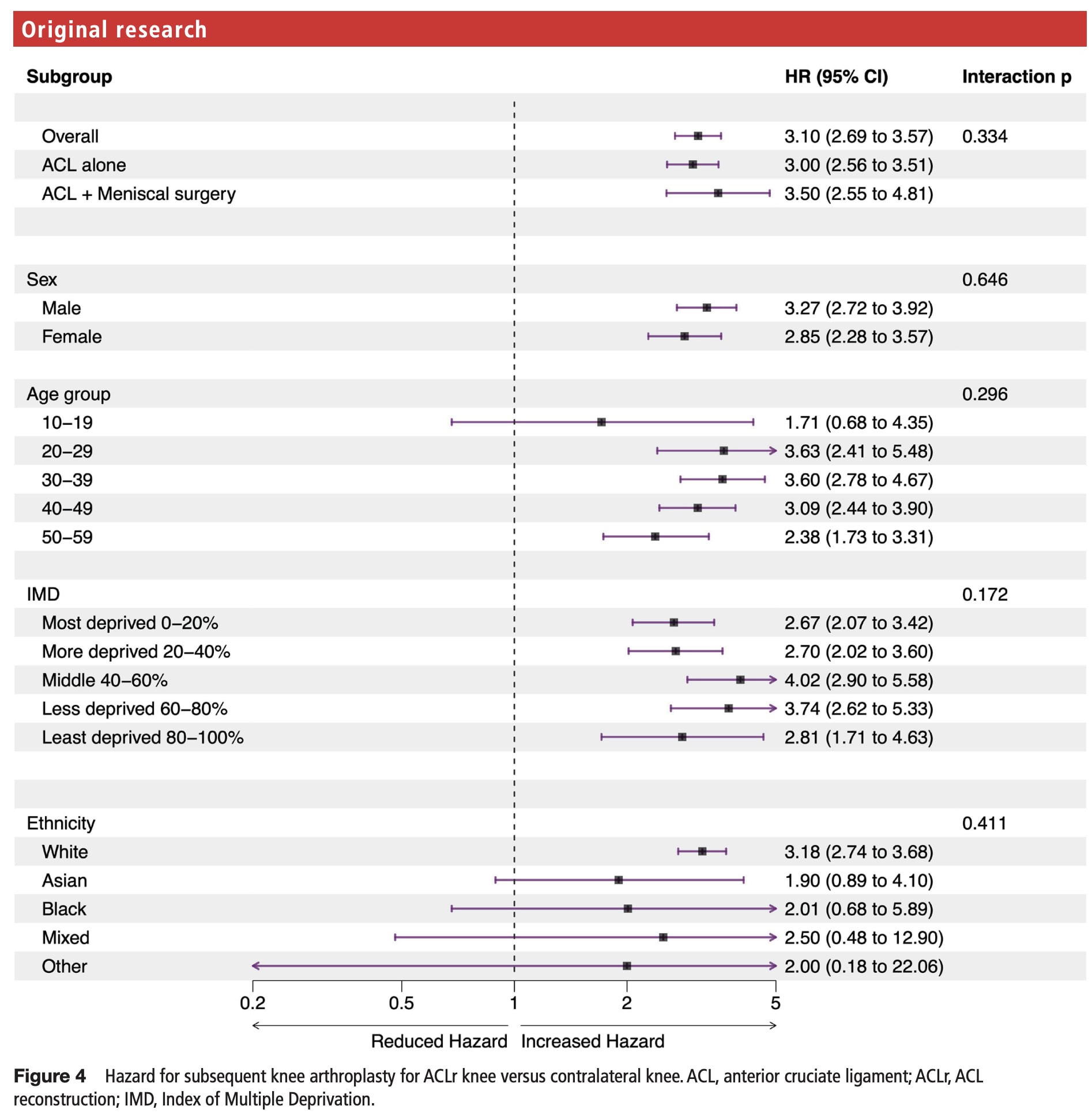
The arthroplasty-free survival of the ACL-reconstructed knee versus the contralateral knee shows an overall hazard ratio for knee replacement of 3.10 (95% CI: 2.69 to 3.57).
When no concomitant meniscal surgery was required, the hazard ratio was 3.00 (95% CI: 2.56 to 3.51), and with concomitant meniscal procedures, the hazard ratio for knee replacement in the ACL-reconstructed knee was 3.50 (95% CI: 2.55 to 4.81). Although the numerical hazard ratio was higher in the meniscal-surgery group, the interaction test did not indicate a statistically significant difference between groups. The study therefore does not establish that concurrent meniscal surgery meaningfully altered the relative risk.
The hazard ratio was highest in patients aged 20-29 years (HR=3.63; 95% CI: 2.41 to 5.48), followed by the 30-39 year group (HR=3.60; 95% CI: 2.78 to 4.67), the 40-49 age group (HR=3.09; 95% CI: 2.44 to 3.90) and the 50-59 year group (HR=2.38; 95% CI: 1.73 to 3.31).
The hazard of knee replacement surgery in the ACL-reconstructed knees was elevated across all the socioeconomic subgroups.
Long-term probability of arthroplasty
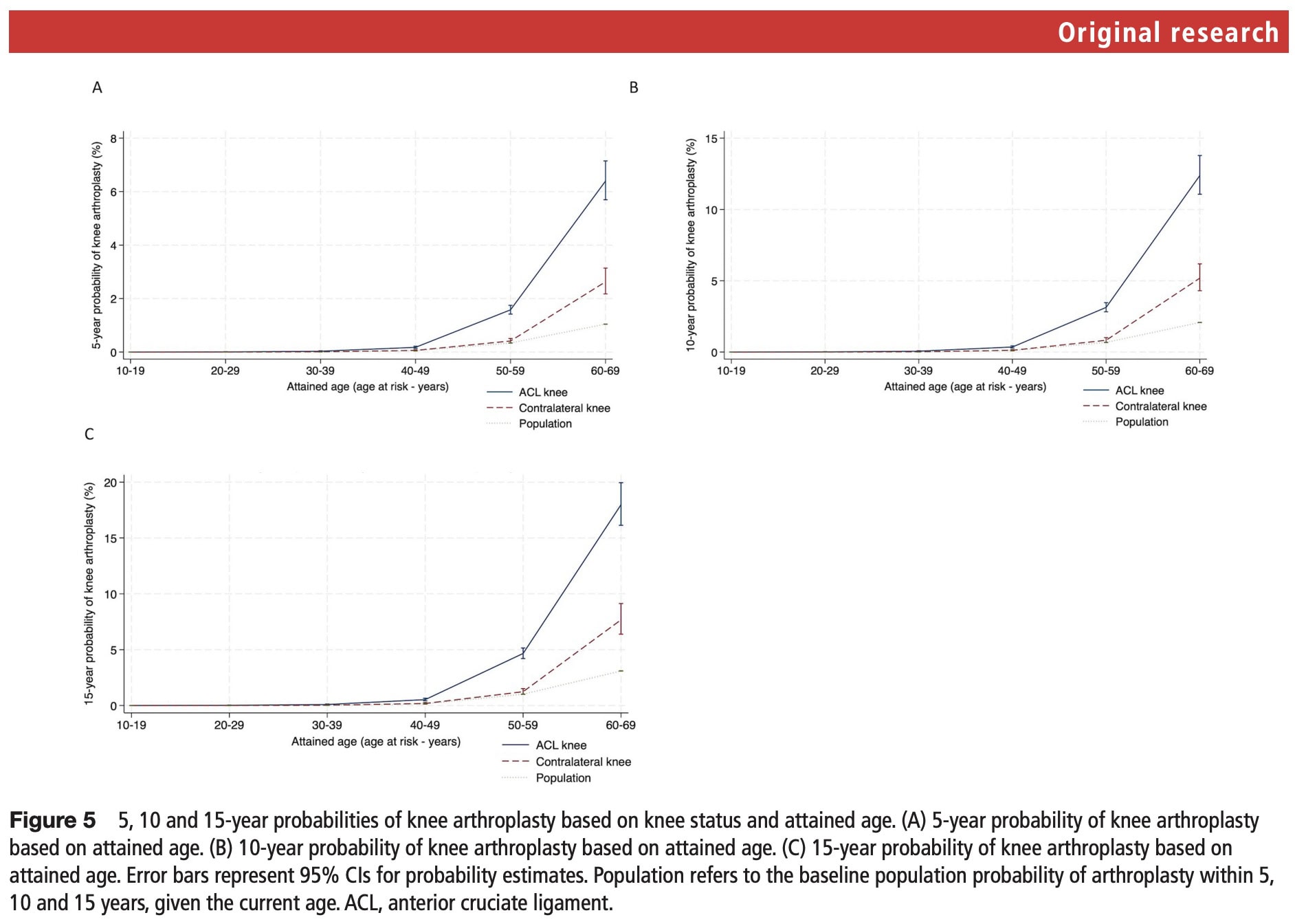
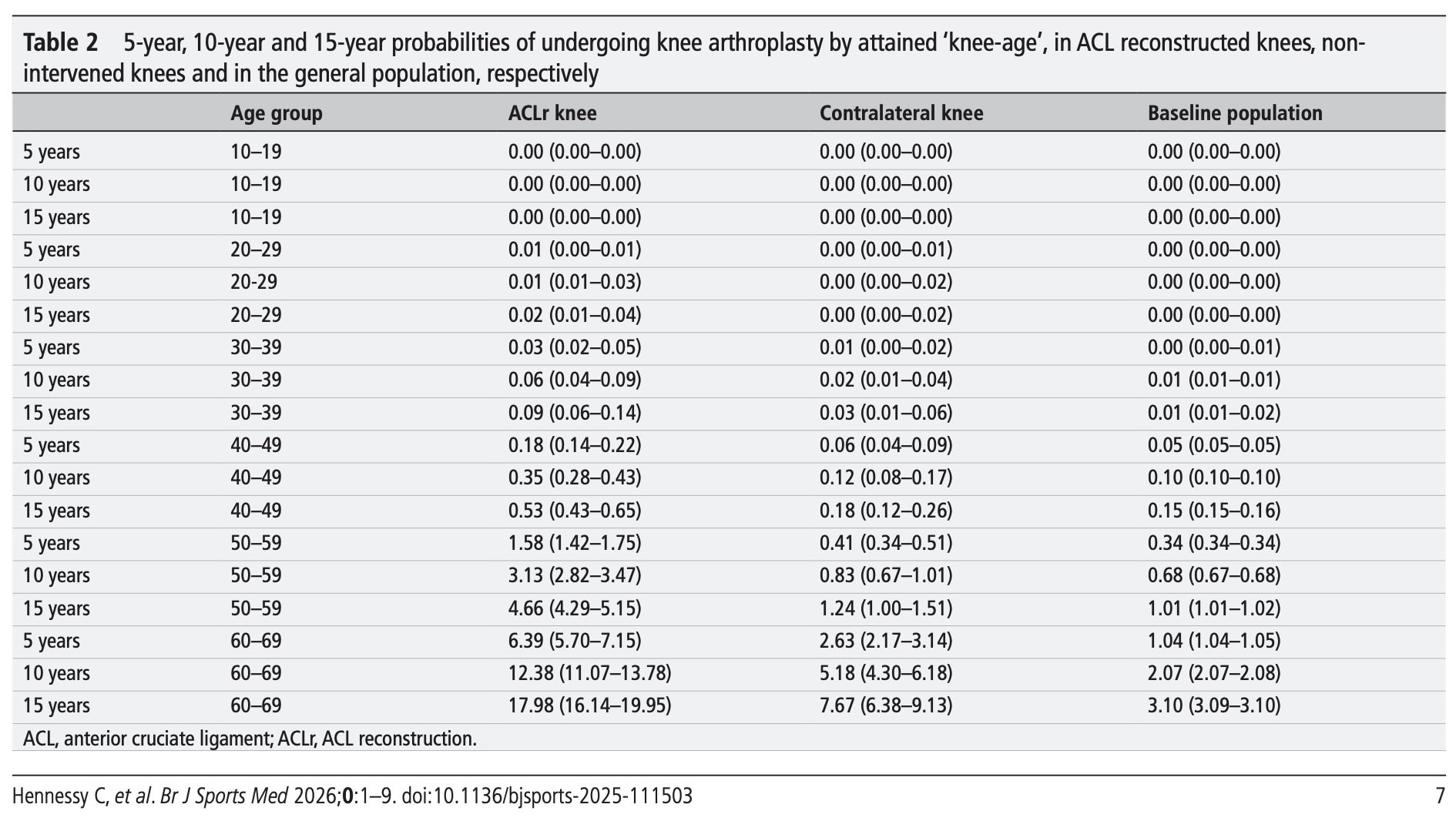
Figure 5 and Table 2 show the 5-, 10-, and 15-year probabilities of knee replacement for each age group. The age group reflects the attained age. The probabilities of having a knee replacement in the 10-19 age group and the 20-29 age group were negligible.
A small probability was seen for the 30-39 age group in the 5-, 10-, and 15-year risk: 0.03; 0.06; and 0.09, respectively. The corresponding values for the contralateral knee were lower: 0.01; 0.02; and 0.03, respectively. Probability remained negligible in the healthy population group ≤0.01 at 15 years.
In the 40-49 age group, probabilities for knee arthroplasty of 0.18; 0.35; and 0.53 were seen at 5, 10, and 15 years for the ACL reconstructed knees, while the healthy contralateral knees demonstrated probabilities of 0.06; 0.12; and 0.18. In the general population, values of 0.05; 0.10; and 0.15 were recorded, respectively.
In the 50–59 age group, the ACL reconstructed knee had 5, 10 and 15-year probabilities of 1.58; 3.13; and 4.66, respectively. The contralateral knee demonstrated probabilities of 0.41; 0.83; and 1.24. The general population had a probability at 5, 10 and 15 years of 0.34; 0.68; and 1.01, respectively.
Finally, in the 60–69 age group, the ACL reconstructed knee had 5, 10 and 15-year probabilities of 6.39; 12.38; and 17.98, respectively. The contralateral knee demonstrated probabilities of 2.63, 5.18; and 7.67, respectively. The healthy general population had a knee replacement risk probability at 5, 10 and 15 years of 1.04; 2.07; and 3.10, respectively.
Questions and thoughts
The article makes a division between the Risk of arthroplasty in ACL-reconstructed knees versus contralateral controls and the Hazard of arthroplasty in ACL-reconstructed knees versus contralateral controls. But what is the difference between the risk and the hazard of knee arthroplasty?
The difference is mainly what is being compared and over what time scale.
The risk of arthroplasty reports the cumulative probability of having undergone knee replacement by a specific time point.
For example, at 20 years:
- ACL-reconstructed knee: 2.44%
- Contralateral knee: 0.88%
- Relative risk: 2.78
So the question the “risk of arthroplasty” answers is: “By 20 years, how many knees in each group had undergone arthroplasty?” This produces an absolute risk for each knee and a relative risk between them.
The hazard of arthroplasty reports the rate at which arthroplasty occurred throughout the entire follow-up period, using a Cox proportional hazards model.
The overall hazard ratio was:
- HR 3.10, 95% CI 2.69–3.57
So the question is: “At any point during follow-up, how quickly was arthroplasty occurring in reconstructed knees compared with contralateral knees?”
A hazard ratio of 3.10 means that the instantaneous rate of knee replacement was approximately three times higher in the reconstructed knee during follow-up. It does not mean that 3.10 times as many patients eventually underwent arthroplasty.
So, clinically simplified, think of a long-distance race:
- Risk asks how many runners have crossed the finish line by year 10, 15 or 20.
- Hazard compares how quickly runners are crossing the finish line at different moments during the race.
The two results are related, which is why the study found an HR of 3.10 and a 20-year relative risk of 2.78, but they are not interchangeable.
The arthroplasty-free survival curves show that the difference between knees gradually widened over time, highlighting that the reconstructed knee was more and more prone to need a knee replacement over time over the years. But we should also place this finding into perspective, since, even at 20 years, more than 97% of reconstructed knees had not undergone arthroplasty. That distinction is central to communicating the findings responsibly. The relative increase was large, but the absolute event rate remained relatively low across the total cohort.
Should this increased risk of needing a knee replacement years post ACL-reconstruction change rehabilitation? The study supports taking long-term knee health seriously, but it does not identify a specific rehabilitation programme that prevents arthroplasty. Physiotherapists should avoid implying that perfect rehabilitation can eliminate post-traumatic osteoarthritis. A more defensible message is that rehabilitation should address potentially modifiable contributors such as strength, load tolerance, movement confidence, physical activity, recurrent instability and secondary injury prevention, while acknowledging that direct evidence for preventing knee replacement remains limited.
Importantly, the time from injury to surgery was not included. A patient reconstructed shortly after injury may have a different cartilage and meniscal history from someone who experienced repeated giving-way episodes for several years. This is important because the observed arthroplasty risk may partly reflect damage accumulated before surgery.
The control knees had no recorded surgeries, but over the years may still have sustained an unrecorded ACL injury, meniscal injury or other trauma. In addition, bilateral anatomical and activity-related risk factors may affect both knees.
Should we then counsel patients to be told they have “three times the risk of needing a knee replacement surgery over the years? Yes, but only alongside absolute risk!
For example: “Your reconstructed knee has about three times the long-term replacement risk of your other knee. However, in the overall study only about 2.4% of reconstructed knees had been replaced by 20 years.” For an individual patient, age-specific estimates may be more informative than the overall cohort average.
Talk nerdy to me
Using the opposite knee as an internal control reduces confounding because both knees share the same person-level factors, such as genetics, sex, and lifestyle. However, the contralateral knee is not a perfect healthy control because it may also have sustained injury or altered loading.
The Kaplan–Meier analysis estimated the probability of remaining free from arthroplasty over time. Patients were censored at knee replacement, death, or study end.
Because each patient contributed two related knees, the authors used person-level bootstrapping to calculate confidence intervals. The study remains observational, so it shows that reconstructed knees had greater arthroplasty risk but cannot prove that reconstruction itself caused this difference.
The main limitation is that the effect of reconstruction cannot be separated from the original ACL injury, associated cartilage or meniscal damage, repeated instability or later reinjury. Also, knee arthroplasty is an imperfect measure of osteoarthritis because the decision to operate depends on symptoms, access to care, patient preference and surgical eligibility.
The database lacked important clinical details, including rehabilitation quality, BMI, graft type, timing of surgery, cartilage damage, meniscal repair versus meniscectomy, and recurrent instability. Coding errors were possible, and some PCL reconstructions may have been included, as the procedure codes used in the database include both ACL and posterior cruciate ligament reconstruction. Because PCL reconstruction is uncommon, the authors considered the resulting cohort to be strongly representative of patients undergoing ACL reconstruction.
Finally, median follow-up was only 8.75 years. This is relatively short for younger patients, who may not reach the age at which knee replacement usually occurs. Therefore, lifetime risk may have been underestimated.
Take-home messages
An ACL-injured knee that undergoes reconstruction is more likely to require knee replacement than the patient’s opposite knee. Across this very large English cohort, the rate was approximately three times higher. That sounds alarming, but the absolute risk remained low for many younger patients. At 20 years, approximately 2.4% of reconstructed knees had undergone arthroplasty, compared with 0.9% of contralateral knees. Absolute risk increased more clearly as patients reached their 50s and 60s.
The major threat to the conclusion is causal interpretation. The study cannot tell us whether reconstruction itself contributed to the later knee replacement. The increased risk may predominantly reflect the original ACL trauma, associated cartilage or meniscal damage and subsequent injuries. For now, the findings are best used for honest prognosis rather than to promote or discourage surgery. Patients should understand that reconstruction can improve stability and function but does not return the knee to the long-term risk profile of an uninjured knee.
Reference
LEARN TO OPTIMIZE REHAB & RTS DECISION MAKING AFTER ACL RECONSTRUCTION
Sign up for this FREE webinar and top leading expert in ACL rehab Bart Dingenen will show you exactly how you can do better in ACL rehab and return to sport decision making