


Research
Diagnosis & Imaging
October 27, 2026
Hypophosphatasia: When Persistent Musculoskeletal Pain Is More Than a Mechanical Problem
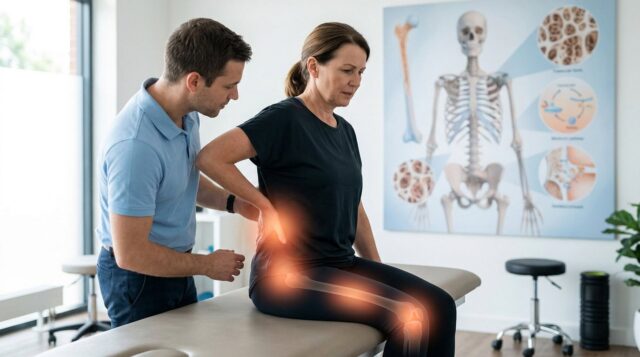
This retrospective case series explored musculoskeletal presentations and diagnostic delays in patients with hypophosphatasia (HPP) referred to rheumatology
13-year diagnostic delay: Musculoskeletal pain, fractures, dental abnormalities, and coexisting conditions may complicate recognition of HPP
Recurrent fractures, early-onset osteoarthritis, enthesopathy, and dental problems occurring together should raise suspicion of an underlying metabolic disorder and prompt medical referral.
Introduction
Patients presenting with persistent pain at multiple musculoskeletal sites are commonly encountered in physiotherapy practice. As highlighted by the Pain and Disability Drivers Management (PDDM) model, pain and disability may be influenced by several interacting factors, including nociceptive mechanisms, nervous system dysfunction, comorbidities, and psychosocial factors. While altered pain processing may contribute to persistent symptoms, clinicians should remain attentive to underlying medical conditions that may coexist with, or contribute to, these mechanisms.
One such condition is hypophosphatasia (HPP), a rare genetic metabolic bone disorder characterised by reduced alkaline phosphatase (ALP) activity, which interferes with normal bone mineralisation. Although HPP is classically associated with fractures and premature tooth loss, its clinical presentation can be considerably more diverse. Some patients predominantly experience musculoskeletal pain resembling common rheumatological disorders, including osteoarthritis, calcium pyrophosphate deposition disease (CPPD), bursitis, and spinal complaints. Consequently, the underlying metabolic disorder may remain undiagnosed for years.
This diagnostic delay can have important consequences. Besides prolonging uncertainty about the underlying condition, failure to recognise HPP may lead to inappropriate medical management. In particular, patients may be misdiagnosed with osteoporosis and receive bisphosphonates, which can aggravate skeletal mineralisation abnormalities in HPP.
As physiotherapists increasingly work in first-contact and direct-access settings, recognising clinical features that warrant further medical investigation is essential. Rather than attributing persistent or recurrent musculoskeletal complaints exclusively to local pathology or altered pain processing, clinicians should consider whether a broader systemic condition might explain the patient’s presentation.
Rauf and colleagues (2023) therefore retrospectively examined 14 patients who initially presented to general rheumatology with musculoskeletal pain and were subsequently diagnosed with HPP. By describing their symptoms, musculoskeletal diagnoses, laboratory findings and diagnostic delays, the researchers aimed to identify clinical features that might facilitate earlier recognition of this frequently overlooked condition.
Methods
The researchers conducted a retrospective case series of 14 adults diagnosed with hypophosphatasia (HPP) following referral to a general rheumatology clinic for musculoskeletal pain.
Results
Hypophosphatasia background
Hypophosphatasia (HPP) is an inherited metabolic disorder caused by mutations in the ALPL gene, which encodes tissue-nonspecific alkaline phosphatase (TNSALP), an enzyme involved in bone and dental mineralisation. Reduced Alkaline Phosphatase (ALP) activity leads to the accumulation of several substances, including inorganic pyrophosphate (PPi), pyridoxal-5′-phosphate (PLP, the active form of vitamin B6), and phosphoethanolamine (PEA).
The accumulation of pyrophosphate has two particularly important consequences. First, it interferes with normal bone mineralisation, increasing susceptibility to fractures. Second, it promotes calcium pyrophosphate crystal formation, potentially contributing to early-onset calcium pyrophosphate deposition disease (CPPD), osteoarthritis and inflammatory joint complaints.
HPP is classified into five forms according to age at onset and clinical presentation: perinatal, infantile, childhood, adult, and odontohypophosphatasia. Adult-onset HPP is generally milder but can substantially reduce quality of life, with systemic musculoskeletal pain and fractures (notably of the metatarsals and femur) being common. Historically, HPP has mainly been recognised through its skeletal and dental manifestations. However, not every patient with HPP initially presents with fractures or obvious bone disease.
Some patients predominantly experience peripheral joint pain, spinal complaints or symptoms resembling rheumatological disorders. These individuals may be referred to rheumatology rather than metabolic bone clinics, potentially delaying recognition of HPP.
Recognising HPP matters because it may influence treatment decisions. In particular, the authors emphasise that bisphosphonates, commonly prescribed for osteoporosis, can worsen hypomineralisation in patients with HPP and may contribute to atypical femoral fractures. This study, therefore, investigated the clinical characteristics of 14 patients who initially presented to general rheumatology with musculoskeletal pain and were subsequently diagnosed with HPP. The objective was to identify features that might help clinicians recognise HPP earlier and consequently reduce diagnostic delays.
Study results
Study population. Fourteen patients were referred between 2011 and 2021. The researchers found that patients frequently experienced several musculoskeletal complaints before their HPP diagnosis. The median number of musculoskeletal diagnoses was two, ranging from one to four per patient.
The median diagnostic delay was 13 years (range: 5–37 years). Four patients reported musculoskeletal pain beginning in childhood, and five had childhood-onset dental disease or fractures.
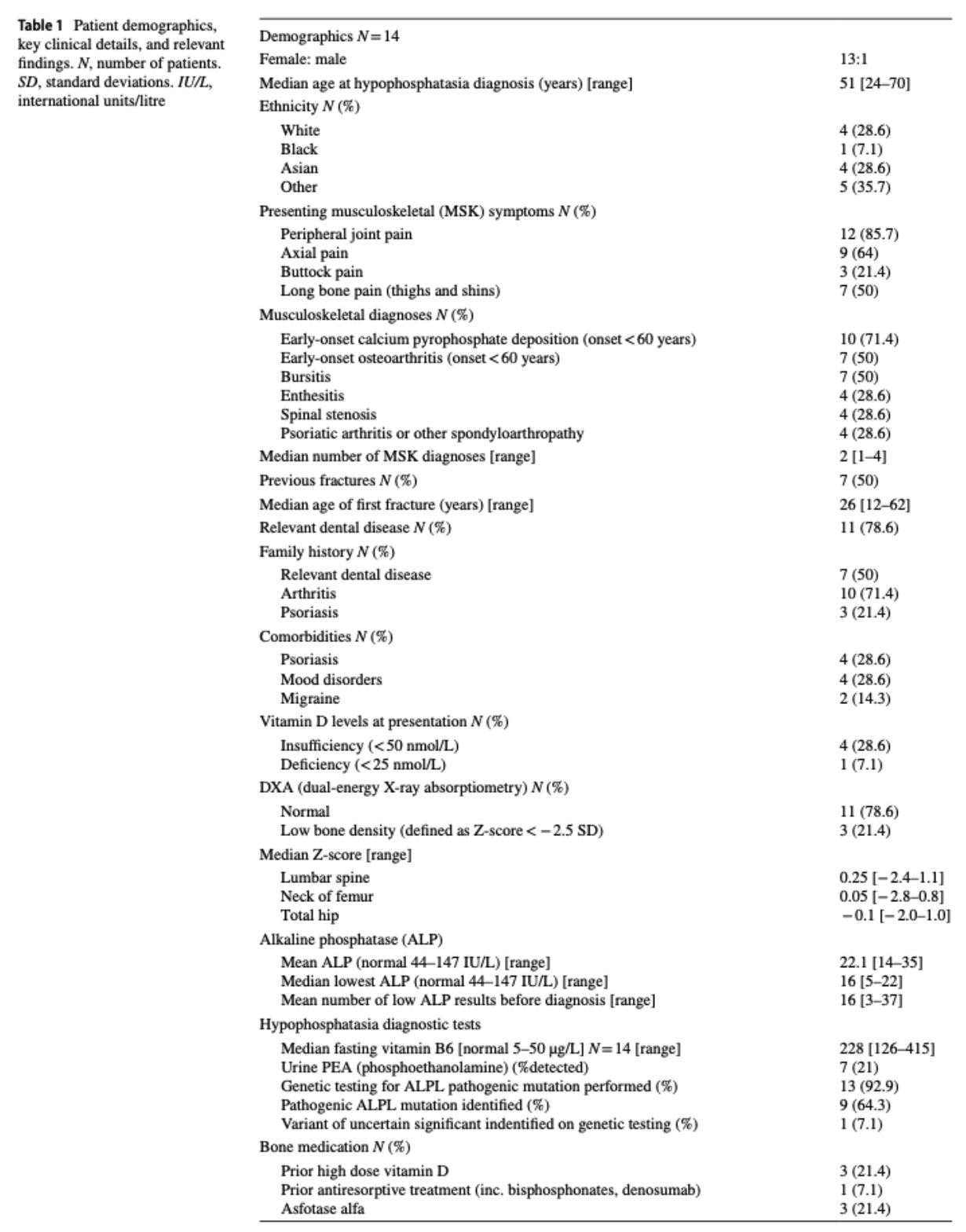
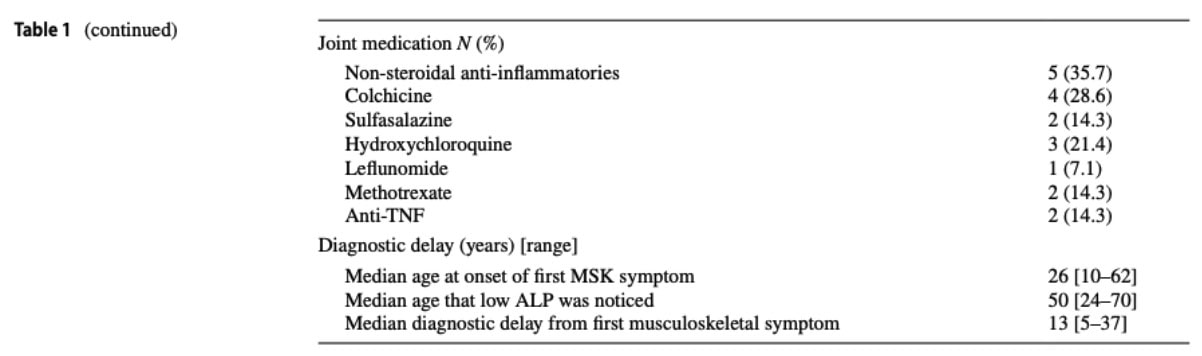
Musculoskeletal manifestations. The most frequently reported symptom was peripheral joint pain, affecting 85.7% of patients, followed by axial pain (64.3%) and long bone pain involving the thighs or shins (50%). Several musculoskeletal conditions were also diagnosed, most commonly early-onset calcium pyrophosphate deposition disease (CPPD, 71.4%), early-onset osteoarthritis (50%) and bursitis (50%). Half of the patients had also experienced previous fractures. Importantly, these musculoskeletal diagnoses were not necessarily incorrect; some may have been manifestations of HPP, whereas others may have represented coexisting conditions.
Enthesopathy. Enthesopathy was identified in four patients (28.6%) based on clinical symptoms, X-ray and ultrasound findings. The Achilles tendon was affected in three patients and a finger flexor tendon in one. Two of the four patients with enthesopathy also had a diagnosis of psoriatic arthritis. Disease-modifying anti-rheumatic drugs (DMARDs) were continued after the HPP diagnosis when they were considered beneficial.
Fractures. Seven patients (50%) had sustained previous fractures. The most frequently reported fracture locations were the lower limbs (36%) and upper limbs (29%), followed by the vertebrae (7%) and ribs (7%). All fractures were low-trauma except one ankle fracture sustained after falling down two steps. None showed delayed healing, and no atypical fractures were reported.
Dental manifestations. Relevant dental problems were present in 11 patients (78.6%). Among these, 50% had premature tooth loss or extraction, 29% had dental fillings, 14% had tooth decay, and 7% each had gum disease and jaw displacement.
Biochemical findings. All patients had persistently low serum alkaline phosphatase (ALP) and elevated fasting vitamin B6 levels. At presentation, serum calcium, parathyroid hormone, phosphate and creatinine levels were normal in all patients. Five patients (35.7%) had low vitamin D levels.
Genetic findings. Nine patients were heterozygous for a pathogenic ALPL mutation. One patient was not tested, but their daughter carried a pathogenic mutation, making testing unnecessary. One patient had a variant of uncertain significance. In three patients, no pathogenic ALPL mutation was identified, but HPP was confirmed by elevated fasting vitamin B6 levels together with compatible clinical features.
Questions and thoughts
Although hypophosphatasia (HPP) is considered a rare disease, genetic modelling has suggested that mild forms may be more common than previously assumed, with an estimated prevalence of up to 1 in 508 individuals in a European population. However, this estimate relies on assumptions about genetic penetrance and should not be interpreted as the observed prevalence of clinically diagnosed HPP.
Musculoskeletal manifestations of HPP may include long bone pain, enthesopathy, bursitis, fractures and joint complaints, alongside dental abnormalities. Reduced alkaline phosphatase (ALP) activity leads to the accumulation of inorganic pyrophosphate (PPi), which can promote calcium pyrophosphate crystal deposition and contribute to calcium pyrophosphate deposition disease (CPPD). This may explain why some patients with HPP present with symptoms resembling more common rheumatological conditions, including osteoarthritis and inflammatory joint disorders.
However, CPPD is not specific to HPP and can occur independently or alongside other musculoskeletal conditions, particularly in older adults. Therefore, the presence of CPPD alone does not necessarily indicate an underlying metabolic disorder. Rather, its occurrence at a relatively young age, especially when accompanied by unexplained fractures, long bone pain, premature tooth loss or persistently low ALP levels, may warrant further medical investigation. Recognising these combinations of clinical features may help physiotherapists identify patients whose musculoskeletal complaints require assessment beyond the local symptomatic region.
Could musculoskeletal symptoms have distracted clinicians from the underlying disorder?
Patients frequently had several recognised musculoskeletal diagnoses before receiving their HPP diagnosis. Osteoarthritis, bursitis, spinal stenosis and enthesitis are common conditions that physiotherapists manage routinely. Their presence does not necessarily prompt clinicians to consider a rare metabolic disorder.
A patient with persistent hip pain, recurrent bursitis, early-onset knee osteoarthritis and a history of low-trauma fractures may initially be treated for each complaint independently. But this case series suggests that, in selected patients, examining the broader clinical history may be more informative than concentrating exclusively on the painful anatomical region. It is important, however, not to assume that every musculoskeletal diagnosis in someone with HPP is caused by HPP. Degenerative, inflammatory, and metabolic conditions can coexist.
Can patients have fragile bones even when their bone density is normal?
This may be one of the most clinically relevant findings. Most patients had normal DXA measurements despite half of the sample having experienced low-energy fractures.
The problem is that DXA primarily assesses bone mineral density, whereas HPP involves abnormalities in bone mineralisation, which are not equivalent concepts. A patient may therefore have normal measured bone mineral density while still having clinically relevant skeletal disease. This reinforces the importance of considering fracture history, symptom behaviour and the broader clinical picture rather than relying on bone mineral density alone when evaluating possible bone-related pain.
What should physiotherapists look for in clinical practice?
Despite its small sample size and descriptive design, this case series highlights the importance of considering multiple, potentially coexisting contributors to systemic musculoskeletal pain. In patients presenting with multisite pain, a comprehensive assessment may help prevent premature attribution of symptoms to a single diagnosis. Rather than assuming that pain is primarily related to a central pain mechanism, clinicians should consider whether the clinical presentation warrants further investigation for an underlying systemic condition.
During the clinical interview, a history of recurrent fractures, bursitis, enthesopathy, dental abnormalities, or temporomandibular disorders may raise suspicion of an underlying metabolic disorder, particularly when several of these features occur together. A family history of similar manifestations or a personal history of psoriasis or psoriatic arthritis may provide additional clinical context, although these features are not specific to HPP. Long-bone pain and axial spinal pain may also be present but should not be considered diagnostic in isolation.
When HPP is suspected, physiotherapists should refer the patient for medical assessment. Further investigations may include measurement of ALP and fasting vitamin B6 serology (or its active form, pyridoxal-5′-phosphate), alongside additional tests guided by the clinical presentation. If CPPD is suspected, synovial fluid analysis and/or appropriate imaging may help clarify the diagnosis. Recognizing these clinical features may help facilitate earlier investigation and reduce diagnostic delays.
Talk nerdy to me
This retrospective case series described 14 adults diagnosed with hypophosphatasia (HPP) following referral to a general rheumatology clinic for systemic musculoskeletal pain. The median diagnostic delay was 13 years. Peripheral joint pain was the most common presentation (85.7%), frequently associated with calcium pyrophosphate deposition disease (CPPD), osteoarthritis, or bursitis. However, several methodological limitations should be considered when interpreting these findings.
First, the small sample size and retrospective design limit the generalizability of the results and prevent causal conclusions. Furthermore, patients presented with multiple coexisting systemic musculoskeletal pain conditions, making it difficult to determine the specific contribution of HPP to their symptoms. Although HPP can promote CPP crystal deposition and is associated with early-onset CPPD and osteoarthritis, these conditions may coexist without fully explaining the patient’s clinical presentation, as both could be asymptomatic. Similarly, the presence of an ALPL variant does not necessarily imply symptomatic disease, highlighting the complexity of genotype–phenotype relationships.
Second, referral bias is likely, as all patients were referred for musculoskeletal pain. This may have led to an overrepresentation of the musculoskeletal phenotype of HPP, limiting the applicability of the findings to patients presenting primarily with fractures, dental manifestations, or fewer symptoms.
Finally, the coexistence of HPP and psoriatic arthritis could not be excluded in some patients, potentially complicating the attribution of symptoms to either condition. Additionally, some CPPD diagnoses relied on clinical features alone, without definitive radiological or synovial fluid confirmation, introducing potential diagnostic misclassification.
Overall, this study highlights the importance of considering HPP in patients presenting with unexplained systemic musculoskeletal pain, particularly when persistently low alkaline phosphatase (ALP) levels, early-onset CPPD, fractures, or dental disease are present. However, the findings should be interpreted as descriptive observations rather than evidence that HPP alone accounts for the reported musculoskeletal manifestations.
Take-home messages
The study reported a median diagnostic delay of 13 years, consistent with findings from an international registry study of 148 adults with hypophosphatasia (HPP), which reported diagnostic delays of approximately 6–10 years. These prolonged delays highlight the need for greater awareness of this rare metabolic disorder among healthcare professionals. The authors suggest that limited knowledge of HPP, even among rheumatologists, may contribute to delayed diagnosis.
This issue is also relevant to physiotherapy practice. Patients are often referred by general practitioners who may be unfamiliar with HPP. Furthermore, as direct access to physiotherapy expands and physiotherapists take on a greater role in clinical assessment and differential diagnosis, recognizing potential systemic conditions that require medical investigation becomes increasingly important.
- Physiotherapists must recognise that familiar musculoskeletal presentations do not always have familiar underlying causes.
- 13-year diagnostic delay: This case series highlights the prolonged time to diagnosis of hypophosphatasia (HPP) in adults presenting with systemic musculoskeletal pain.
- Recognize the clinical clues: Unexplained multisite pain, recurrent fractures, early-onset osteoarthritis, enthesopathy, and dental abnormalities may warrant further investigation for HPP.
- Think beyond the painful site: Multiple coexisting musculoskeletal conditions may contribute to a patient’s symptoms, making a broader clinical assessment essential.
Reference

