


Research
Exercise
October 16, 2026
Pain Sensitization in Knee OA: Can Behavioral Graded Activity Succeed Where Standard Exercise Fails?

A 12-week behavioral graded activity (BGA) program improved pain and function in KOA patients who had NOT responded to guideline-based exercise
Pressure pain threshold increased, and temporal summation decreased alongside clinical improvements, suggesting parallel changes in pain sensitization
Baseline structural damage (X-ray/MRI) and sensitization did not predict who improved - only higher baseline step count did
Introduction
Roughly 1 in 3 patients with knee osteoarthritis (KOA) fails to achieve meaningful pain relief from guideline-concordant exercise. If you’ve ever had a KOA patient who just doesn’t respond despite a well-dosed program, pain sensitization might be part of the answer. Structural damage on imaging often doesn’t match symptom severity, and a subgroup of patients shows altered pain processing (lower pressure pain thresholds, facilitated temporal summation) that seems to blunt their response to standard exercise therapy.
So what do you do with these non-responders? This study tested behavioral graded activity (BGA) – a fundamentally different approach that ditches prescriptive exercise protocols in favor of gradual, goal-directed exposure to meaningful daily activities. Instead of asking “how much load can this knee tolerate,” BGA asks “what does this patient want to be able to do again, and how do we get there without provoking a flare?” For clinicians facing patients who plateau or worsen with standard exercise, this study offers a first look at whether BGA can move the needle — and whether it does so by actually changing pain sensitization itself.
Methods
This study conducted a single-arm trial, without any control group. The study included women older than 50 years, with radiographically confirmed KOA (Kellgren-Lawrence scale grade ≥2) with persistent knee pain for more than 6 months. They had previously completed a 3-month guideline-concordant exercise program consisting of aerobic, resistance, and neuromuscular training for 3 sessions per week of 40-minute duration, without achieving ≥30% VAS pain improvement. That prior exercise program was guideline-based, but did not include standardized activity progression procedures to achieve behavioral change.
The intervention examined here consisted of a 12-week behavioral-graded activity (BGA) program, defined as an individualized, operant-conditioning-based activity plan. The intervention was centered on each patient’s primary complaint and personal goals, and was combined with pain education, delivered once weekly (~40 min/session). The program had 3 phases: a starting phase, a treatment phase, and an integration phase.
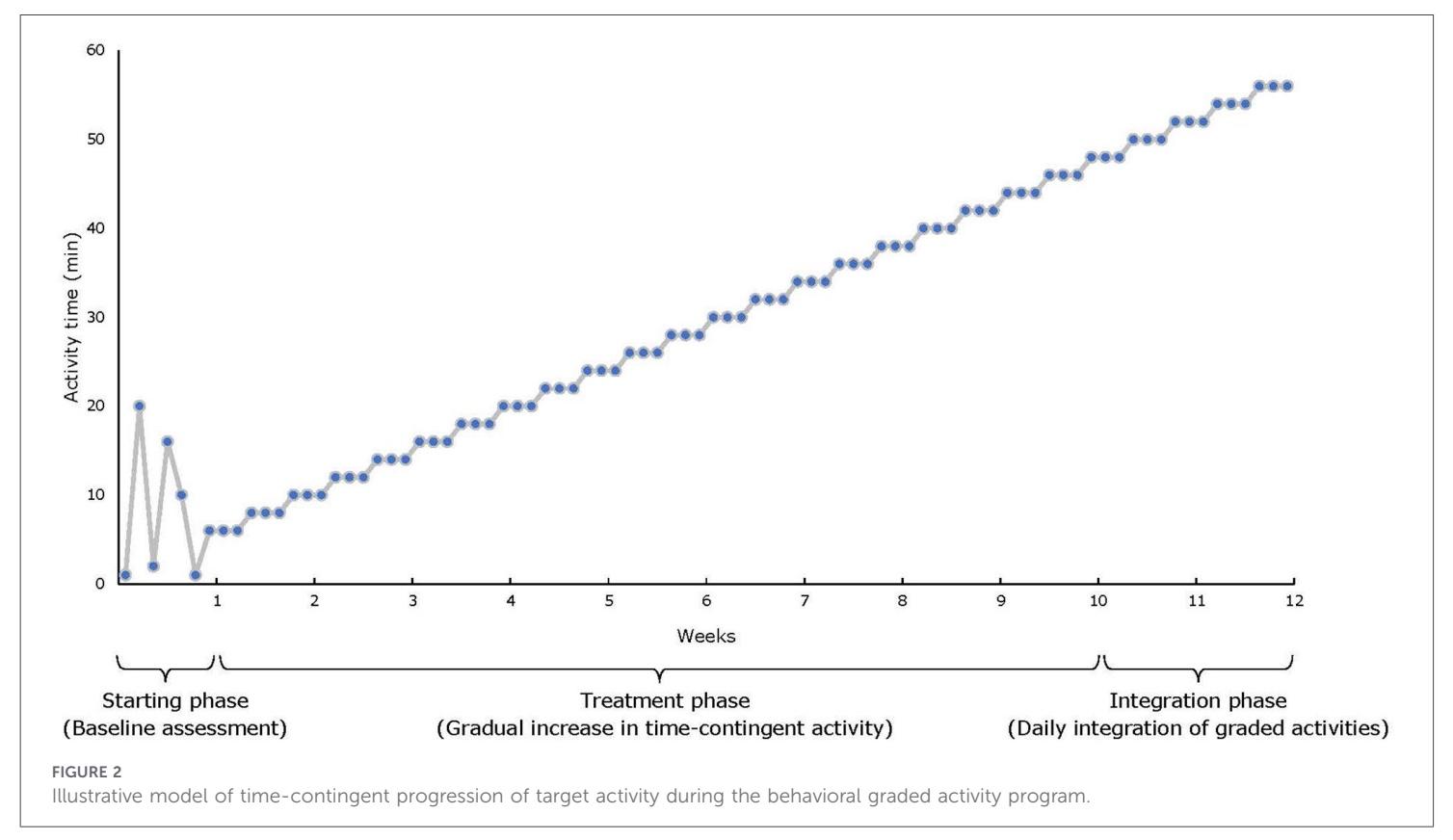
From: Hattori & Matsubara, Front Pain Res. (2026)
The starting phase was a week where baseline activity levels were assessed, and physiotherapists rated the task-specific activity tolerance and fear of movement. Pain-related beliefs were explored using the vicious circle model. Together with the patient, the physiotherapist defined long-term and short-term activity goals and chose tasks amenable to graded progression. Based on the assessed task-specific activity tolerance, the time-contingent quotas were set per participant.
The treatment phase was a 12-week intervention that was delivered once weekly for approximately 40 minutes in an outpatient setting. The set activities were progressed in a time-contingent manner, with quotas increasing systematically over time to approach the previously defined goals. The participants were instructed to adhere to the time goals, without over- or underperforming them. Only in the presence of signs suggestive of an active inflammatory response (flare) could the progressions be temporarily paused and restarted at a lower level. Activity diaries were used to track daily performance and to facilitate self-monitoring and encourage adherence. Successful talk engagement was positively reinforced.
The last phase of the intervention program was the integration phase, where the progressed activities were integrated into the participants’ daily life. The longer-term adherence and maintenance of their functional gains was supported.
As a primary outcome, the KOOS score was used. The minimal important change was defined as 12.4 and 8.4 points for the pain and ADL subscales, respectively. Secondary outcomes included pressure pain threshold (PPT) at the knee and forearm, temporal summation of pain (TSP), and accelerometer-measured step count for 7 days at baseline and after the intervention.
- For PPT, pressure was applied at four standardized locations around the patella of the affected knee. The lowest threshold across these locations (the point at which pressure was experienced as painful) was used to represent local mechanical pain sensitivity. PPT was also measured over the extensor carpi radialis longus in the forearm as an indicator of pain sensitivity at a site distant from the knee. A higher PPT means that more pressure can be tolerated before it becomes painful and therefore indicates lower mechanical pain sensitivity.
- TSP was measured at the knee location with the lowest baseline PPT. Participants first rated the pain caused by a single pressure stimulus on a 0-100 VAS. After any residual pain had disappeared, ten identical pressure stimuli were applied at one-second intervals. The participant rated the pain again after the tenth stimulus. TSP was calculated by subtracting the pain rating after the first stimulus from the rating after the tenth. A larger positive difference indicates greater pain amplification in response to repeated stimulation, whereas a reduction in TSP indicates less pain amplification. The pressure intensity was individualized according to each participant’s PPT, and TSP was measured only once at each assessment to avoid prolonged after-sensations.
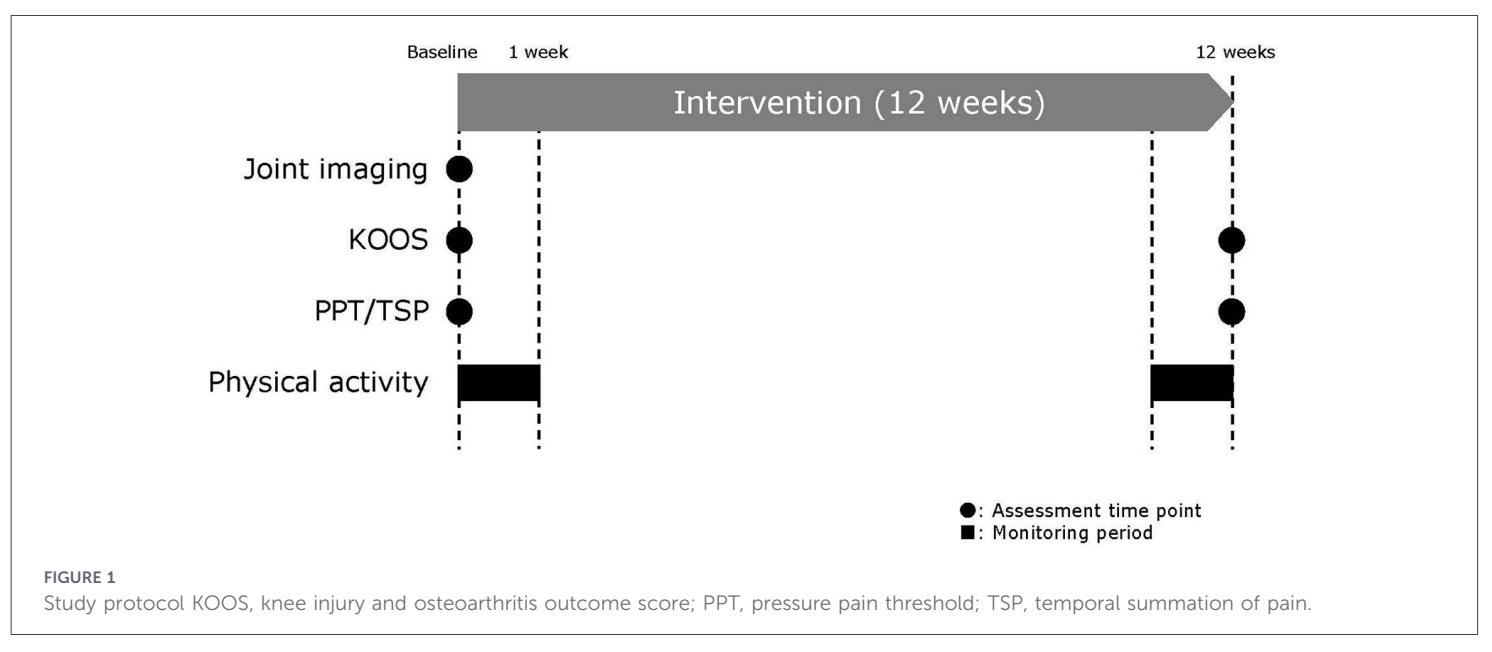
From: Hattori & Matsubara, Front Pain Res. (2026)
Results
Of 32 patients starting the program, 26 (median age 70.5) completed it. There were no differences in age, BMI, or pain duration between those completing the program and those dropping out. Twenty reported using NSAIDs as needed for pain exacerbations before the start of the intervention.
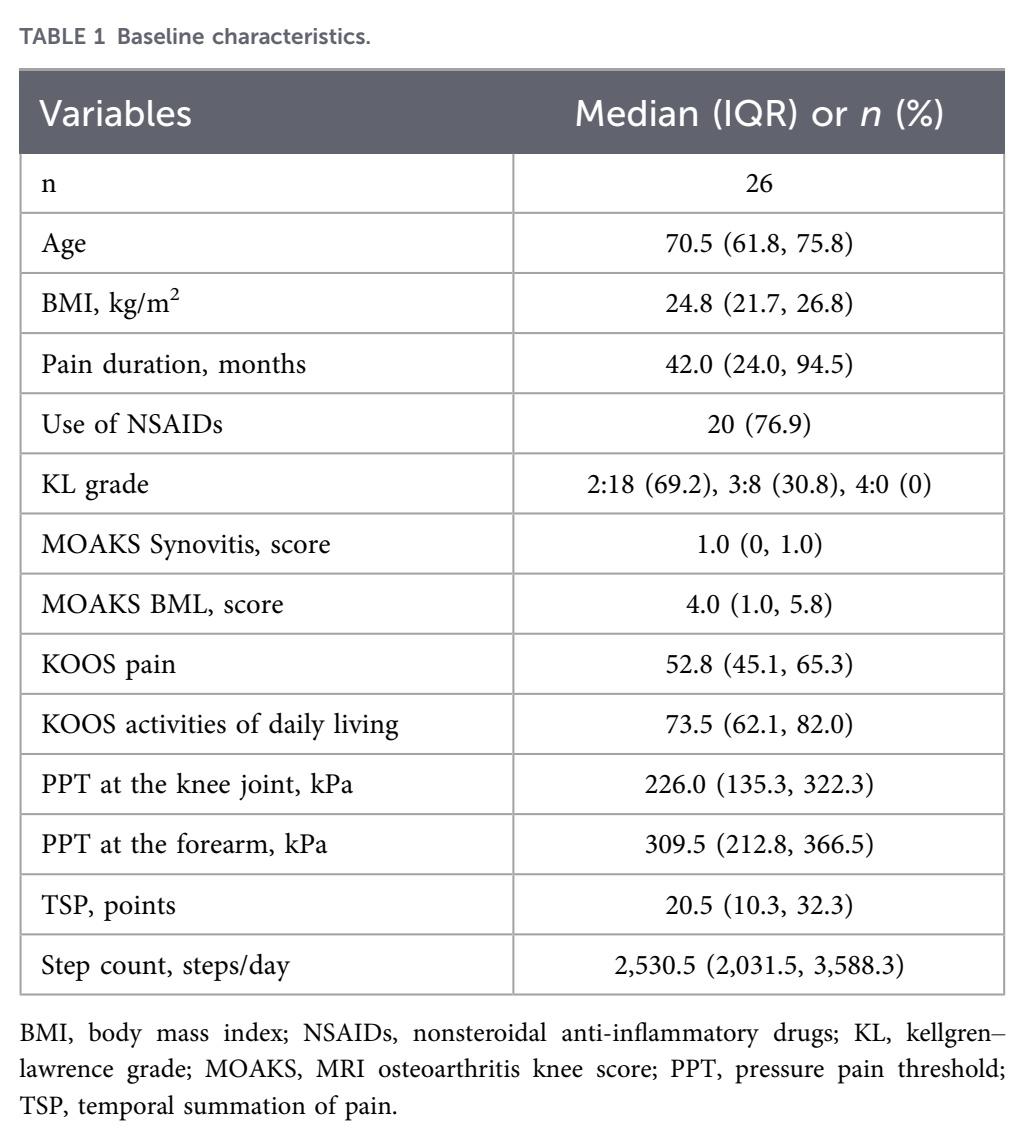
From: Hattori & Matsubara, Front Pain Res. (2026)
Significant improvements exceeding the minimal important change were found for:
– KOOS pain: +15.44 points (95% CI 7.25 to 23.63)
– KOOS ADL: +11.78 points (95% CI 2.12 to 21.44)
Pain sensitization measures also shifted in the expected direction with increases in pressure pain thresholds at the knee and at the forearm, and a decrease in temporal summation of pain. The step count increased with +1,628.88 steps/day (95% CI 819.62 to 2,438.14)
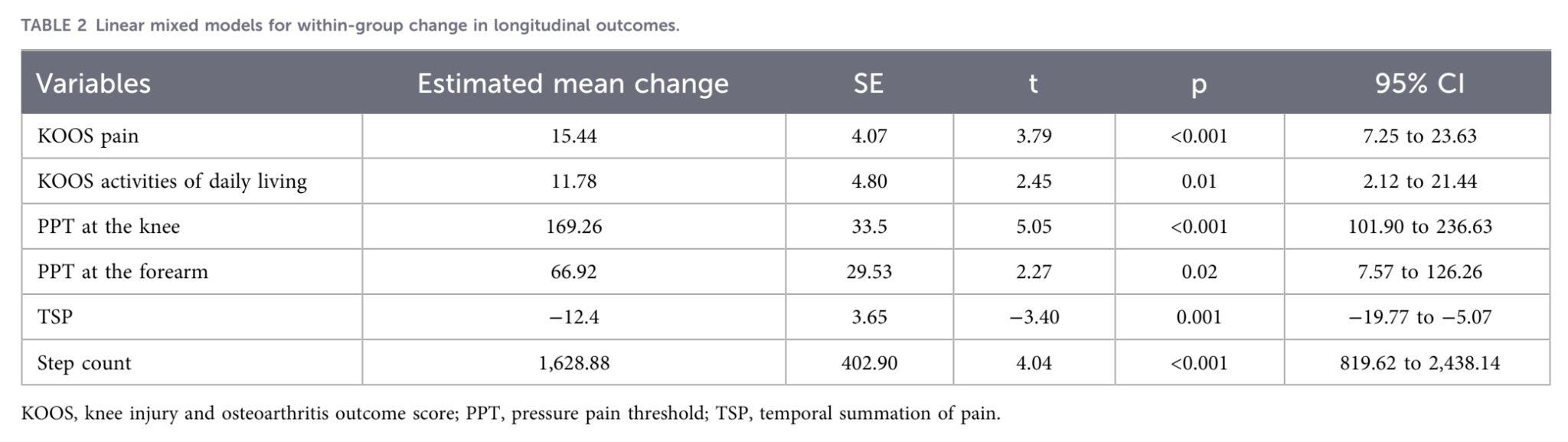
From: Hattori & Matsubara, Front Pain Res. (2026)
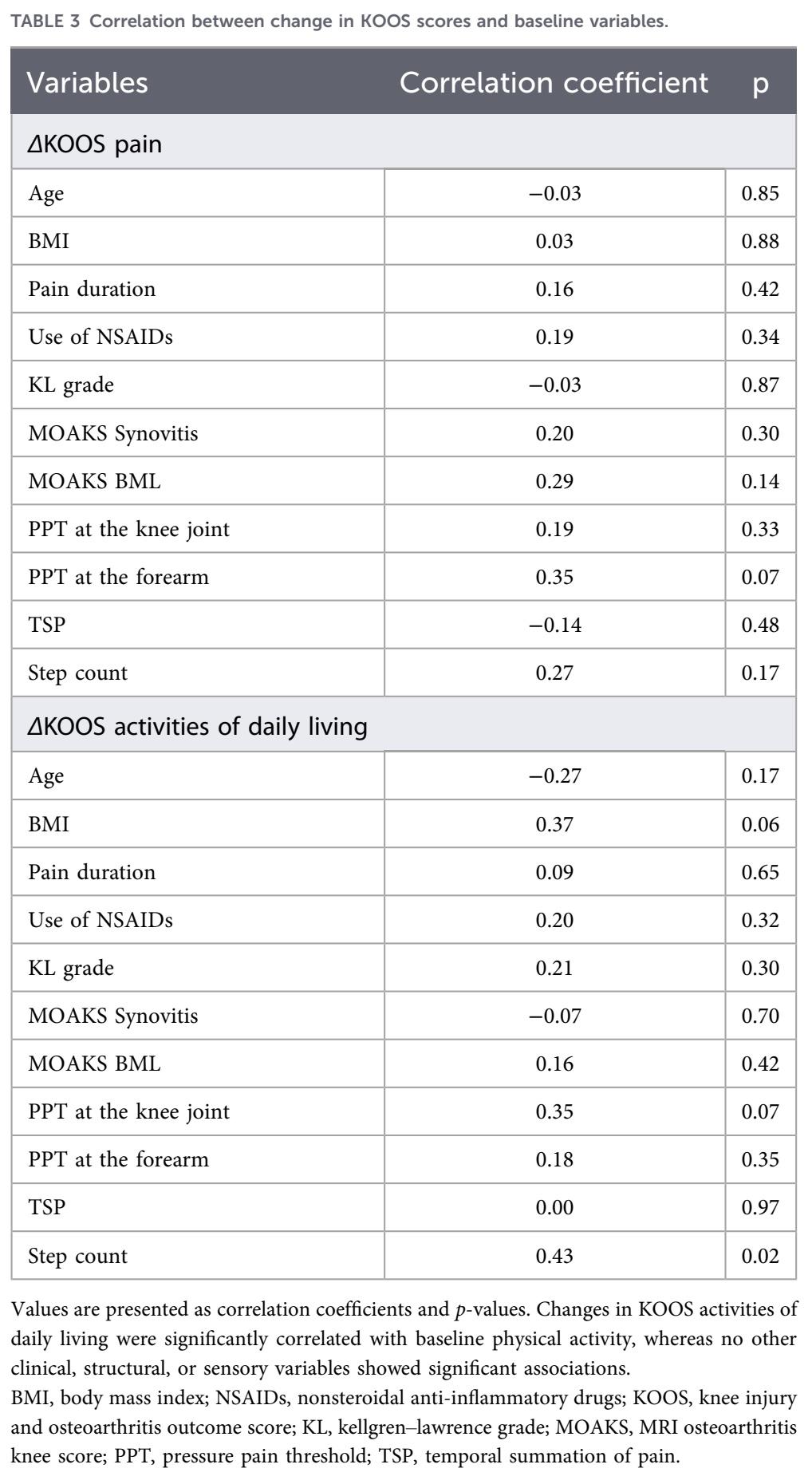
In the correlation analyses between the baseline measures and the changes in KOOS scores, only baseline step count was associated with improvement in KOOS ADL (r = 0.43, p = 0.02). Baseline KL grade, MOAKS synovitis/BML scores, and baseline PPT/TSP showed no significant association with clinical improvement. NSAID use dropped from 76.9% (n=20) to 30.8% (n=8) of participants over the course of the intervention.
From: Hattori & Matsubara, Front Pain Res. (2026)
Questions and thoughts
On average, participants reported less pain and fewer limitations in activities of daily living. The point estimates for both KOOS improvements exceeded the minimal important change values chosen by the authors. However, this does not mean that every participant experienced a clinically important improvement, as the confidence intervals for both mean changes extended below the respective minimal important change thresholds. The results therefore show statistically reliable average improvement, but provide less certainty that the average benefit exceeded the clinical threshold.
Participants tolerated more pressure before reporting pain at both the knee and forearm. Pain amplification (TSP) during repeated pressure stimulation also decreased. These results indicate that the experimental measures of local and widespread pain sensitivity changed during the intervention period, which is a very interesting finding that should be further studied in future blinded and controlled trials.
What is an example of a time-contingent approach to an activity?
For example, if a patient’s goal was to walk continuously for 30 minutes, the starting quota was set slightly below their current walking tolerance, defined in the starting phase. Walking time was then increased by approximately one minute every three days, allowing the patient to gradually reach the 30-minute target by the end of the 12-week program. For hobby and household activities, the number of repetitions or the task duration was used.
Figure 2 sets the example: in the starting phase a patient can walk 1 minute of pain-free walking, followed by 20-minutes the next day, followed by 2 minutes the day thereafter, then 17 minutes and 10 minutes the subsequent days, and 1 minute on the final day of the week. The program then takes an average of those activities: which is 8,5 minutes, and then includes a “safety-threshold” of 30%, equalling nearly 6 minutes. Then the patient is instructed to walk 6 minutes every day for 3 days, not more, not less. The fourth day, approximately 1,5 minutes are added, so then the patient walks 7,5 minutes on days 4-6. This gradual progression every 3 days is continued over the weeks in case no flares are occurring, to ultimately achieve the predefined goal.
Can we conclude that Behavioral Graded Activity is the way to go for this population of non-responders?
Participants received individualized activity progression, goal setting, pain education, self-monitoring, positive reinforcement, and weekly physiotherapist contact. Any or all of these components may have contributed to improvement. The study does not isolate the specific influence of time-contingent progression, and can not conclude this since this was a single-group study.
Yet, the results give a genuinely interesting signal for a notoriously hard-to-treat subgroup: patients who’ve already “failed” standard exercise. The fact that both PPT improved locally and at the forearm, together with an improvement in TSP, is intriguing. This could be a hint that BGA might be engaging both peripheral and central pain modulation pathways, not just building tolerance at the knee.
That said, I’d resist the temptation to conclude that BGA “desensitizes” the nervous system. This is a single-arm, uncontrolled design. Repeated QST exposure alone can produce habituation effects that mimic a genuine reduction in sensitization, and we have no way here to separate a true treatment effect from regression to the mean, natural symptom fluctuation, or simply the effect of extra clinician attention over 12 weeks.
Clinically, what stands out most to me is the correlation finding (or rather, the lack of one): neither radiographic severity nor MRI findings nor baseline sensitization predicted who improved. Only baseline step count did. This fits a broader pattern in OA rehab: what a scan shows often tells you less about treatment response than what a patient is currently doing day-to-day. If your sensitized, exercise-fatigued knee OA patient is already relatively active, that alone might be a better prognostic sign than anything from their imaging.
Talk nerdy to me
A few methodological points worth flagging before you get too excited about this one. First, and most importantly: this is a single-arm trial with no comparator, so we cannot attribute the observed changes to BGA itself. The authors are upfront about this and frame their entire discussion as exploratory — a framing I’d encourage you to hold onto as well.
Second, the QST outcomes (PPT, TSP) were secondary and exploratory, and p-values were not adjusted for multiple comparisons; only the two primary KOOS outcomes received a Bonferroni correction (α = 0.025). With six outcomes tested and no correction on five of them, some caution around the sensitization findings specifically is warranted.
Third, the sample was deliberately restricted to non-responders to prior exercise, which reduces variability in baseline sensitization and structural measures (range restriction). This likely explains at least part of why KL grade, MOAKS scores, and baseline PPT/TSP failed to correlate with outcomes, as the cohort may simply have been too homogeneous on these variables to detect an association even if one exists in a broader KOA population.
Finally, this was an all-female, single-clinic sample in Japan, which limits generalizability, and psychological variables like kinesiophobia, catastrophizing, and self-efficacy, which are plausible mechanisms for why BGA might work, were not measured at all. Given BGA’s roots in operant conditioning and fear-avoidance frameworks, this feels like a missed opportunity that future RCTs should correct.
Take-home messages
Meaningful daily activities can be progressed systematically after conventional exercise has not helped enough. In patients with knee OA who plateau despite guideline-concordant exercise, behavioral graded activity is a plausible next step, as it produced clinically meaningful improvements in pain and function alongside favorable shifts in pain sensitization markers over 12 weeks. In this study, weekly BGA used personally relevant goals, manageable starting quotas, and gradual time-contingent progression. Pain was not ignored, but day-to-day pain fluctuations did not dictate every activity decision.
Don’t fear the scan. Structural findings on X-ray or MRI shouldn’t discourage you from trying this approach: they didn’t predict who responded. Baseline physical activity level might be a more useful prognostic cue than imaging.
Clinical improvement occurred alongside changes in experimental pain sensitivity. Participants reported less pain and disability, took more daily steps, tolerated greater pressure, and showed less pain amplification after 12 weeks. These parallel changes suggest that pain sensitivity is not necessarily fixed, but they do not prove that BGA changed the nervous system.
The results are promising but cannot establish that BGA caused the improvement. There was no control group, only 26 female completers from one clinic, medication use changed, and multiple exploratory analyses were performed. BGA may be a useful clinical option for selected exercise non-responders, but comparative randomized trials are needed before concluding that it is superior to conventional exercise or specifically modifies pain sensitization.
That said, treat this as hypothesis-generating rather than practice-changing until controlled trials confirm that BGA, rather than time, attention, or natural fluctuation, is actually driving these changes.
Reference

