


Research
Manual Therapy & Modalities
July 2, 2026
The Effect of Adding Cervical or Shoulder Mobilization in Subacromial Pain Syndrome (SAPS) - Does It Increase the Outcomes of Pain, Sensation, and Function Beyond Conventional Treatment?

Adding mobilization to conventional treatment may improve some short-term outcomes in SAPS, particularly function when shoulder mobilization is added and selected pain/sensory outcomes when cervical mobilization is added
However, the effects were not consistent across all outcomes, cervical mobilization was not superior for general ROM or overall function compared with shoulder mobilization, and the cervical group received more total treatment time
Therefore, the study suggests a possible added short-term benefit, but does not definitively prove a specific cervical mobilization effect beyond increased hands-on dose and therapist contact
Introduction
The shoulder and neck regions are closely related, and it is recommended that assessments screen for local dysfunctions to create a multimodal approach across both articulations. Subacromial Pain Syndrome (SAPS) serves as a descriptor for shoulder issues of non-traumatic and non-specific origin, typically presenting as discomfort during overhead movements. This terminology moves away from traditional mechanical impingement theories, focusing instead on broader factors such as sensory processing, localized tissue capacity, and motor patterns.
In practice, physiotherapists often focus on local shoulder factors: rotator cuff loading, scapular control, posterior capsule stiffness, pain-free range of motion, and graded strengthening. However, this study starts from a broader clinical question: should we also consider the cervical spine when treating people with SAPS? The authors argue that the cervical and shoulder regions may be linked through both biomechanical and neurophysiological pathways. They describe previous evidence suggesting that shoulder dysfunction and neck disability can coexist, and that cervicothoracic manual therapy has sometimes been associated with improvements in pain, range of motion, and function. However, the literature is inconsistent. Some studies support adding cervical or thoracic manual therapy, while others do not show clear additional benefit. As findings are associative and remain inconsistent, and not many studies have looked into sensory processing as an outcome, rather than only pain and function, this study tried to dive into this topic as the primary outcome measure.
This matters because chronic shoulder pain may involve altered pain processing, reduced pressure pain thresholds, tactile disturbance, and features consistent with peripheral or central sensitization. Therefore, the current study was necessary because it not only asked: “Does cervical mobilization reduce shoulder pain?” It also asked whether cervical mobilization might influence sensory processing around the shoulder.
Methods
The study’s main aim was to investigate whether adding cervical mobilization to conventional physiotherapy and shoulder mobilization would improve sensory outcomes, pain, range of motion, pain-free range of motion, and function in people with SAPS. A three-arm randomized controlled trial including adult participants diagnosed with SAPS was set up.
Participants were included if they had shoulder pain for at least 3 months, had a VAS pain score of at least 4/10, and had not received shoulder treatment in the previous 6 months. They were excluded if they had previous shoulder, cervical, or thoracic surgery, frozen shoulder, shoulder instability, full-thickness rotator cuff tear, systemic rheumatological or neurological disease, upper extremity fracture, or diagnosed scoliosis.
The SAPS diagnosis was clinically established by a physiotherapist and supported where needed by imaging such as MRI or X-ray. Before inclusion, participants were also re-evaluated using a cluster consisting of the following clinical tests: Neer, Hawkins–Kennedy, Jobe, and painful arc tests.
Participants were allocated into three equal groups:
- Conventional treatment group
- Conventional treatment + shoulder mobilization group
- Conventional treatment + shoulder mobilization + cervical mobilization group
All three study arms underwent a total of 15 therapy sessions, scheduled five times weekly over a three-week period.
The conventional treatment consisted of heat using hot packs, therapeutic ultrasound, TENS, and exercise. TENS was applied for 20 minutes at 80–100 Hz, 100 µs pulse duration, sensory-level intensity, without muscle contraction. Electrodes were placed around the painful shoulder. Ultrasound was applied at 1 MHz, 1.0–1.5 W/cm², continuous mode, for 5 minutes over the subacromial region.
The exercise program included stretching and strengthening. Stretching involved pectoralis stretching at 90° and 135° shoulder elevation against a wall and posterior capsule stretching. These were performed as 1 set of 5 repetitions, with each stretch held for 15 seconds. Strengthening included resisted internal and external rotation, scapular retraction at 90° elbow flexion and full elbow extension, and scapular plane elevation in the “full can” position. Strengthening was performed as 3 sets of 10 repetitions. Resistance was individualized using red or green TheraBand and 0.5–2.5 kg dumbbells, based on 10-repetition maximum. Importantly, resistance was kept constant across the 3-week intervention.
The shoulder mobilization group received the above plus Maitland Grade III glenohumeral mobilizations in addition to conventional treatment. Techniques included lateral distraction, anterior-posterior glide, and inferior glides. Mobilizations were performed as 30 oscillations per set, each oscillation lasting 1–2 seconds, for 3 sets.
The cervical mobilization group received all of the above, plus cervical mobilization. The cervical techniques included traction, lateral flexion, anteroposterior sliding, and lateral sliding, also applied in the Grade III range. Again, the dose was 30 oscillations per set, 1–2 seconds per oscillation, for 3 sets.
All manual therapy was delivered by the same physiotherapist with 7 years of clinical experience.
Outcome measures
The assessments were performed before and after the last intervention. The sensory outcomes were selected as primary outcome measures and included:
- Pressure pain threshold (PPT), which was measured with a handheld dynamometer using a 1 cm² rubber probe. The measurements were taken over the upper trapezius, supraspinatus, and middle deltoid. Pressure was applied until the participant first reported pain. Each site was tested three times, and the mean value was used.
- Tactile sensation was measured by two-point discrimination over the C5, C6, and C7 shoulder dermatomal regions. The authors tested anterior, middle, and posterior shoulder regions using an ascending method, starting at 0 mm and increasing the distance by 2–3 mm until the participant reported two distinct points. Lower two-point discrimination values indicate better tactile acuity. For example, someone who can feel two distinct points when assessing 3mm of separation between them has better tactile acuity compared to someone who feels two different points at a separation of 6mm.
Secondary outcome measures were:
- Pain intensity, which was measured using the VAS, for worst shoulder pain during active shoulder movements over the previous week.
- Pain-free ROM was measured during active shoulder abduction. Participants elevated the arm until pain first appeared, then continued until maximum available range and reported when the painful range ended. The angular difference between pain onset and pain cessation was recorded.
- Active shoulder ROM was measured with a goniometer for flexion, extension, abduction, adduction, internal rotation, and external rotation.
- Function was measured using the Turkish DASH questionnaire, including the disability/symptom score and optional sport/music and work modules.
Results
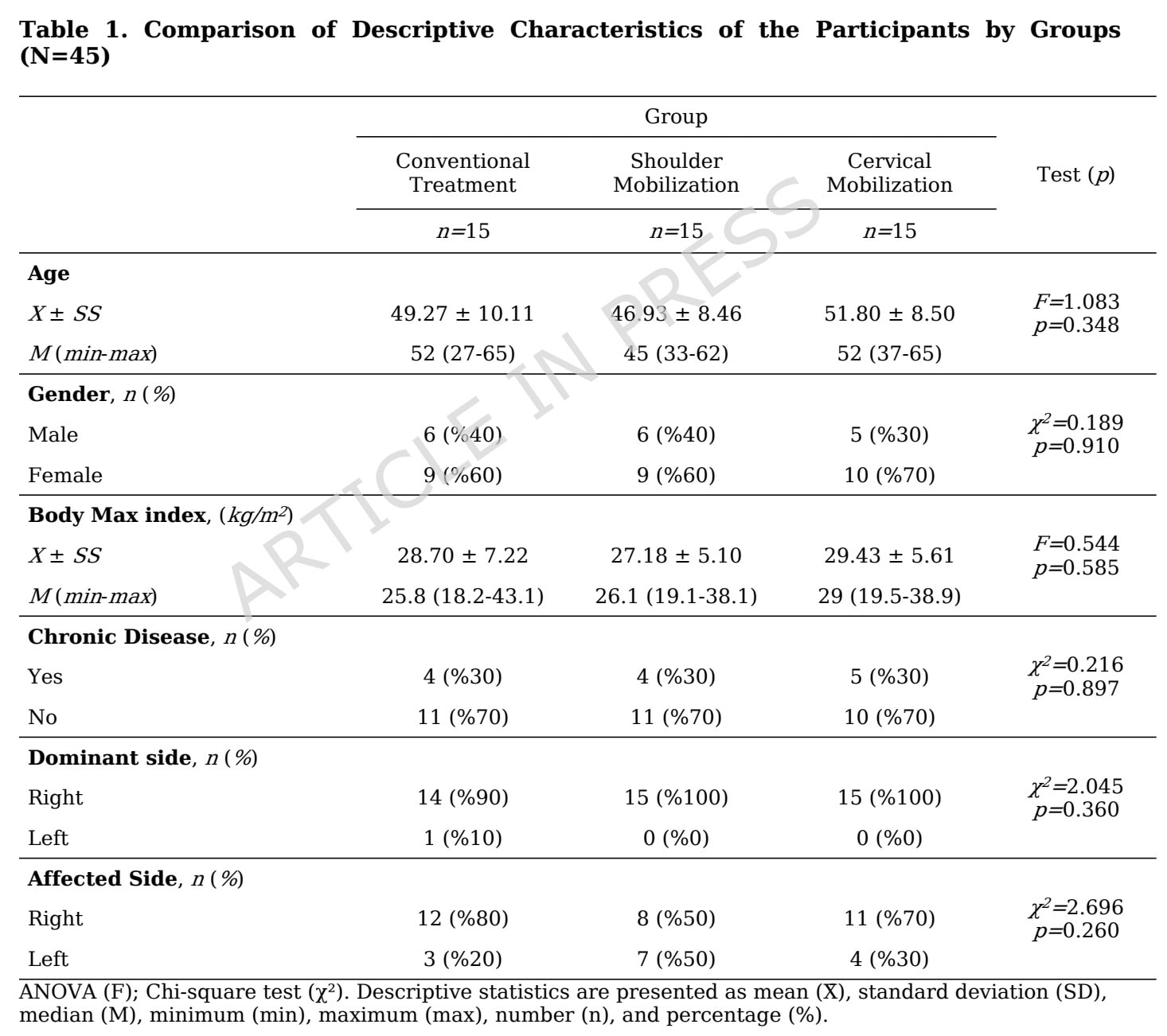
Forty-five participants between the ages of 27 and 65 years were enrolled in the RCT and randomized over the 3 intervention arms. The descriptive statistics at baseline indicated equal groups.
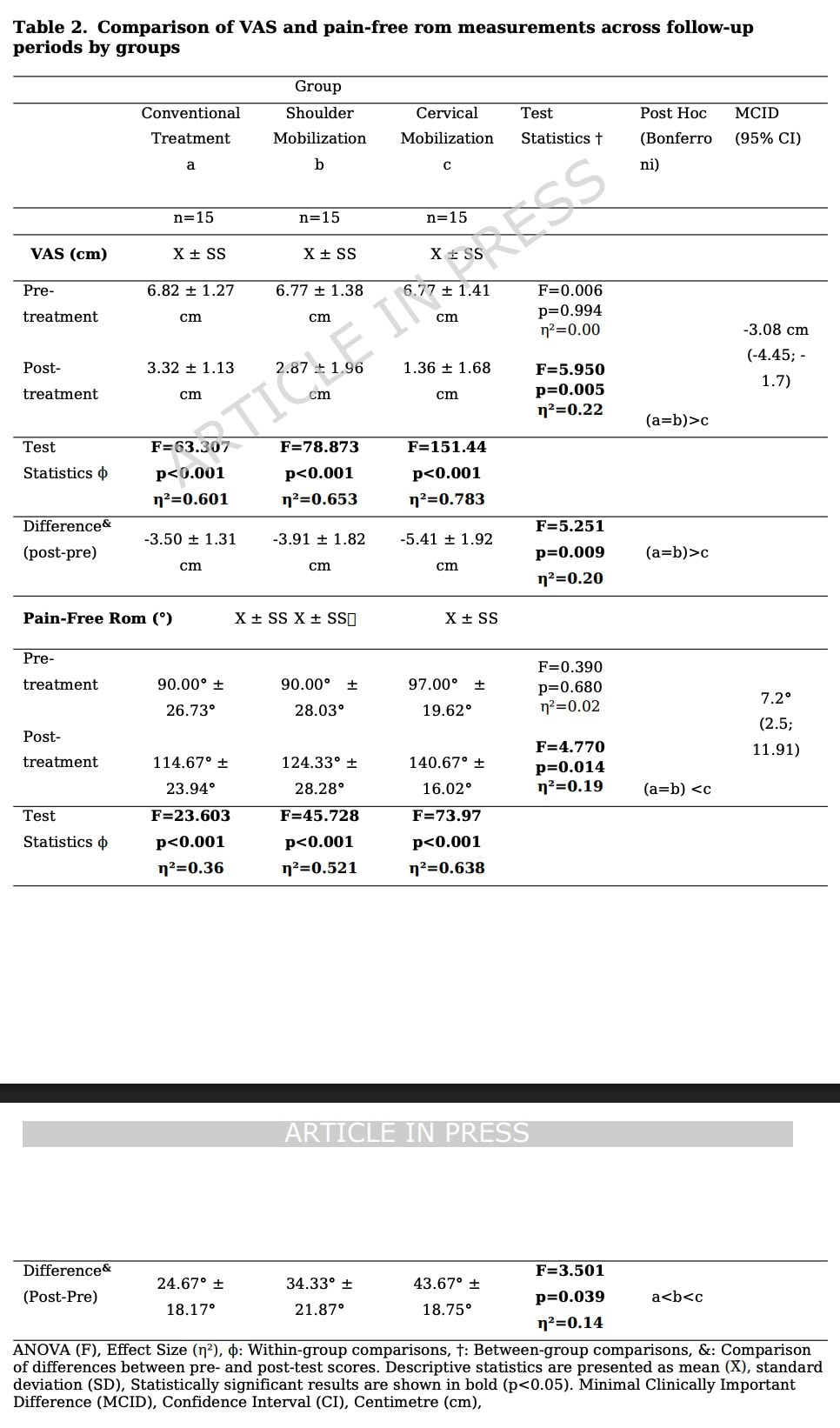
The mixed-methods ANOVA did not reveal significant differences between the groups at baseline regarding pain and pain-free range of motion. A significant main effect of time for pain and pain-free range of motion was observed for all groups, which means that all groups improved over the course of the 3 weeks.
A significant group x time interaction effect was observed for pain and pain-free range of motion. The post-hoc Bonferroni-adjusted comparisons indicated that the cervical mobilizations group experienced significantly greater pain and pain-free range of motion improvements, compared to the two other groups.
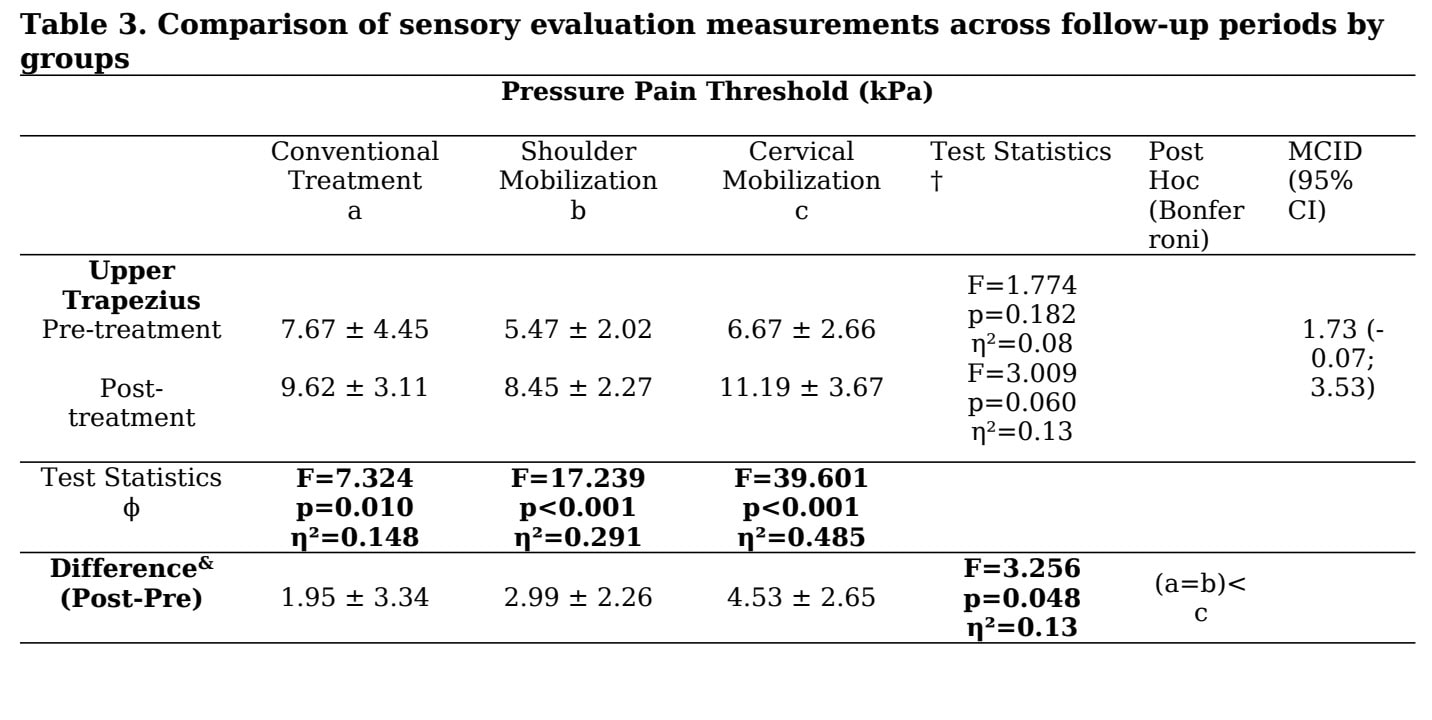
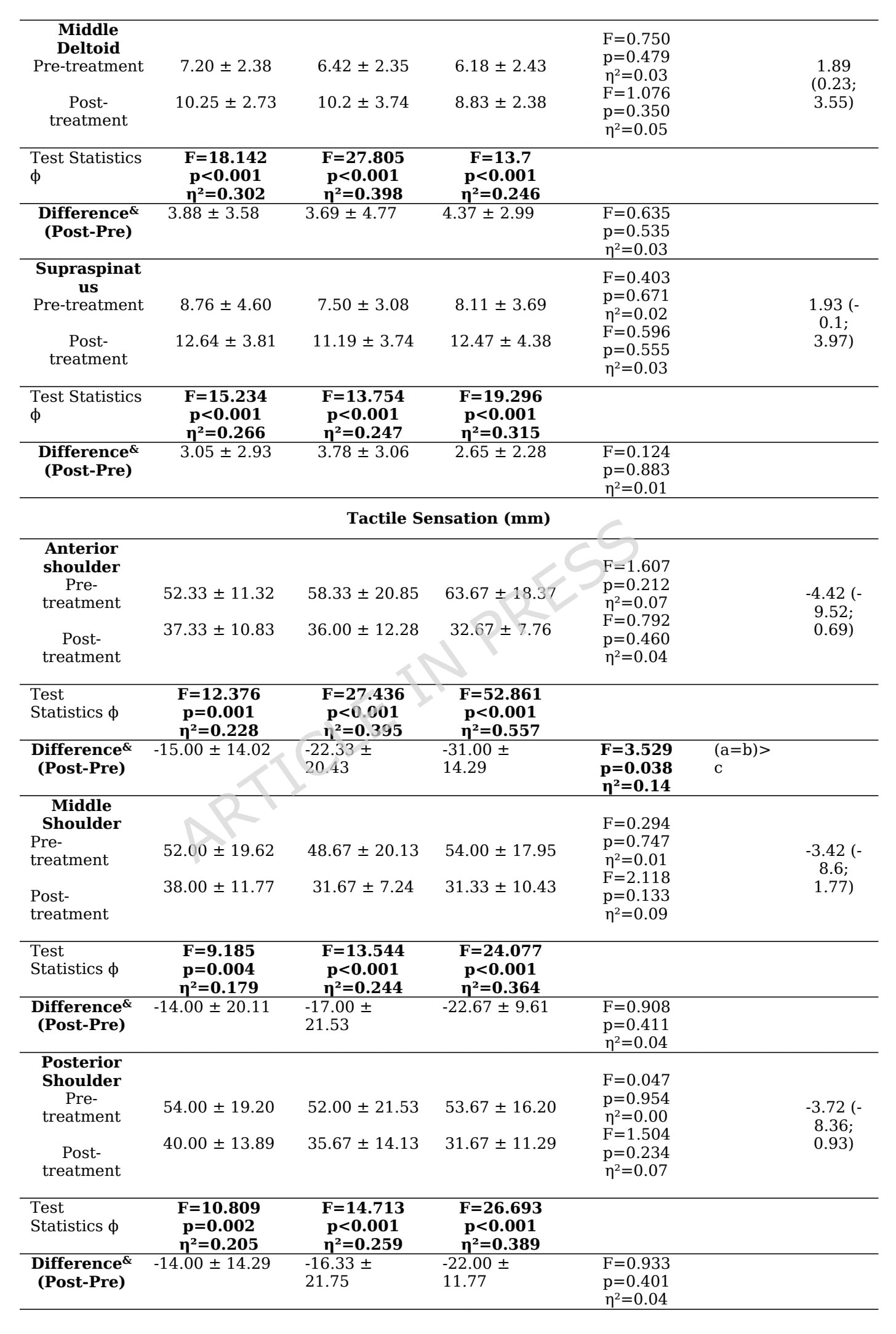
The primary outcome analysis showed that at baseline, all groups were comparable for PPT and tactile sensation across all measurement locations. A significant main effect of time was seen in all groups for all tactile sensation and PPT measurements. All groups thus improved over the course of 3 weeks. A significant group x time interaction effect was observed for upper trapezius PPT and anterior shoulder tactile sensation in the cervical mobilization group.
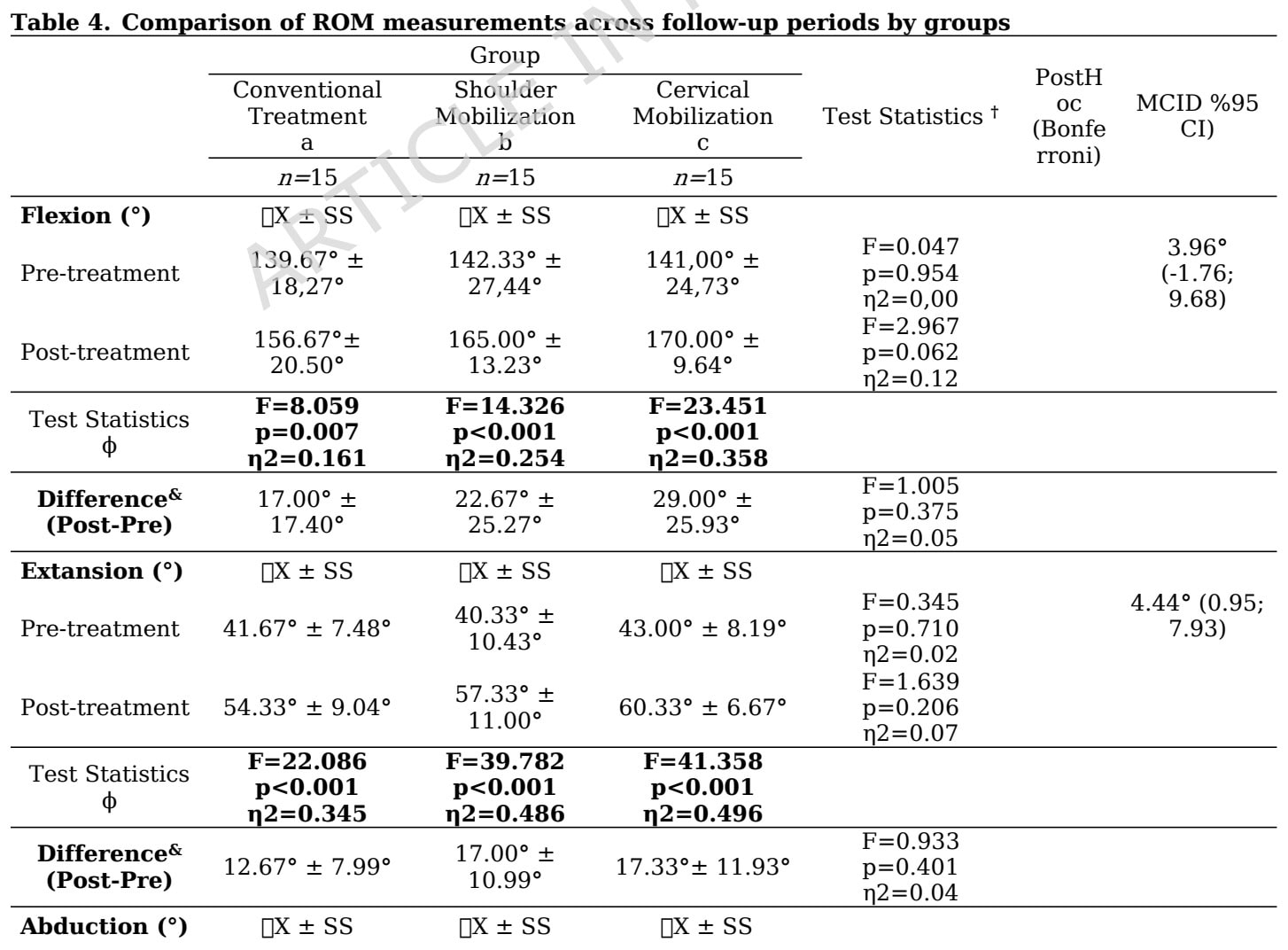
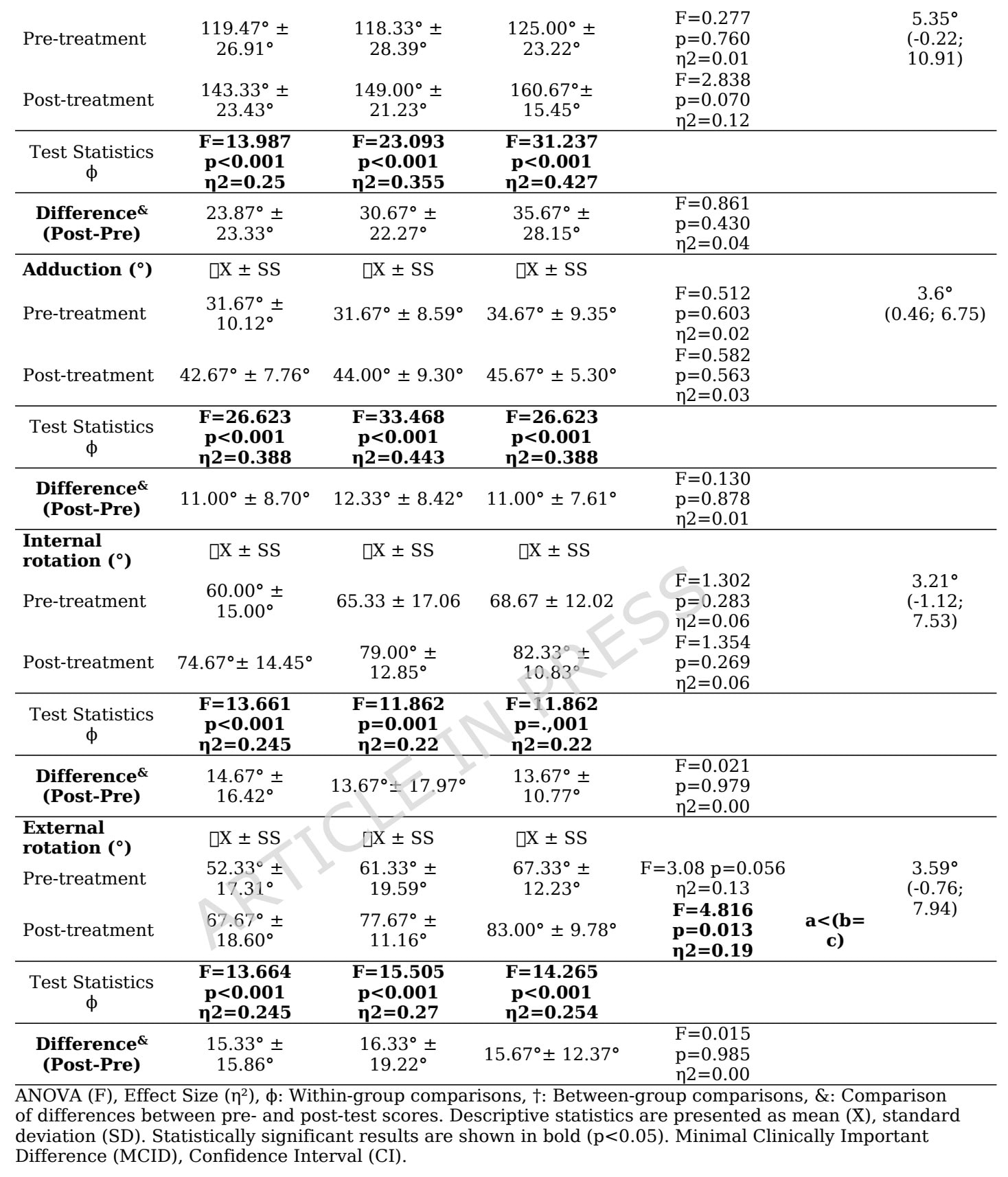
No baseline group differences were observed regarding range of motion. Here also, a significant main effect of time was observed for all directions across all groups. No significant group x time effect was observed. A significant group effect was observed for post-treatment external rotation, where the authors report that the conventional group had lower values compared to the shoulder and cervical mobilization groups.
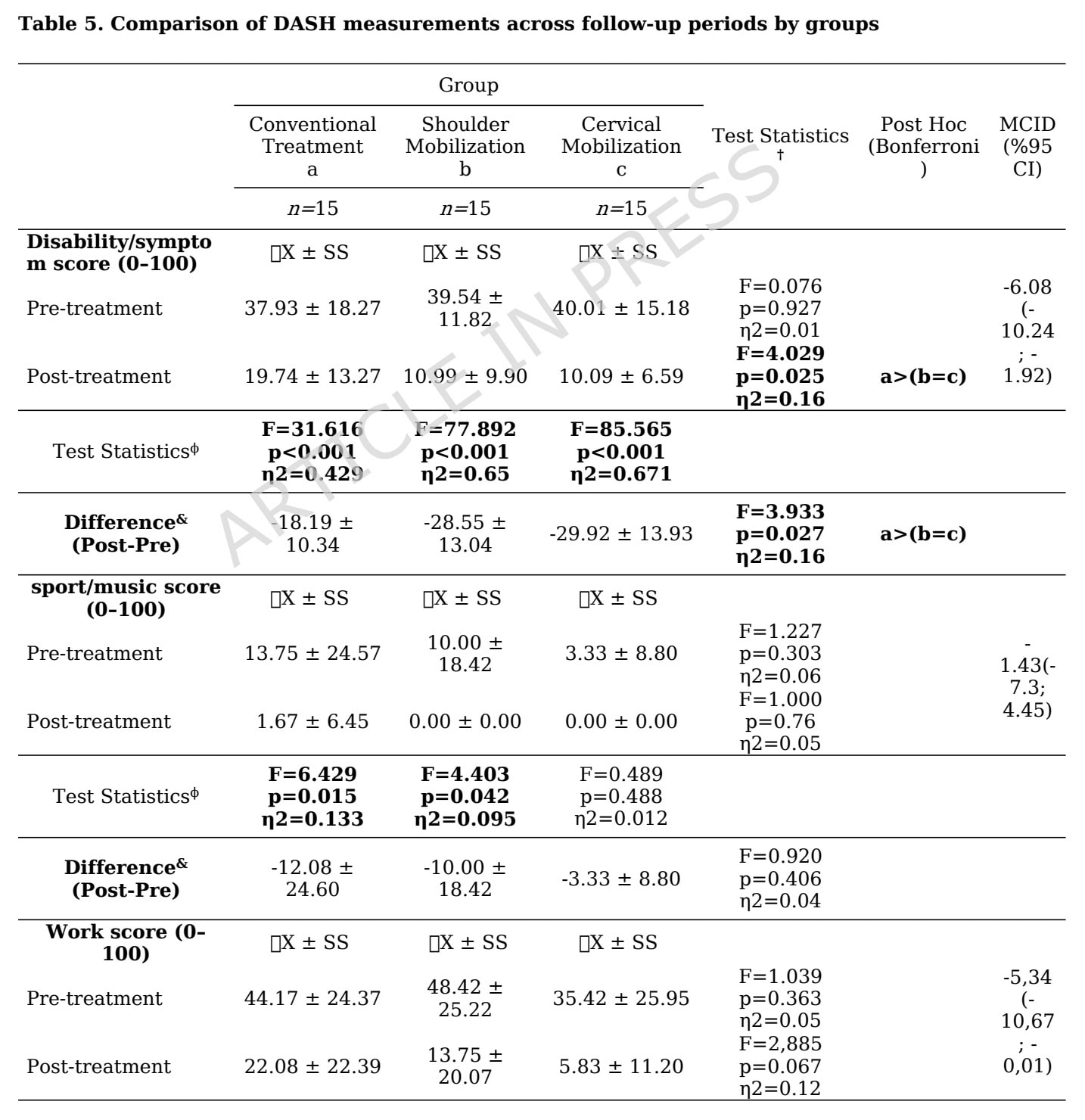
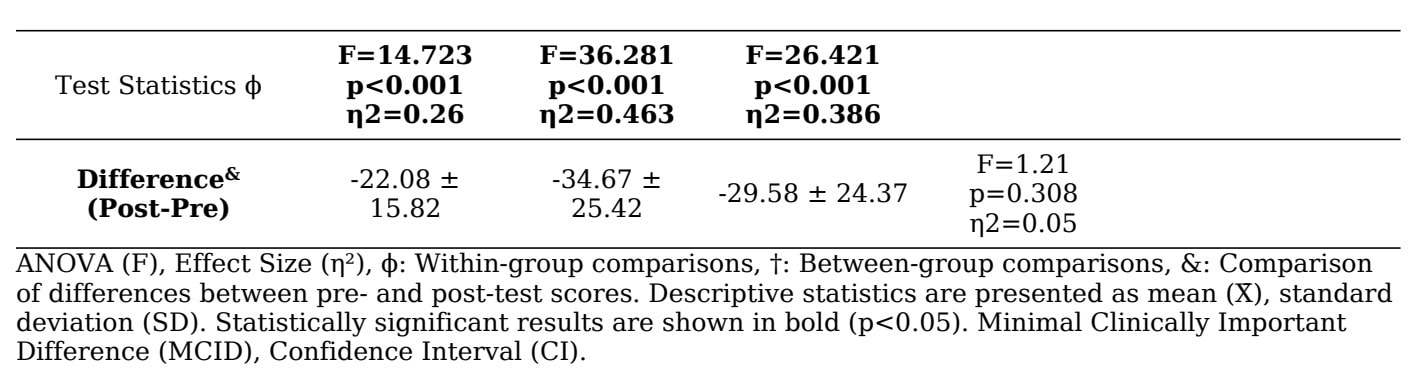
DASH functional outcomes were not different between groups at baseline. A significant main effect of time was observed across all groups. A significant group x time interaction effect was found for the disability/symptom subdomain. Post-hoc Bonferroni-adjusted comparisons indicated that the shoulder mobilization and cervical mobilization groups showed significantly greater improvements compared to the conventional treatment group.
Questions and thoughts
We can question why the authors first described the secondary outcomes. They likely led with pain and pain-free ROM because these outcomes are more clinically intuitive and produced clearer findings, even though sensory outcomes were stated as the primary outcomes. Methodologically, this is not ideal: primary outcomes should usually be presented first because they anchor the study’s hypothesis and sample size. This matters because the sensory findings were selective rather than broadly positive: cervical mobilization was superior only for upper trapezius pressure pain threshold and anterior shoulder tactile sensation, not across all sensory sites. So the ordering may make the intervention appear more convincing than if the results had been led by the primary outcomes.
Reading the pain threshold assessments, I wondered how the authors differentiated between the PPT of the upper trapezius muscle and the supraspinatus muscle, as both are overlapping? Unfortunately, the paper does not clearly explain how they anatomically separated the upper trapezius and supraspinatus PPT sites. It does not provide landmarking details such as exact distance from the acromion, scapular spine, clavicle, or how they avoided overlap between the superficial upper trapezius and deeper supraspinatus region. Clinically, this matters because the upper trapezius overlies part of the supraspinatus fossa, and the assessment of PPT is not muscle-specific in a strict anatomical sense. Pressure applied over the supraspinatus region may still stimulate skin, fascia, upper trapezius fibers, supraspinatus, periosteum, or other local tissues. So the study’s assessment of the supraspinatus PPT should probably be better interpreted as a regional pressure pain sensitivity over the supraspinatus area, instead of an isolated measure of supraspinatus muscle sensitivity.
Why was tactile sensation, measured by 2-point discrimination, an outcome measure? Two-point discrimination measures how well someone can distinguish two separate tactile stimuli on the skin; poorer discrimination is often interpreted as a sign of altered tactile acuity and possibly changes in sensorimotor or cortical processing in persistent pain states. The authors argued that chronic SAPS may involve peripheral and central sensitization components, instead of just local shoulder tissue irritation, especially because this is rarely assessed as an outcome. An important caveat is that two-point discrimination does not directly prove central sensitization or cortical reorganization. It is an indirect clinical sensory measure, and in this study it may have been influenced by testing method, attention, expectation, and measurement variability.
We can also question whether there was a difference in total treatment time across groups. Although the paper does not explicitly report total treatment time per group, it is almost certain that this occurred. All groups received the same conventional package: hot pack, TENS, ultrasound, and exercise. The shoulder mobilization group then received additional glenohumeral mobilizations. The cervical mobilization group received conventional treatment plus shoulder mobilization plus cervical mobilization. This can be an important limitation, as the study does not state whether the extra benefit came from cervical mobilization specifically, or from more total treatment time, more therapist contact, greater expectation/contextual effects, or simply a higher manual therapy dose. A cleaner design would have included a time-matched comparison, such as sham cervical mobilization or another non-specific hands-on intervention of equal duration.
Another relevant question is the reason for not progressing the resistance in the exercises over the study period. The most likely reason I can think of is standardization. By keeping the exercise dose similar and controlled across groups, I assume that the authors wanted to ensure that if any between-group difference emerged, by standardizing, they wanted it to be more plausibly attributed to the added mobilization components rather than different progression of exercise load. That said, clinically this is a limitation. A non-progressive strengthening program over 15 sessions is not how many physiotherapists would manage subacromial pain in practice. It may have made the trial cleaner experimentally, but it also may have underdosed the exercise component. This could make the added manual therapy effects look more attractive than they would against a well-progressed loading program.
From a clinical perspective, the conventional treatment package was a mixed comparator: the exercise component was relevant for SAPS rehabilitation, but the use of hot pack, TENS, and ultrasound may not reflect best contemporary practice when used as core treatment elements. The strengthening program was also not progressively loaded over the 3 weeks, which improves standardization but underrepresents how many physiotherapists would normally progress shoulder rehab. Therefore, when the mobilization groups outperformed conventional treatment, this may partly reflect added hands-on care compared with a relatively passive and non-progressive baseline program, rather than proving that shoulder or cervical mobilization would add the same benefit on top of an optimized, progressive exercise-based approach.
Talk nerdy to me
The PPT assessment was done using a handheld dynamometer, but is that a valid measurement? I would not treat it as equivalent to a dedicated pressure algometer without caution. A handheld dynamometer can measure force, but PPT testing also depends heavily on probe size, pressure application rate, examiner control, anatomical landmarking, participant instruction, and intra-rater reliability. The authors did not directly test intra-rater reliability, and they did not provide detailed landmarking. So, the measurement is probably acceptable as a regional pressure sensitivity measure, but not as a highly precise or muscle-specific assessment. It may be valid enough for exploratory PPT assessment, but the lack of study-specific reliability testing and detailed site standardization weakens confidence in the sensory findings.
Withdrawing participants were replaced, but this does not reflect common practice. Five participants withdrew during the study, but they were replaced with new eligible individuals to maintain group size and balance. This is clinically convenient but methodologically important, because it deviates from a strict intention-to-treat approach. Replacing them helped the authors keep equal group sizes, but it is less valid than intention-to-treat analysis for preserving randomization and estimating pragmatic treatment effects. It is not “statistical replacement” in the same sense as imputing missing data; it is more like recruiting substitute participants after attrition, which can introduce selection bias and should be considered a meaningful limitation.
The authors, however, mainly used the appropriate between-group differences to report changes over time using mixed-design ANOVA. This showed cervical mobilization had greater improvement for pain, pain-free ROM, upper trapezius pressure pain threshold, and anterior shoulder tactile sensation. However, the interpretation sometimes leaned too much on the fact that all groups improved, which does not prove superiority. They also highlight some post-treatment differences, such as external rotation ROM, even though the actual change over time was not different between groups. For DASH, both mobilization groups improved more than conventional treatment, but cervical mobilization was not superior to shoulder mobilization. So the cervical-specific conclusions should stay limited to the outcomes with significant group × time effects.
Take-home messages
- Global improvement is not evidence of superiority. Because every group received active treatment, the clinically relevant question is whether one group improved more than another, not whether each group improved from baseline.
- Cervical mobilization showed short-term superiority only for selected outcomes. The cervical group improved more for pain, pain-free abduction, upper trapezius PPT, and anterior shoulder two-point discrimination, but not consistently across all ROM, sensory, or functional measures.
- Function improved more with mobilization in general, not cervical mobilization specifically. DASH disability/symptom scores improved more in both mobilization groups than in conventional treatment, but cervical mobilization was not clearly better than shoulder mobilization.
- The conclusions should remain cautious because the design was not time-matched and did not use strict intention-to-treat analysis. The cervical group received more total hands-on treatment, and withdrawn participants were replaced, so the added benefit may partly reflect treatment dose, therapist contact, contextual effects, or selection bias rather than a specific cervical mobilization effect.
Reference
100% Free Headache Home Exercise Program
Download this FREE home exercise program for your patients suffering from headaches. Just print it out and hand it to them for them to perform these exercises at home


