


Research
Diagnosis & Imaging
October 14, 2026
Musculoskeletal Manifestations of Perimenopause: An Overlooked Etiology of Musculoskeletal Pain?

This systematic review and meta-analysis investigated the prevalence of musculoskeletal pain across menopausal stages in 93,021 women
Higher pain prevalence: Musculoskeletal pain was more prevalent in peri- and postmenopausal women than in premenopausal women
Clinical implications: Consider menopause in your differential diagnosis while screening for other potential causes of musculoskeletal pain
Introduction
Musculoskeletal pain can affect everyone, most often in midlife. Declining estrogen levels during the menopausal transition in women may contribute to joint changes, as estrogen plays a role in maintaining synovial and cartilage health. Women may experience increased musculoskeletal pain during perimenopause, although the relationship between hormonal changes and pain remains unclear.
Evidence from prospective studies and animal models suggests that sex hormones may influence joint health and pain. This systematic review and meta-analysis aims to investigate the prevalence of musculoskeletal manifestations of perimenopause and characterize associated musculoskeletal conditions, providing insights into the potential contribution of menopause to musculoskeletal symptoms.
Methods
The study is a systematic review and meta-analysis conducted in accordance with established systematic review methods. Three reviewers independently screened titles and abstracts, followed by full-text assessment. Disagreements at the full-text screening stage were resolved by a fourth reviewer. Three reviewers also independently extracted data in duplicate using a predefined, pilot-tested form in Microsoft Excel. Extracted information included study characteristics, patient demographics, menopausal status, and musculoskeletal outcomes. Study quality was independently assessed by three reviewers using the Joanna Briggs Institute critical appraisal checklist for cross-sectional studies.
Eligibility criteria
Randomized controlled trials, comparative cohort studies, case-control studies, and surveys were eligible for inclusion. Studies had to include perimenopausal women and report primary data on musculoskeletal symptoms or pathology. Publications in all languages were considered. Menopausal stages were classified according to the Stages of Reproductive Aging Workshop (STRAW) criteria. Studies that did not distinguish menopausal stages according to these criteria were excluded, as were studies involving women who had undergone surgical menopause, to focus on the natural menopausal transition.
Outcomes assessed
The primary outcomes were the prevalence of muscle or joint pain, back pain, and defined musculoskeletal pathologies. When pain severity was reported, moderate and severe symptoms were included in the muscle or joint pain outcome. Pain symptoms were assessed using several instruments, including the Menopause Rating Scale, Menopause-Specific Quality-of-Life Questionnaire, Kupperman Menopausal Index, Greene Climacteric Scale, and study-specific questionnaires. Data on specific musculoskeletal conditions were extracted when available.
The authors performed meta-analyses to estimate pooled prevalence and compare outcomes across menopausal stages. Random-effects models were used, and subgroup analyses explored potential sources of heterogeneity, including measurement scale, geographical location, pain severity, and mean age.
From: Kruse et al., JBJS Open Access. (2026)
Results
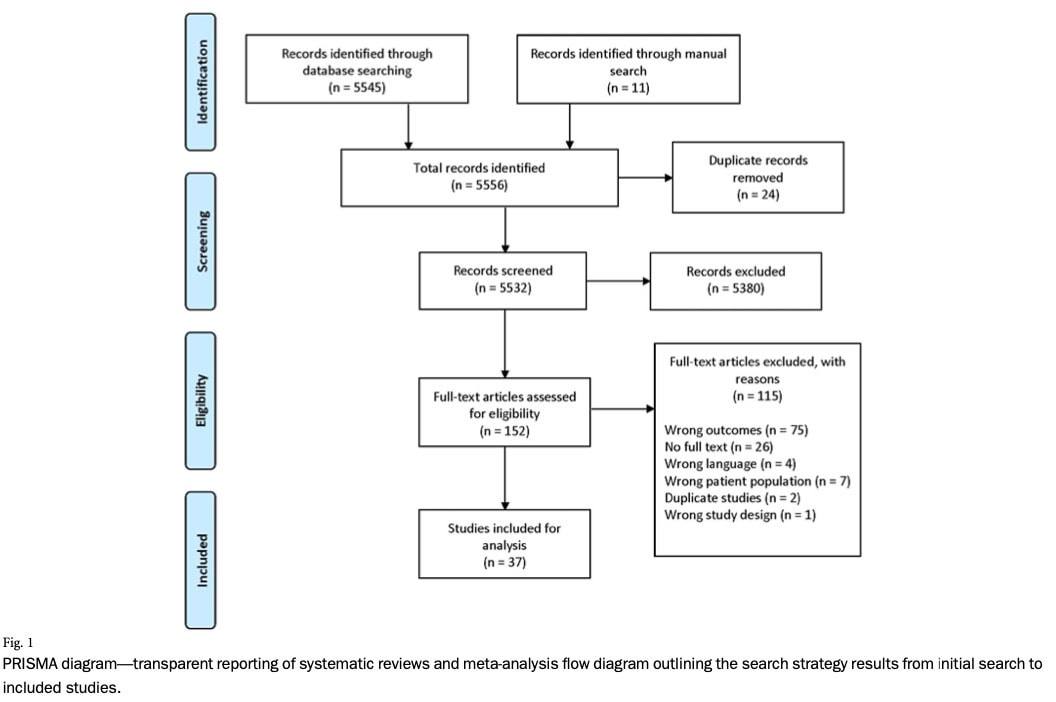
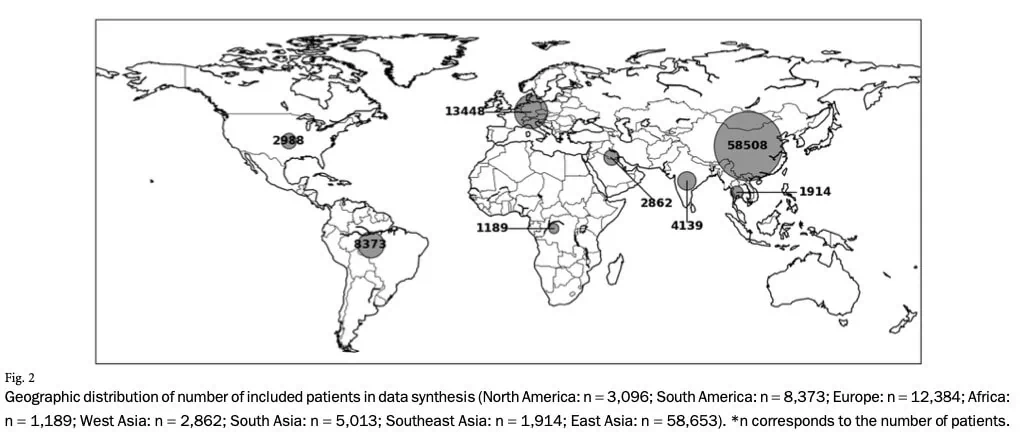
37 studies were included; 35 were cross-sectional, and the remaining two were prospective cohort designs. The included studies were from 22 different geographical regions. Asia was the most represented continent, followed by Europe, North America, and lastly Africa.
A total of 93,421 women were included, among which 26,789 were categorized in the premenopausal stage, 24,326 in the perimenopausal stage, and lastly 41,906 in the postmenopausal stage.
From: Kruse et al., JBJS Open Access. (2026)
Muscle and joint pain
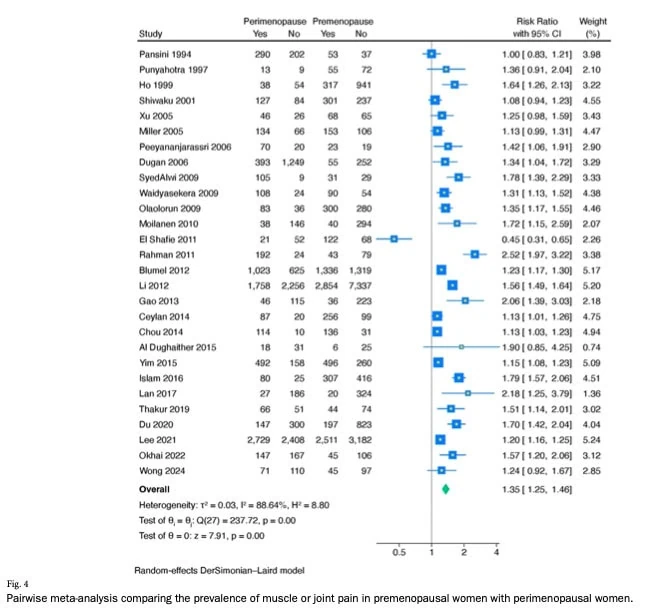
The prevalence of muscle or joint symptoms was 40% in premenopausal women, 57% in perimenopausal women, and 59% in postmenopausal women. Pairwise meta-analysis demonstrated a significantly higher risk of muscle or joint pain among perimenopausal women compared with premenopausal women, with an absolute risk difference of 130 additional cases per 1,000 women. No significant subgroup interactions were observed.
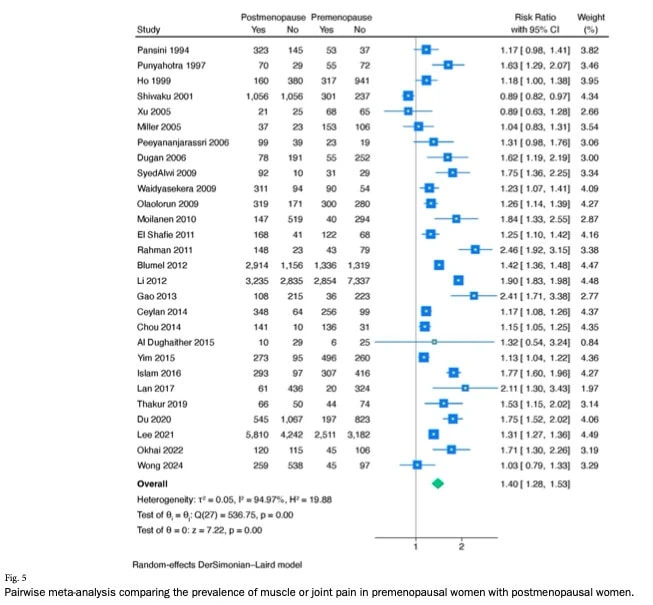
Similarly, postmenopausal women had a significantly higher risk of muscle or joint pain compared with premenopausal women, with an absolute risk difference of 148 additional cases per 1,000 women. No significant subgroup interaction was observed according to the measurement scale. However, significant subgroup interactions were identified according to geographic study location and pain severity. Subgroup analysis according to mean cohort age did not demonstrate a significant interaction between studies including women with a mean age of 50 years or older and those with a mean age below 50 years.
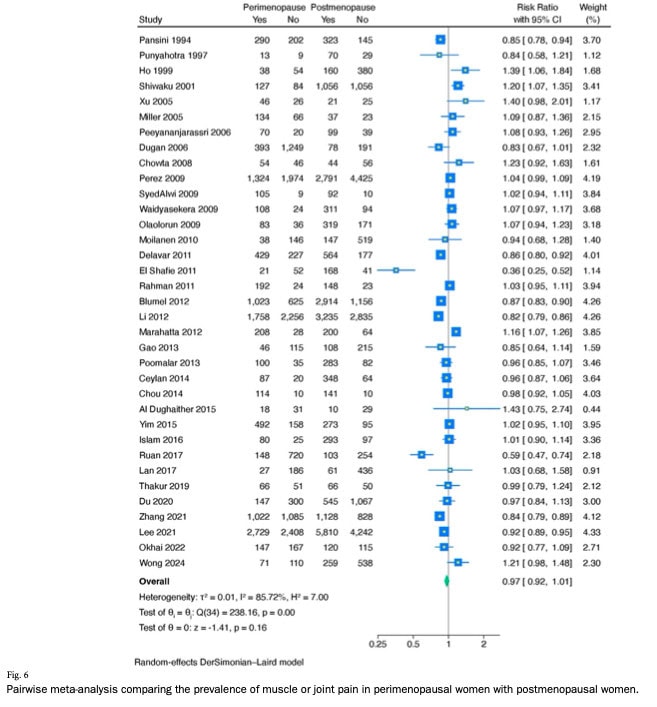
In contrast, pairwise meta-analysis comparing perimenopausal and postmenopausal women found no statistically significant difference in the prevalence of muscle or joint pain between the two groups. However, significant subgroup interactions were identified according to the measurement scale, geographic location, and pain severity.
From: Kruse et al., JBJS Open Access. (2026)
Back pain
The pooled prevalence of back pain was 42% in premenopausal women, 57% in perimenopausal women, and 59% in postmenopausal women. Pairwise meta-analysis demonstrated a significantly higher risk of back pain among perimenopausal women compared with premenopausal women, with a 15% higher risk. Similarly, postmenopausal women had a significantly higher risk of back pain compared with premenopausal women, with a 20% higher risk.
From: Kruse et al., JBJS Open Access. (2026)
Prevalence of Musculoskeletal conditions in perimenopausal women
A single study by Yoon et al. reported the prevalence of specific musculoskeletal manifestations of perimenopause, comparing several shoulder pathologies between perimenopausal (n = 197) and premenopausal (n = 113) women. Adhesive capsulitis was the most common diagnosis, with a prevalence of 35% in perimenopausal women and 32% in premenopausal women; however, no significant difference was observed between the two groups. Shoulder synovitis was the second most common diagnosis and was significantly more prevalent among perimenopausal women than premenopausal women (25.1% vs. 6.2%). Rotator cuff disorders and arthritis were also assessed; however, no specific results for these outcomes were reported in the reviewed study.
From: Kruse et al., JBJS Open Access. (2026)
Questions and thoughts
The findings suggest that structural changes occurring during perimenopause, potentially related to declining estrogen levels, may contribute to musculoskeletal manifestations of perimenopause and postmenopause. This hypothesis is supported by the higher prevalence of MSK pain among perimenopausal women compared with premenopausal women, and the further increase observed after menopause. Osteoarthritis and synovitis may be associated with these endocrinological changes, as declining estrogen levels have been linked to increased inflammatory responses.
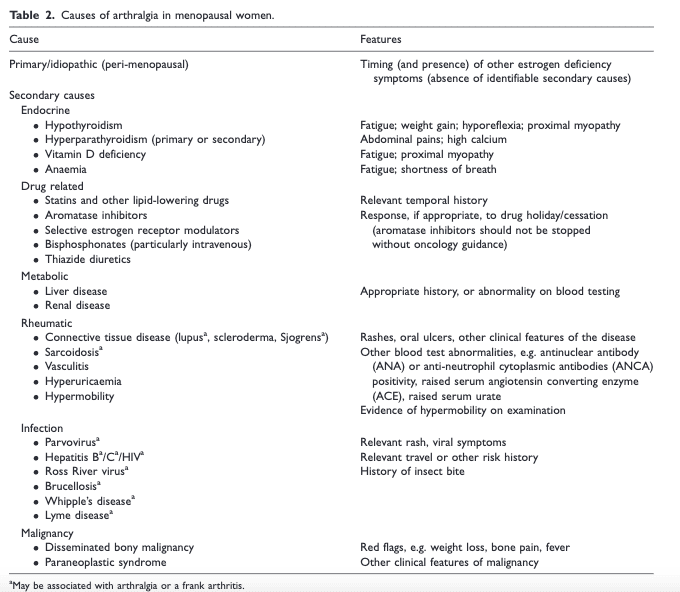
From a physiotherapy perspective, early identification of patients whose pain may have an endocrinological component is essential. A narrative review highlights several clinical features that may suggest menopausal involvement, including symptom onset and progression, menopausal status, hot flashes, sleep disturbances, and mood changes. Pain may affect joints, muscles, bursae, and entheses. Medical history should also include thyroid disease and vitamin D deficiency. When systemic disease is suspected, metabolic, drug-related, endocrine, rheumatic, infectious, and malignant causes should be considered. Table 2 provides further information on the differential diagnosis of arthralgia in menopausal women.
A second narrative review, published in 2024, introduces the term musculoskeletal syndrome of menopause and identifies additional clinical features, including atraumatic joint pain and a history of adhesive capsulitis. It also highlights polymyalgia rheumatica as an important differential diagnosis, given its presentation with musculoskeletal pain in adults over 50.
When physiotherapy assessment suggests a potential systemic origin of symptoms, referral to a general practitioner is warranted. Further medical assessment and laboratory investigations may help identify underlying endocrine or metabolic disorders, medication-related effects, infections, or other systemic conditions.
Regarding management, the literature emphasizes monitoring bone health and assessing osteoporosis risk. Vitamin D supplementation may benefit individuals with inadequate levels, although evidence for vitamin K2 supplementation remains less conclusive. Weight-bearing and resistance exercises are important interventions to support bone health, improve function, and reduce fall risk. Finally, menopausal hormone therapy (MHT) may help manage selected consequences of estrogen deficiency, although its suitability must be assessed individually by a medical practitioner.
From: Kruse et al., JBJS Open Access. (2026)
Talk nerdy to me
Several methodological limitations should be considered when interpreting the study findings.
One major limitation is the substantial heterogeneity among the included studies, potentially arising from differences in study populations, outcome definitions, measurement instruments, and contextual factors. Consequently, the pooled estimates should be interpreted with caution, as the observed association may not be consistent across all populations and settings.
The geographical distribution of participants also warrants consideration. As illustrated in Figure 2, approximately 63% of the included participants were from East Asia. Although the authors conducted subgroup analyses according to geographical location, cultural differences in pain perception and reporting, as well as differences in population characteristics and healthcare contexts, may limit the generalizability of the pooled estimates to other populations.
Outcome measurement represents another important limitation. The questionnaires used were primarily designed to assess menopausal symptoms or quality of life rather than to comprehensively characterize musculoskeletal manifestations of perimenopause. Although the authors performed subgroup analyses according to measurement scale, differences in questionnaire content and outcome definitions may limit comparability across studies. Furthermore, the lack of information regarding pain location, functional impact, and specific musculoskeletal diagnoses restricts the clinical interpretation of the findings.
Despite these limitations, the large pooled sample of approximately 93,000 women is an important strength, providing substantial statistical information and broad coverage across multiple countries. However, sample size alone cannot compensate for confounding, measurement limitations, or substantial between-study heterogeneity.
Taken together, the findings suggest an association between menopausal stage and the prevalence of musculoskeletal pain. The proposed biological mechanisms, including the potential influence of declining estrogen levels on inflammation and musculoskeletal tissues, provide biological plausibility for this association. Nevertheless, these mechanisms do not establish causality.
Take-home messages
-
Musculoskeletal manifestations of perimenopause are common. This systematic review and meta-analysis found a higher prevalence of muscle and joint pain in perimenopausal (57%) and postmenopausal women (59%) compared with premenopausal women (40%). However, no significant difference was found between peri- and postmenopausal women.
-
Consider menopause as one potential contributing factor, not a definitive diagnosis. Hormonal changes may influence musculoskeletal tissues and pain mechanisms, but the available evidence does not establish a causal relationship. A comprehensive assessment remains essential to identify other contributing factors and potential differential diagnoses.
-
Adapt your clinical reasoning to the patient’s broader presentation. Menopausal status, symptom onset and progression, sleep disturbances, hot flashes, and mood changes may provide useful clinical context. Atraumatic musculoskeletal pain should also prompt consideration of systemic, endocrine, metabolic, and inflammatory conditions when clinically indicated.
-
Physiotherapy remains relevant for maintaining function and musculoskeletal health. Individualized resistance and weight-bearing exercise can support strength, physical function, and bone health. When symptoms suggest an underlying systemic condition, collaboration with a general practitioner is appropriate.
-
Interpret the findings with caution. The predominance of cross-sectional studies, substantial heterogeneity, and reliance on self-reported symptoms limit causal inference and generalizability. Further longitudinal research is needed to clarify how menopausal changes influence musculoskeletal pain and to identify effective management strategies.
Reference

