

Research
Exercise
August 14, 2026
To Avoid or Not - Engaging in High-Impact Physical Activity and the Risk of Needing Joint Replacement Surgery

Introduction
As knee and hip osteoarthritis is common, many guidelines exist and recommend low-impact physical activity to keep the joints healthy. Low-impact activities such as walking, cycling, and swimming are often encouraged, while activities involving running or jumping may be discouraged because of concerns that repeated impact could accelerate joint damage. These concerns are also common among patients. As a matter of fact, many people are afraid that running and other high-intensity or high-impact activities will damage their joints further. Some healthcare professionals even advocate against participating in high-impact physical activity to avoid damaging the joints. However, evidence showing that high-impact activity increases the likelihood of joint replacement remains limited.
An important difficulty is that many studies classify physical activity according to cardiovascular intensity rather than mechanical joint impact. Vigorous cycling, for example, may be metabolically demanding without producing the same impact loading as running. This distinction matters because impact loading may have different effects on joint symptoms, muscle function, and bone health. High-impact activity could theoretically influence joint replacement through several pathways. It might aggravate pain and fear of joint damage, potentially increasing the likelihood of surgery. Conversely, active people may maintain better strength, bone mass, and physical capacity, which could reduce that likelihood.
This study therefore investigated whether participation in high-impact physical activity versus low-impact activity was associated with total hip or knee replacement within 12 months, and whether pain, functional capacity, or fear of joint damage mediated these associations.
Methods
This was a longitudinal, registry-based cohort study using data from the Danish Good Life with osteoArthritis in Denmark (GLA:D) registry. GLA:D is a structured programme consisting of patient education and supervised neuromuscular exercise delivered mainly by physiotherapists. Participants had knee or hip problems that had led them to contact the healthcare system and were considered eligible by their treating physiotherapist. In a previous research review, the same register was used to study over 9,000 patients and found that after participating in a standardized exercise and education program (GLA:D), only 10% of knee and 30% of hip osteoarthritis patients progressed to joint replacement surgery within two years. Notably, it suggested that clinical improvements in pain, function, and self-efficacy are key predictors of who will avoid surgery
The current register-based study aimed to answer the question of whether participation in high-impact physical activity was associated with total hip or knee replacement surgery within 12 months.
Participants who were enrolled in the GLA:D register with joint problems affecting their knee and/or hip between May 2016 and December 2022 were examined. The researchers excluded people who:
- Had knee or hip problems other than osteoarthritis, or when symptoms other than osteoarthritis were more dominant
- Had previously undergone surgery in the primary affected joint.
- Reported surgery at the three-month assessment.
- Did not provide information about surgery at three months.
- Did not provide baseline physical activity data.
Physical activity classification
Baseline physical activity was self-reported using the University of California, Los Angeles Activity Scale (UCLA). The scale ranges from 1 to 10, where 1 represents “wholly inactive”, 9 represents “sometimes participates in impact sports such as jogging, tennis, skiing, acrobatics, ballet, heavy labor, or backpacking”, and 10 represents “regularly participates in impact sports”. The authors recategorized the scale in 4 physical activity categories:
- High-impact activity: scores 9–10
- High-intensity activity: scores 7–8.
- Moderate-intensity activity: scores 5–6.
- Low-intensity activity: scores 1–4.
The high-impact group was compared separately with each of the other three groups. This is clinically useful because it distinguishes high-impact activity from activity that may be physiologically intense but does not necessarily generate the same impact loading.
Proposed mediators
Three possible mediators were measured at three months:
- Pain intensity: a 0–100 visual analogue scale, with higher scores indicating more pain.
- Functional capacity: number of repetitions completed during the 30-second chair stand test.
- Fear of joint damage: a yes/no answer to the question, “Are you afraid that your joints will be damaged from physical activity and exercise?”
To examine how high-impact physical activity might be related to joint replacement, the authors performed a mediation analysis. As illustrated in Figure 1, the overall association, representing the total effect (Rte), was separated into two pathways. The pure natural indirect effect (Rpnie) represented the part operating through the selected mediator: pain, chair-stand performance, or fear of joint damage. The total natural direct effect (Rtnde) represented the remaining association not operating through that particular mediator. Each mediator was analysed separately, and all effects were reported as odds ratios. An odds ratio of 1 indicated no association, below 1 indicated lower odds, and above 1 indicated higher odds of joint replacement.
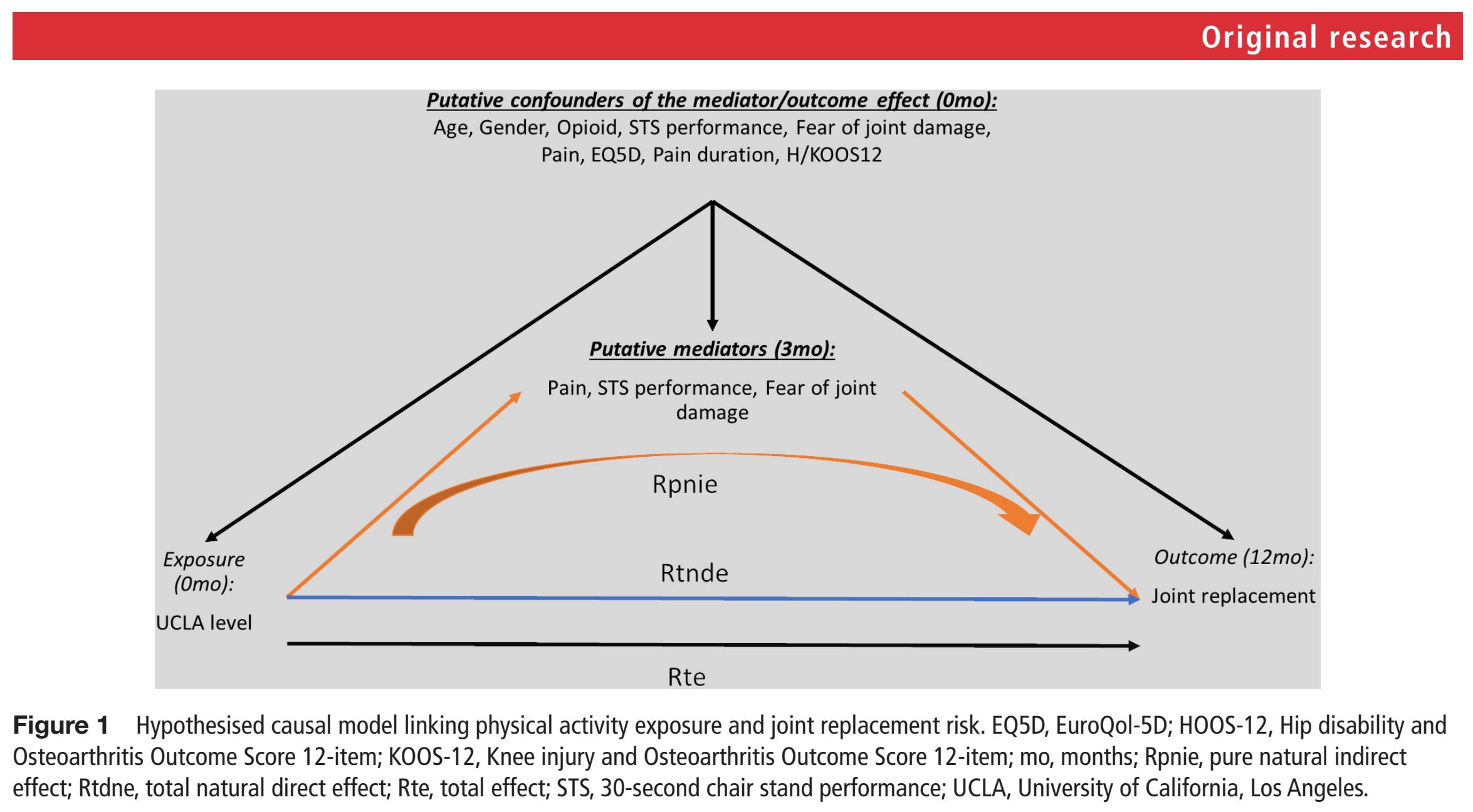
For mediation to occur, high-impact activity would first need to influence the mediator, and that mediator would subsequently need to influence the likelihood of joint replacement.
For example:
High-impact activity → better chair stand performance → lower odds of knee replacement.
Outcomes
The outcomes were self-reported total hip replacement or total knee replacement at 12 months.
Results
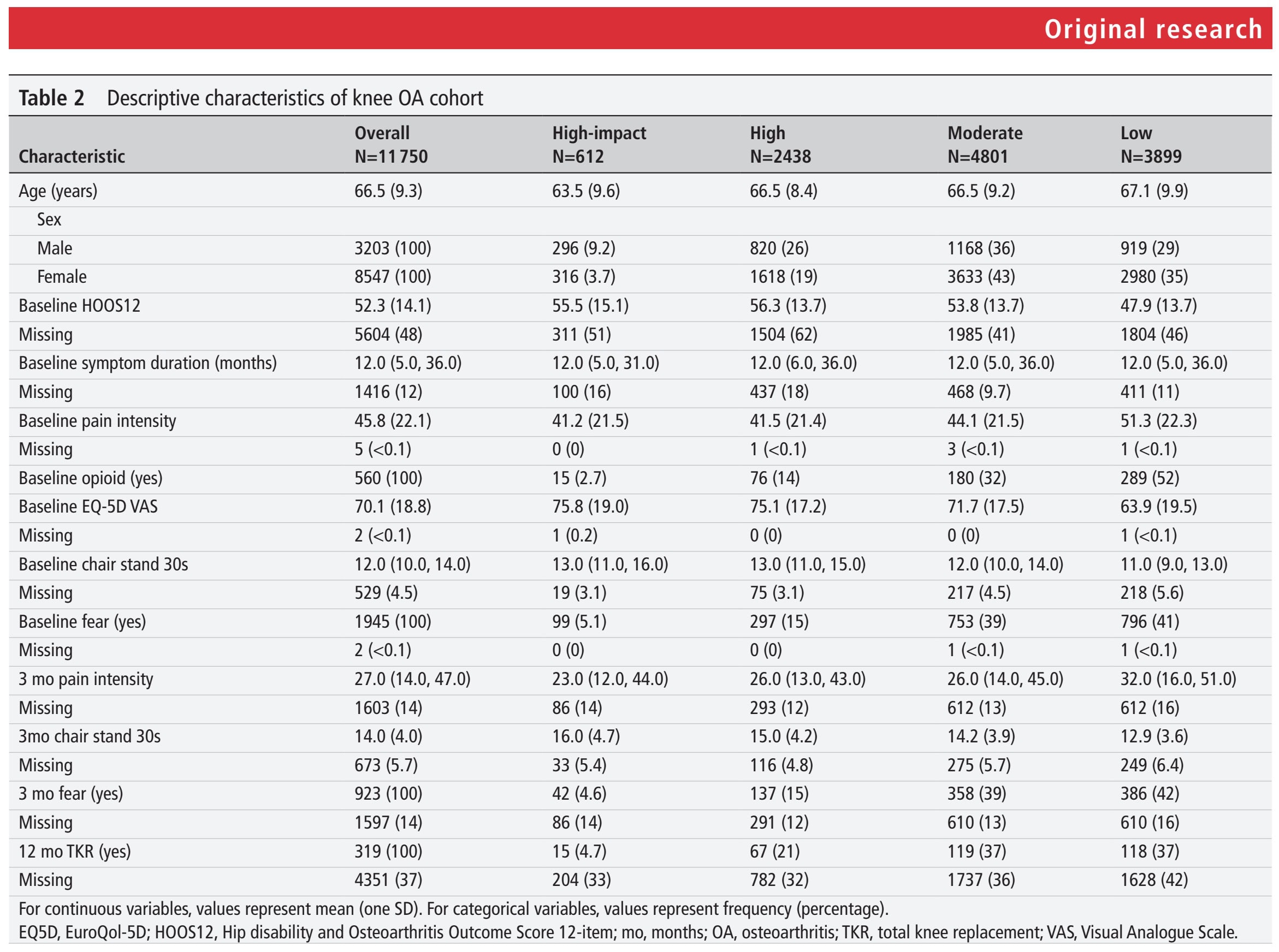
The GLA:D register counted 5911 people with hip osteoarthritis and 11750 with knee osteoarthritis. The average age was approximately 67 years. Women represented 69.5% of the hip cohort and 72.7% of the knee cohort.
Of those with hip osteoarthritis, 5.9%, 21.2%, 41.3%, and 31.6% participated in high-impact, high-intensity, moderate-intensity, and low-intensity physical activity at baseline, respectively.
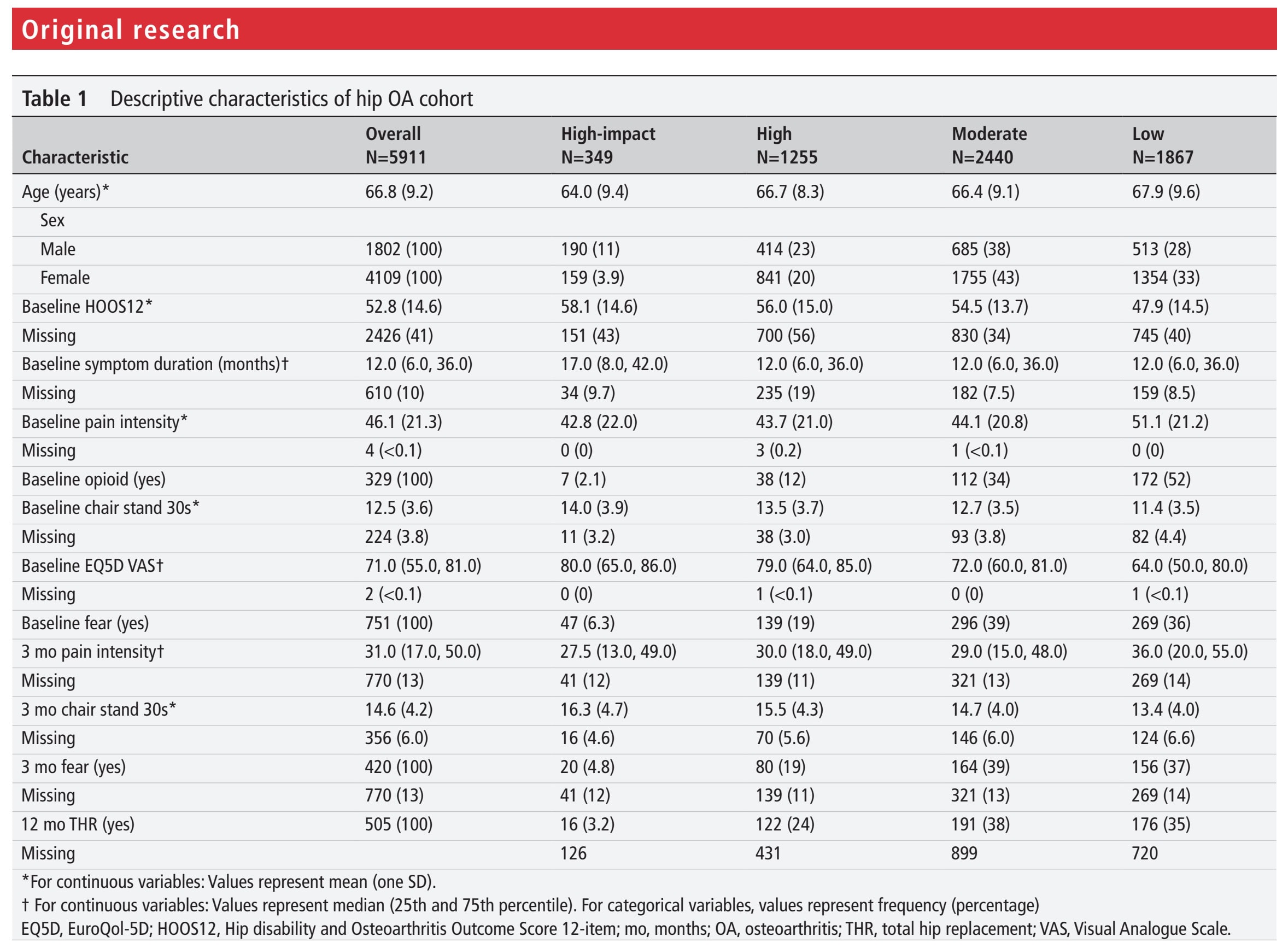
For participants with knee osteoarthritis, these were 5.2%, 20.7%, 40.9%, and 33.2%, respectively.
Total hip replacement
Effect of the exposure on the mediators
The people in the high-impact group had 0.57 times the odds of reporting fear and performed 1.4 more chair stand repetitions than those in the low-intensity group.
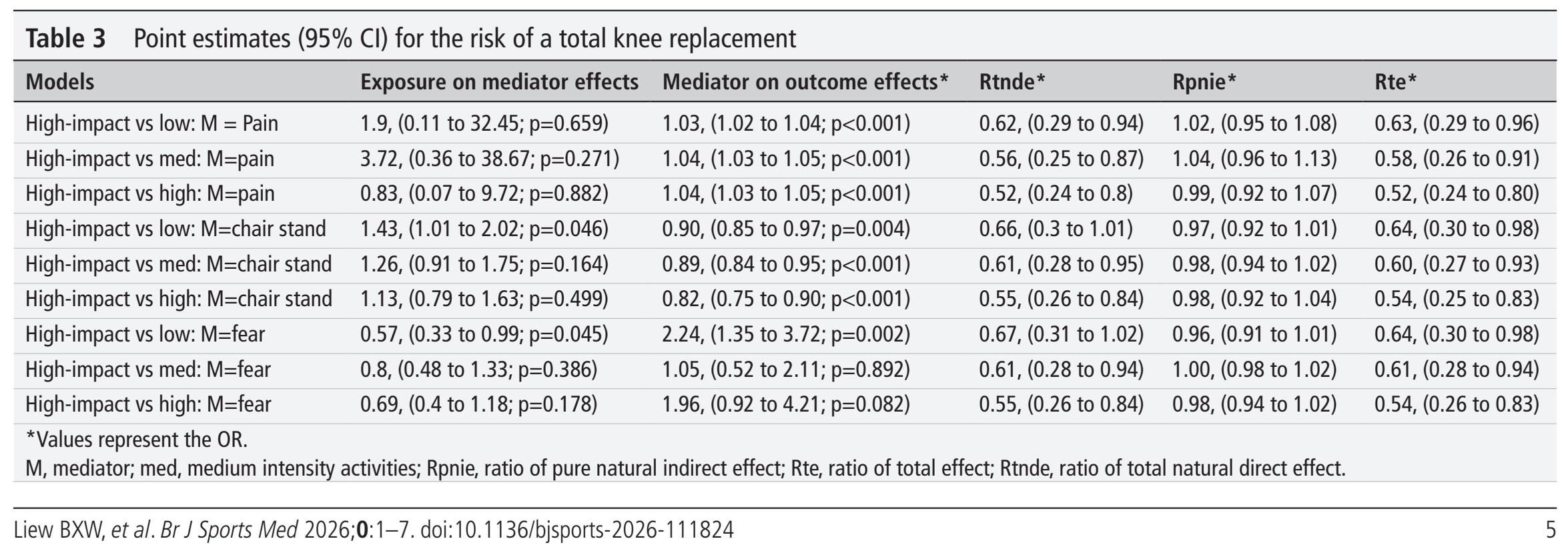
Table 3 is titled “risk of a total knee replacement,” but its estimates clearly correspond to the hip-replacement analyses; therefore, it reflects a labeling issue.
Effect of the mediators on the outcomes
An increase of 10/100 points in pain predicted 30 to 40% greater odds of a total hip replacement. Being able to perform one additional chair-stand repetition was associated with 10-18% lower odds of total hip replacement.
Fear of joint damage was associated with greater odds of a total hip replacement, but this association was only present between the high-impact versus low-intensity subgroups. High-impact versus low-intensity: OR 2.24 (95% CI 1.35–3.72; p=0.002). Participants reporting fear had 2.24 times the odds (or 124% greater odds) of hip replacement than those without fear.
Causal effects
Participation in high-impact physical activity predicted 36 to 48% lower odds of receiving a total hip replacement at 12 months. Nevertheless, none of these factors statistically mediated the association between high-impact activity and hip replacement. In other words, the lower odds of hip replacement could not be explained by differences in pain, chair stand performance, or fear at three months.
Total knee replacement
Effect of the exposure on the mediators
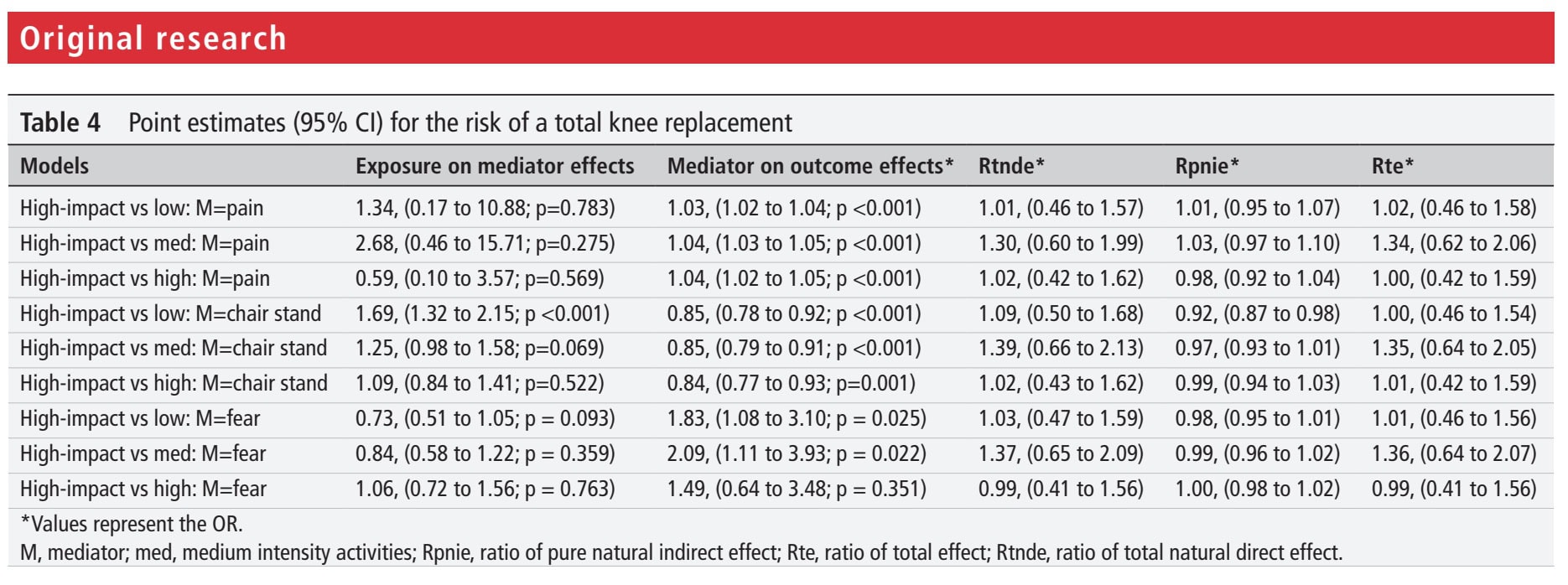
Those in the high-impact physical activity group performed 1.7 more chair stands versus those in the low-intensity group.
Effect of the mediators on the outcomes
An increase of 10/100 points in pain predicted 30 to 40% greater odds of a total knee replacement, compared with other physical activity types. For every additional repetition in the sit-to-stand chair test, 15% lower odds of a total knee replacement were seen. Fear of joint damage was associated with greater odds of a knee replacement in the models comparing the high-impact versus the low- and moderate-intensity physical activity subgroups.
Total, direct and indirect effects
High-impact physical activity did not alter the risk of a total knee replacement when compared to the other forms of physical activity with low impact. An indirect effect (Rpnie) was observed through the sit-to-stand performance, where the ability to perform one more repetition was associated with an 8% reduction in the odds of a total knee replacement (OR = 0.92). This suggests that better functional capacity might partly connect high-impact activity with lower knee replacement odds. However, there was no overall protective effect of high-impact activity on knee replacement, and this isolated mediation result should be interpreted cautiously.
Pain and fear were associated with greater knee replacement odds in several models, but high-impact activity did not meaningfully change these factors. They therefore did not mediate the relationship.
Questions and thoughts
We know that bone is highly metabolically active and responds to loading and offloading, but that bone needs to undergo forms of impact to keep its innate strength. It is, therefore, reasonable to argue that low-impact exercise may not be sufficient to promote or preserve bony strength, and this relationship is clearly visible in astronauts who, even for very short periods of time, went to space. For example, the European Space Agency (ESA) states the following on bone health on their website: “Remodelling of the bone structure and/or bone loss during spaceflight occurs at about 1-2% per month and after six months in space astronauts’ osteoporosis symptoms can be compared to those of osteoporosis in elderly women on Earth. In microgravity, weight-bearing bones are particularly affected, and bone mass decreases of up to 20% have been reported after a six-month mission. The astronauts returning from long-duration space flights are at risk of fracture and are consequently subject to specific attention and care.”
Although high-impact activity was associated with 36–48% lower odds of total hip replacement compared with other activity categories, high-impact activity was not associated with significantly higher or lower overall odds of total knee replacement compared with the other activity categories. However, this does not prove that high-impact activity protects the hip but has no effect on the knee. The hip and knee estimates were analysed separately, and “statistically significant” in one cohort but not the other does not establish a genuine difference between joints. Compared with the low-intensity group, the high-impact group was:
- Younger: 64.0 vs 67.9 years
- Less painful: 42.8 vs 51.1/100
- Better functioning/fewer symptoms on HOOS-12: 58.1 vs 47.9
- Better on the chair-stand test: 14.0 vs 11.4 repetitions
- Better in self-rated health: 80 vs 64/100
People capable of high-impact activity were generally younger, healthier, and less symptomatic, so selection and unmeasured differences in osteoarthritis severity may partly explain the hip finding. For example, the authors explicitly acknowledge that residual confounding remains possible and give radiographic osteoarthritis severity as an example of an unmeasured confounder.
Does this study show that clinicians should prescribe high-impact activity? Not directly. It shows that people already participating in high-impact activity did not have worse 12-month outcomes. Importantly, it did not test whether introducing running, jumping, or another impact activity is safe or beneficial for a previously inactive person with osteoarthritis. The clearest clinical implication is therefore that high-impact activity should not automatically be prohibited in someone who is already tolerating it.
Could reverse causation explain the findings? Yes. Participants with milder symptoms, less advanced disease, or a lower likelihood of imminent surgery may have been better able to continue high-impact activity. Their underlying condition may therefore explain both their activity level and their lower likelihood of arthroplasty. For example, reverse causation is possible: people with more advanced symptoms or an anticipated hip replacement may already have reduced or stopped high-impact activity. Excluding replacements within the first three months limits this explanation but does not rule it out.
The UCLA scale combines several very different activities within its highest categories. Jogging, tennis, skiing, heavy labour and backpacking do not expose the joints to identical loads, movement patterns, frequencies or recovery demands. The study also did not quantify:
- Frequency or weekly volume.
- Running distance or speed.
- Jumping exposure.
- External load.
- Symptom response.
- Years of previous participation.
It therefore cannot identify a safe “dose” of impact activity. The physical activity was also measured at 3 and 12 months, but unfortunately, these measurements were not incorporated into the analysis. The authors used baseline activity only, thereby ensuring that the exposure was measured before the proposed mediators and the outcome. Of course, activity participation can shift over time; let’s say more people will play tennis or go jogging in summertime compared to when the weather is colder in winter.
Does joint replacement reflect worsening osteoarthritis? Only partly. Surgery depends on more than joint structure. Pain, disability, expectations, access, surgical consultation and willingness to undergo the procedure all matter. Lower joint-replacement odds do not prove that cartilage or radiographic osteoarthritis improved, as this was not measured in this paper.
Talk nerdy to me
The analyses adjusted for several baseline characteristics that could be associated with physical activity, the proposed mediators, and joint replacement:
- Age and sex
- Pain intensity and duration
- HOOS-12 or KOOS-12 scores
- Chair stand performance
- Fear of joint damage
- Self-rated health on the EQ-5D visual analogue scale
- Opioid use
The investigators selected these variables using a causal confounder-selection framework. However, radiographic osteoarthritis severity, body mass index, and socioeconomic factors were not included.
Very important to remember is that this was an observational association study, not an activity trial. Participants were not randomly assigned to high- or low-impact activity. People who were already capable of high-impact activity were likely different from less active participants. At baseline, the high-impact groups were younger, reported less pain, performed better on the chair stand test and had better self-rated health. Statistical adjustment reduced these differences but cannot guarantee that they have been eliminated.
Also, odds are not the same as risk. The study reported odds ratios. An OR of 0.52 was described as 48% lower odds, not necessarily 48% lower absolute risk. The unadjusted observed proportions also need caution because outcome information was missing for many participants. Only approximately 33–58% of participants had complete predictor information, depending on the cohort, comparison, and mediator. The researchers used multiple imputation with 30 imputed datasets, which is preferable to simply excluding everyone with missing predictor data.
However, joint-replacement outcome data were missing for approximately 37% of both cohorts. Multiple imputation can reduce bias only when its assumptions about why data are missing are reasonable. If people who underwent surgery, or people with worse symptoms, were systematically less likely to complete follow-up, estimates could still be biased.
The authors conducted 18 mediation analyses: two joints, three mediators, and three activity comparisons. Testing numerous related hypotheses increases the possibility that an isolated statistically significant result arises by chance. No adjustment for multiple testing was reported.
Take-home messages
High-impact activity was not associated with greater odds of either hip or knee replacement. Although lower odds of hip replacement were observed among high-impact participants, no clear association was found for knee replacement. The findings are reassuring regarding potential harm, but they do not demonstrate that high-impact activity prevents hip replacement or that its effect genuinely differs between the hip and knee.
Those performing high-impact activity completed more repetitions on the chair-stand test, and better chair-stand performance was associated with lower odds of knee replacement. This pathway corresponded to approximately 8% lower odds of surgery (Rpnie 0.92). However, high-impact activity was not associated with lower overall odds of knee replacement. Therefore, this small indirect association should be considered an exploratory statistical finding, not proof that high-impact activity prevents surgery by improving physical function.
For a person with hip or knee osteoarthritis who wants to continue or resume impact activity, a reasonable clinical approach would include:
- Establishing their previous activity experience and current goals.
- Assessing pain behaviour, swelling and symptom recovery.
- Evaluating lower-limb strength and functional capacity.
- Beginning below their current tolerance and progressing gradually.
- Monitoring the response over the following 24–48 hours.
- Modifying volume, frequency or recovery time when symptoms persistently escalate.
Learn more
Reference
21 OF THE MOST USEFUL ORTHOPAEDIC TESTS IN CLINICAL PRACTICE
We have comprised a 100% Free E-Book containing 21 of the hands-down most useful orthopedic tests per body region guaranteed to help you reach a proper diagnosis today!