

Research
Knee
August 11, 2026
Dual-task testing after ACL Reconstruction (ACLR): Uncovering Hidden Sensorimotor Impairments During Return-to-Sport Testing
ACLR rehabilitation may restore physical capacity while leaving persistent cognitive-motor impairments unresolved
Adding a cognitive task during single-leg hop testing disproportionately reduced limb symmetry in individuals 6 months after ACLR compared with healthy controls
Due to the small sample size and methodological limitations, these findings should be considered exploratory and require confirmation in larger studies
Introduction
Persistent neuromuscular impairments are common following Anterior Cruciate Ligament Reconstruction (ACLR). While traditional rehabilitation focuses on restoring mobility, strength, proprioception, balance, and neuromuscular control, neurocognitive deficits may persist and contribute to the high rate of secondary ACL injuries. Neuroimaging studies have demonstrated impaired sensorimotor integration, proprioceptive processing, and attentional control after ACL injury, leading to greater reliance on conscious motor control. Therefore, dual task testing after ACLR may provide valuable insights into an athlete’s readiness to return to sport.
This study investigated the effect of cognitive load on the Single-Leg Hop for Distance (SLHD) in individuals six months after ACLR. By exploring dual task testing after ACLR, the authors aimed to understand the role of cognitive-motor function in post-ACLR rehabilitation better.
Methods
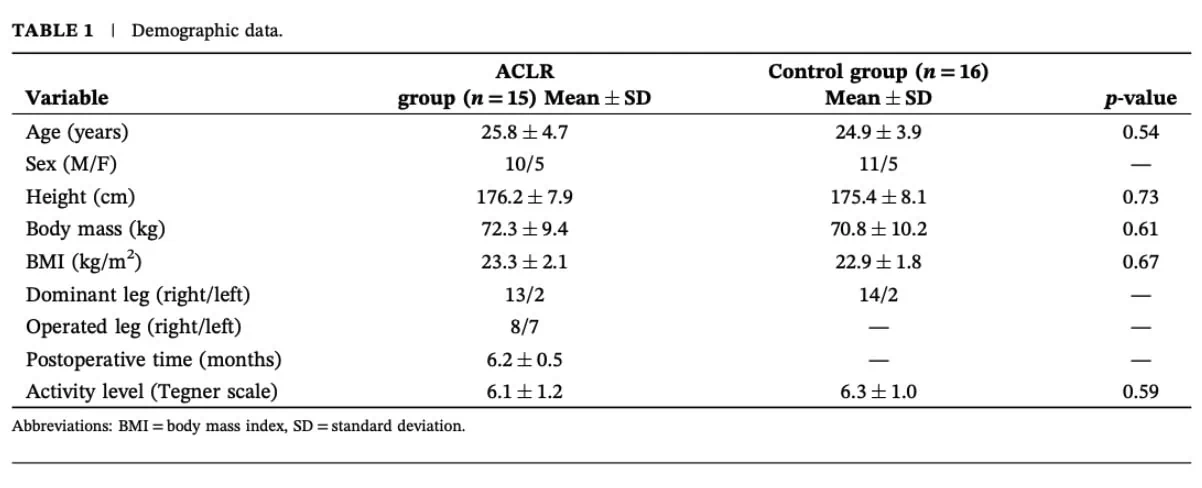
This study is a multicenter, randomized, crossover, repeated-measures, controlled trial. Participants were recruited from three outpatient rehabilitation centres in France. The initial sample size calculation of 26 participants per group was required; however, due to feasibility constraints, only 15 participants were recruited in the ACLR group and 16 in the healthy group.
Inclusion criteria
Participants in the ACL reconstruction (ACLR) group were aged 16–40 years and had undergone primary unilateral ACLR using either a hamstring tendon or bone–patellar tendon–bone autograft approximately 6 ± 1 months before enrolment. Eligible participants sustained a unilateral non-contact ACL rupture and had a pre-injury Tegner activity score of ≥5. Healthy controls were matched for age, sex, and physical activity level (Tegner score ≥5) and had no history of lower-limb trauma within the previous six months.
Exclusion criteria
ACLR participants were excluded if they had concomitant ligament injuries requiring surgery, revision ACLR, previous major lower-limb injury or surgery (other than the index ACLR), a contact mechanism of injury, a lower-limb injury unrelated to the ACL rupture within the previous 12 months, a Tegner activity score <5, or a postoperative interval outside the 6 ± 1-month inclusion window. Healthy controls were excluded if they had a history of lower-limb surgery, a significant lower-limb injury within the previous 12 months, current pain or injury affecting hop performance, or any neurological or vestibular disorder.
Rehabilitation history was recorded for the ACLR group when available; however, postoperative rehabilitation followed local clinical practice rather than a standardized protocol. Although all centres implemented conventional rehabilitation, the specific exercise content, intensity, and progression criteria varied across centres and were acknowledged as a potential source of clinical heterogeneity.
Procedure
Testing procedure: Participants completed dual task testing indoors on a non-slip surface after a standardized warm-up. Standardized instructions were provided, and participants performed maximal SLHDs. Three valid trials were completed per limb, with the longest hop retained for analysis. Trials were repeated if participants lost balance, used an additional hop, changed hand position, or reported pain limiting maximal effort.
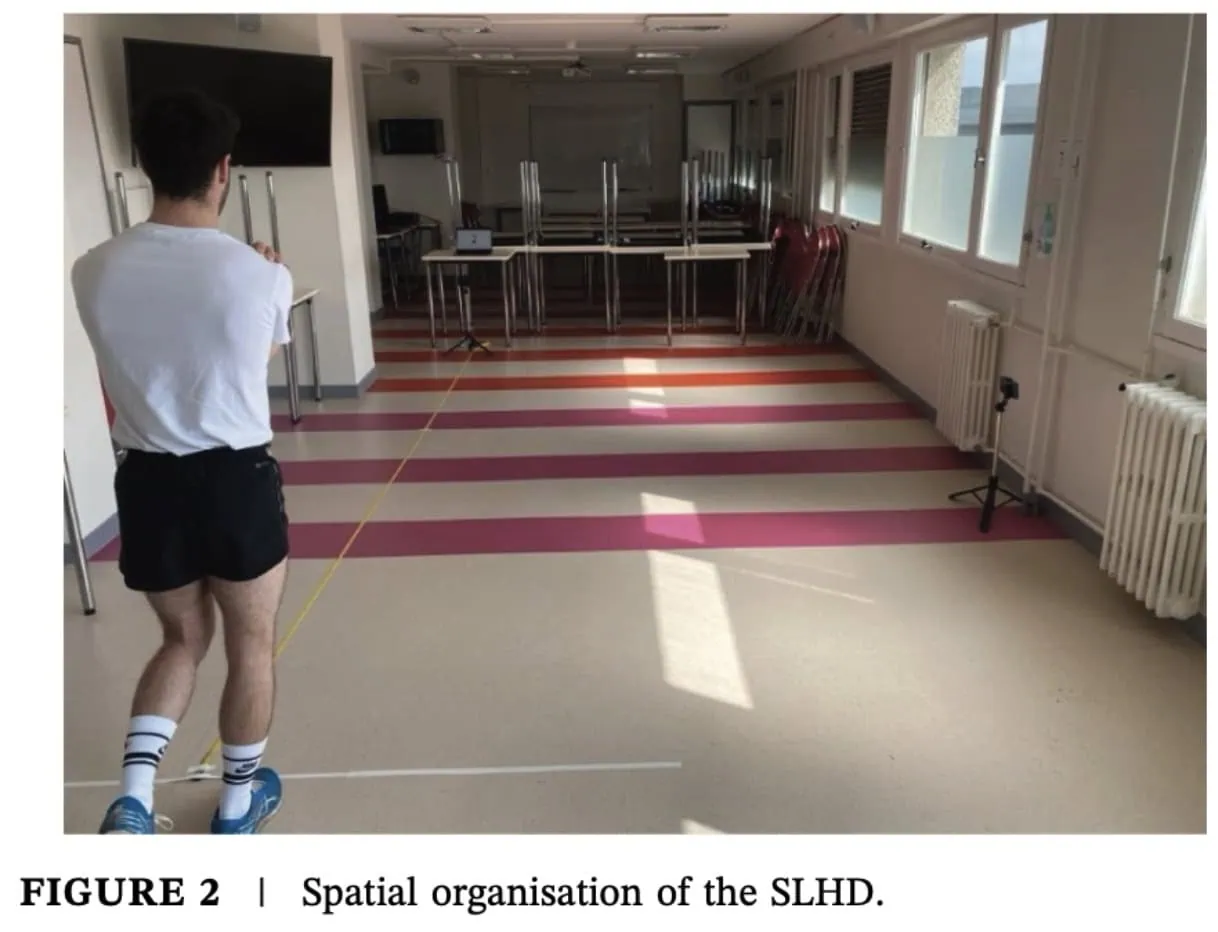
Participants completed two testing conditions separated by one week: a single-task (ST) condition involving the SLHD alone and a dual-task (DT) condition combining the SLHD with a visuospatial working-memory task. During the DT condition, participants memorized a five-digit sequence displayed for 3 seconds and recalled it in reverse order during or immediately after landing stabilization. Cognitive performance was quantified by the number of correctly recalled digits in the correct order, while cognitive errors were also recorded.
To avoid fatigue, learning, and performance effects, the researchers implemented four counterbalanced testing sequences (A1, A2, B1, and B2), equally distributed across testing sites. In sequences A1 and A2, the two testing sessions involved different conditions: A1 consisted of the dual-task condition followed by the single-task condition, while A2 followed the reverse order. In contrast, sequences B1 and B2 were repeated-condition sequences: B1 involved two dual-task assessments across the two sessions, while B2 involved two single-task assessments. The B sequences were retained to assess potential order, learning, and fatigue effects associated with repeated testing and were therefore not included in the dual-task cost (DTC) analysis.
Video recordings from frontal and sagittal views were used to assess landing quality using the Qualitative Analysis of Single-Leg Loading (QASLS). Outcome measures included SLHD distance, QASLS score, cognitive performance during the DT condition, and the Limb Symmetry Index (LSI), calculated from the best hop distance. Dual-task cost (DTC) was defined as the relative percentage decrease in hop distance between the single-task and dual-task conditions.
The authors analyzed the data using linear mixed-effects models, a statistical method suited for repeated measurements and crossover study designs. They compared performance between the ACLR and healthy control groups, as well as between the single-task and dual-task conditions, while adjusting for testing order and study center. The primary analysis examined whether the effect of the dual-task differed between groups. They also calculated the dual-task cost (DTC) to quantify the impact of adding a cognitive task on performance. Results are reported as mean differences, 95% confidence intervals, p-values, and effect sizes, with statistical significance set at p < 0.05.
Results
The 31 participants were matched on demographic characteristics.
ACLR group:
Overall, dual-tasking had a limited effect on single-leg hop-for-distance (SLHD) performance. A significant reduction in hop distance was observed only in sequence B2. Movement quality, assessed using the QASLS, significantly worsened only in sequence A2 under dual-task conditions. In contrast, the Limb Symmetry Index (LSI) significantly decreased during dual-task performance in sequences A1, A2, and B2, indicating reduced inter-limb symmetry, whereas no significant change was observed in sequence B1.
Control group:
In the control group, dual-task conditions did not significantly affect SLHD performance or LSI values across sequences. Movement quality assessed with the QASLS remained largely unchanged, with the only significant difference observed in sequence B2, where scores slightly decreased under dual-task conditions. No other significant changes were identified across the remaining sequences.
Intergroup analysis:
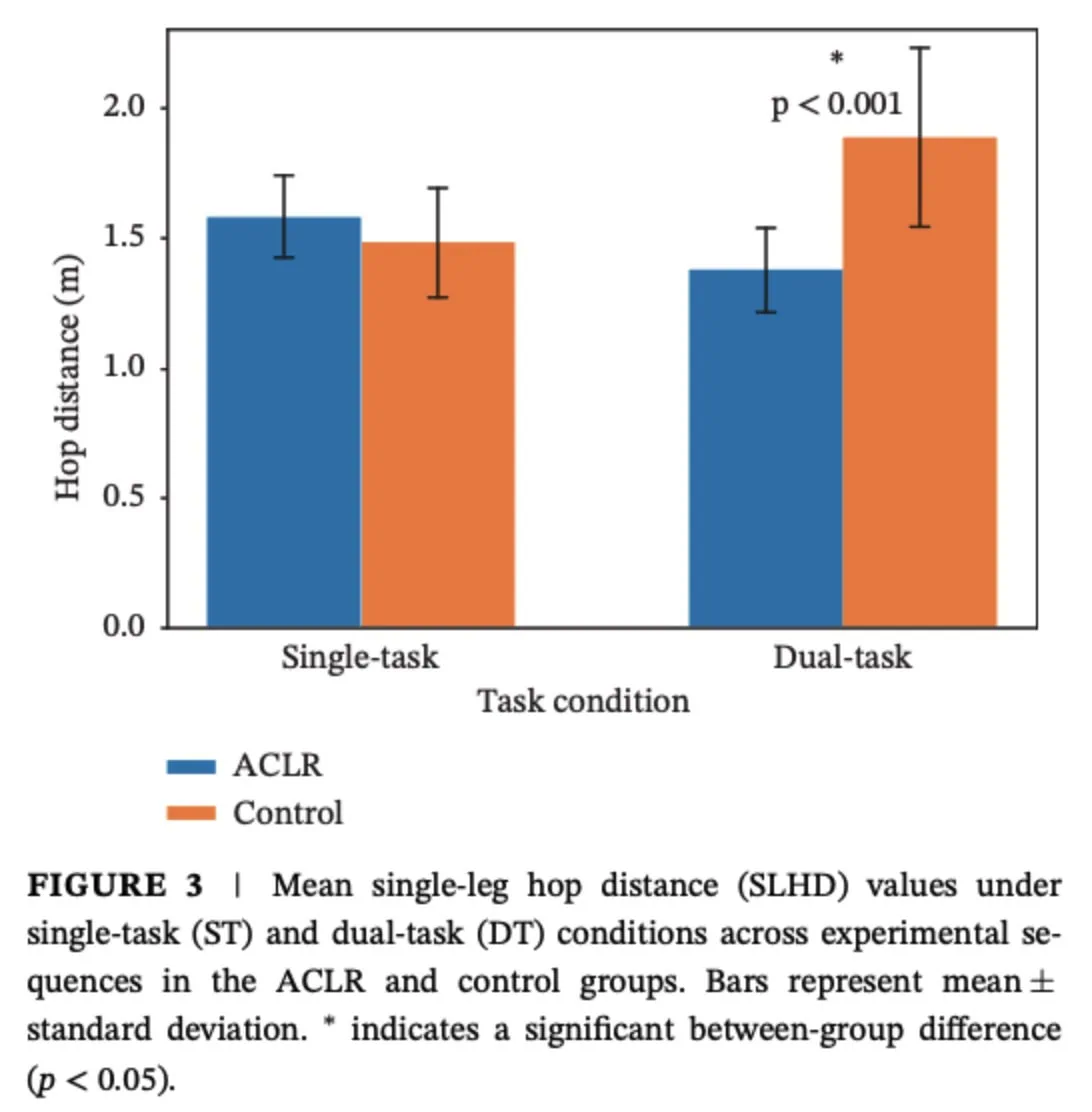
Compared with controls, the ACLR group demonstrated significantly lower SLHD performance only in sequence B2, with a large effect size. No other significant between-group differences were observed for hop distance. Movement quality (QASLS) did not differ significantly between groups, although a tendency toward higher scores in the ACLR group was observed in sequence A1. LSI values were significantly lower in the ACLR group during sequences A1 and B1, indicating reduced limb symmetry, whereas no significant differences were found in sequences A2 and B2.
Dual Task Cost Analysis
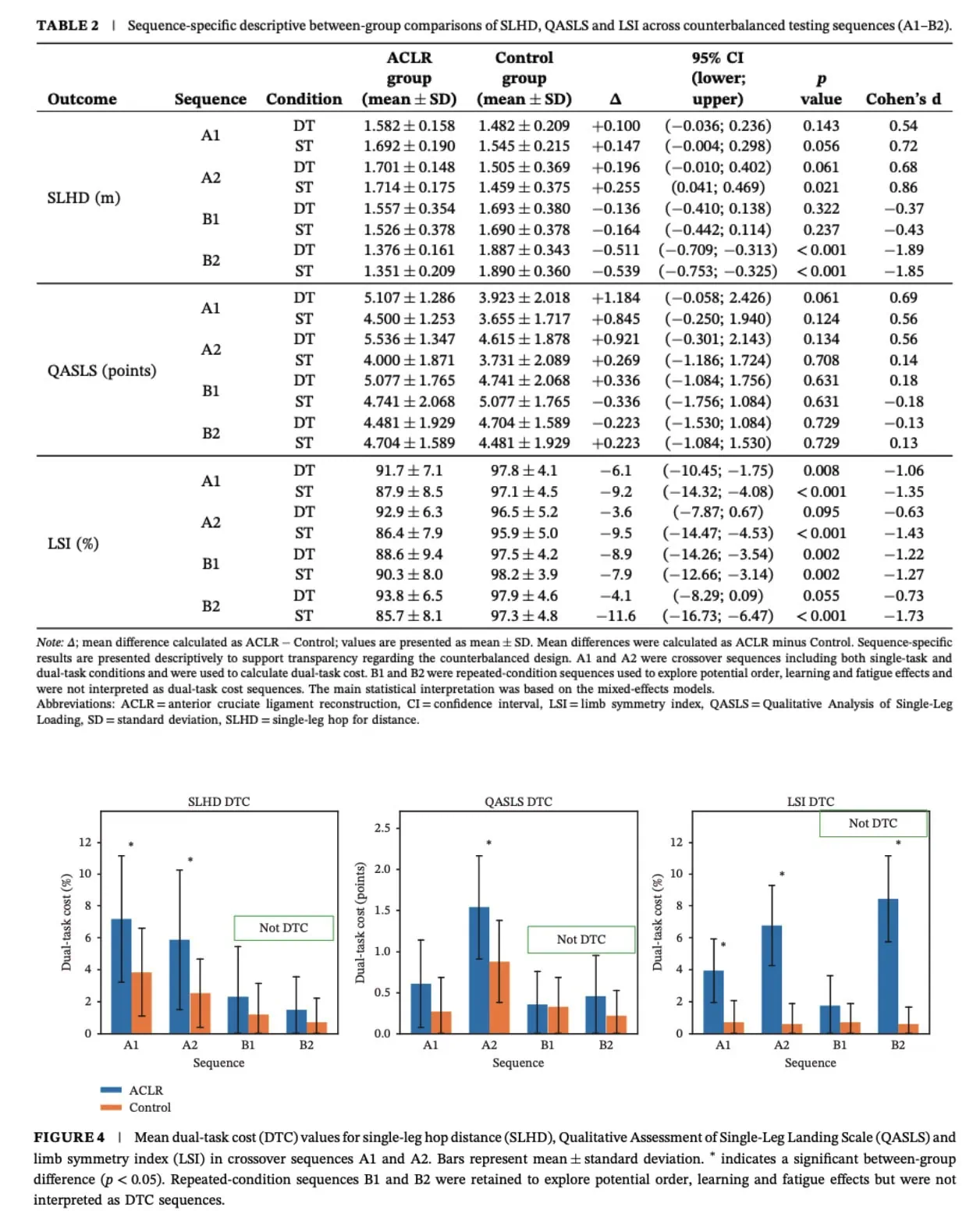
DTC analyses were performed only for crossover sequences (A1 and A2), as these included both single-task and dual-task conditions within the same participant. For SLHD distance, DTC values were higher in the ACLR group compared with controls in both sequences, although differences did not reach statistical significance. QASLS DTC values were small and showed no significant between-group differences. In contrast, LSI DTC demonstrated significantly greater increases in the ACLR group for both A1 and A2 sequences, indicating a larger reduction in limb symmetry under dual-task conditions compared with controls.
Questions and thoughts
The LSI was reduced under dual-task conditions in the ACLR group, whereas controls maintained similar SLHD performance across task conditions. These findings suggest that introducing a concurrent cognitive task may disproportionately affect inter-limb symmetry in individuals six months after ACLR, potentially reflecting persistent alterations in motor control. One possible explanation is that ACLR patients may rely on greater attentional resources to regulate lower-limb movement, making them more vulnerable to cognitive interference. In contrast, healthy individuals may perform the task with more automatic motor control, requiring fewer conscious resources. As discussed in the introduction, previous neuroimaging studies have suggested increased frontal and sensorimotor cortical activation following ACLR, which may indicate a transition from predominantly automatic movement control toward a more consciously regulated motor strategy during functional tasks.
Although exploratory, this study provides preliminary evidence supporting the presence of adaptive central nervous system changes following ACLR and highlights the potential relevance of cognitive–motor interactions during return-to-sport assessment. However, interpretation of these findings should consider several limitations, including the small sample size, multicentre design with potential variability in rehabilitation approaches, and limited external validity due to the relatively homogeneous participant characteristics.
Additionally, the post-ACL dual task testing paradigm only assessed working memory and verbal recall demands, which may not fully represent the range of cognitive challenges encountered during sport participation. Other domains, such as visuospatial processing, response inhibition, and rapid decision-making, may influence motor performance differently. Future research should therefore investigate whether dual task testing after ACLR should better reflect real-world sporting situations and whether performance deficits observed in laboratory conditions translate into functional limitations during dynamic sport-specific activities.
Talk nerdy to me
One aspect of this study’s design deserves closer consideration: an apparent discrepancy between the narrative description of the counterbalanced sequences and the data presented in Table 2.
According to the methods section, sequences B1 and B2 were “repeated-condition sequences,” with B1 comprising two dual-task assessments and B2 comprising two single-task assessments. By this description, B1 participants should have no single-task data at all, and B2 participants should have no dual-task data at all. Each B-sequence was designed to hold condition constant across both testing sessions, precisely so it could serve as a reference for order, learning, and fatigue effects independent of the ST/DT manipulation.
However, Table 2 reports both a DT row and an ST row for B1, and both a DT row and an ST row for B2. If B1 truly involved only dual-task testing, an ST row should not exist for that sequence; the same logic applies in reverse for B2. This raises an important methodological question regarding the interpretation of the ST/DT labels reported for sequences B1 and B2. One possibility is that these labels represent a simplified notation referring to “session 1” and “session 2” of the same repeated condition, applied for consistency within the table format. Alternatively, these labels may indicate that participants assigned to B1 and B2 actually completed both single-task and dual-task conditions, which would be inconsistent with the description provided in the Methods section.
Neither explanation is fully satisfying. If the first interpretation is correct, the table’s formatting is misleading in a way that it could cause readers to misinterpret repeated-measures data as a genuine within-sequence ST-vs-DT contrast. Notably, the DT and ST rows within B1 and B2 do show numerically similar values, which is broadly consistent with two repeat measurements of the same condition rather than two genuinely different conditions.
If the second interpretation is correct, the rationale provided for excluding sequences B1 and B2 from the dual-task cost (DTC) analysis would be questionable. The authors justified this exclusion by stating that these sequences did not include a change in experimental condition and therefore could not provide the paired single-task (ST) and dual-task (DT) measurements required for DTC calculation. However, since DTC is defined as the relative change between ST and DT performance within the same individual, these sequences may have allowed DTC computation if both conditions were in fact available for the same participants.
This ambiguity has important implications because DTC is central to the study’s main comparisons and relies on the correct identification of paired ST/DT data. Based on the published information alone, it remains unclear which interpretation is accurate. Clarification from the authors or access to the underlying data would help resolve this issue. Until then, sequence-specific results in Table 2, particularly for B1 and B2, should be interpreted cautiously, as ST/DT labels may not represent the same conditions across all sequences.
Take-home messages
- Traditional ACL rehabilitation focuses mainly on restoring strength, mobility, and physical performance; however, cognitive-motor factors may contribute to persistent deficits after reconstruction.
- Adding a concurrent dual task testing after ACLR during single-leg hop testing revealed a greater reduction in limb symmetry in individuals 6 months after ACLR compared with healthy controls.
- These findings suggest that ACLR patients may rely on greater attentional resources to regulate lower-limb movement, indicating a potential shift from automatic toward more consciously controlled motor strategies.
- Dual task testing after ACLR may provide complementary information to traditional return-to-sport evaluations by challenging the interaction between cognitive processing and movement control.
- Due to the small sample size, multicentre variability, and exploratory design, these results should be interpreted as hypothesis-generating rather than definitive evidence for clinical implementation.
- Future research should investigate whether dual-task deficits translate into sport-specific situations and whether integrating cognitive-motor challenges into rehabilitation can improve long-term outcomes after ACL reconstruction.
Reference
LEARN TO OPTIMIZE REHAB & RTS DECISION MAKING AFTER ACL RECONSTRUCTION
Sign up for this FREE webinar and top leading expert in ACL rehab Bart Dingenen will show you exactly how you can do better in ACL rehab and return to sport decision making