


Research
Exercise
November 20, 2026
Home Exercise for Cam FAI: Does It Actually Help?

An 8-week home-based hip exercise programme targeting posterior pelvic tilt showed no superiority over usual care for pain, function, or quality of life in symptomatic cam FAI
Adherence to the home programme was high (84%), so lack of effect isn't simply explained by poor compliance
Authors suggest cam FAI may be primarily a structural issue that conservative exercise alone cannot sufficiently address
Introduction
Femoroacetabular impingement (FAI) is one of the most common causes of hip and groin pain in young, active patients, and cam-type FAI in particular has been linked to the development of hip pain and early hip osteoarthritis. Clinically, we’re often asked to help these patients conservatively before surgery is even considered, usually with exercises targeting hip strength and pelvic positioning. Previous research has identified altered movement patterns in patients with symptomatic FAI, including increased anterior pelvic tilt, reduced hip extensor strength, and altered hip and pelvic movement during activities such as walking and squatting.
These observations have prompted interest in whether targeting pelvic positioning through exercise might reduce symptoms. Biomechanical studies suggest that increasing posterior pelvic tilt may delay the point at which femoroacetabular contact occurs during hip movement. But does targeting pelvic tilt through a structured home exercise programme actually change outcomes, or are we just buying time before the inevitable referral to the orthopedic surgeon?
This RCT aimed to tackle that question with a pragmatic trial design, comparing a physiotherapist-supervised home exercise programme to usual care in patients with symptomatic cam FAI. If you’re treating hip and groin patients, this one is directly relevant to how you set expectations and structure conservative management.
Méthodes
This study conducted a single-blind, parallel-group RCT in people between 16 and 50 years. They had symptomatic cam FAI, defined as having ≥3 months of groin pain, a positive FADIR, an alpha angle >60°, labral tear on MRI, and Tönnis grade 0-1.
Patients were excluded if they had pincer-type FAI, previous surgery on the affected hip, health conditions preventing participation in exercise, or hip surgery scheduled within the following six months. Patients who had previously undergone physiotherapy were not excluded.
Participants were randomized to an 8-week home-based exercise programme or usual care alone
Intervention: Home-based exercise targeting posterior pelvic tilt
The intervention was designed around the hypothesis that strengthening the abdominal and hip extensor muscles, combined with stretching selected hip muscles, could encourage posterior pelvic tilt and potentially reduce symptoms associated with cam-type FAI.
The programme consisted of five exercises:
Strengthening exercises
-
Abdominal strengthening
-
Hip extensor strengthening
Four levels of difficulty were available for the strengthening exercises, allowing the physiotherapist to adapt and progress the programme according to the patient’s capabilities. The appropriate difficulty was determined by observing exercise technique and using the Borg Rating of Perceived Exertion (RPE) scale, with a target between 10 and 15 out of 20. Exercise difficulty was reassessed during subsequent appointments using the same criteria.
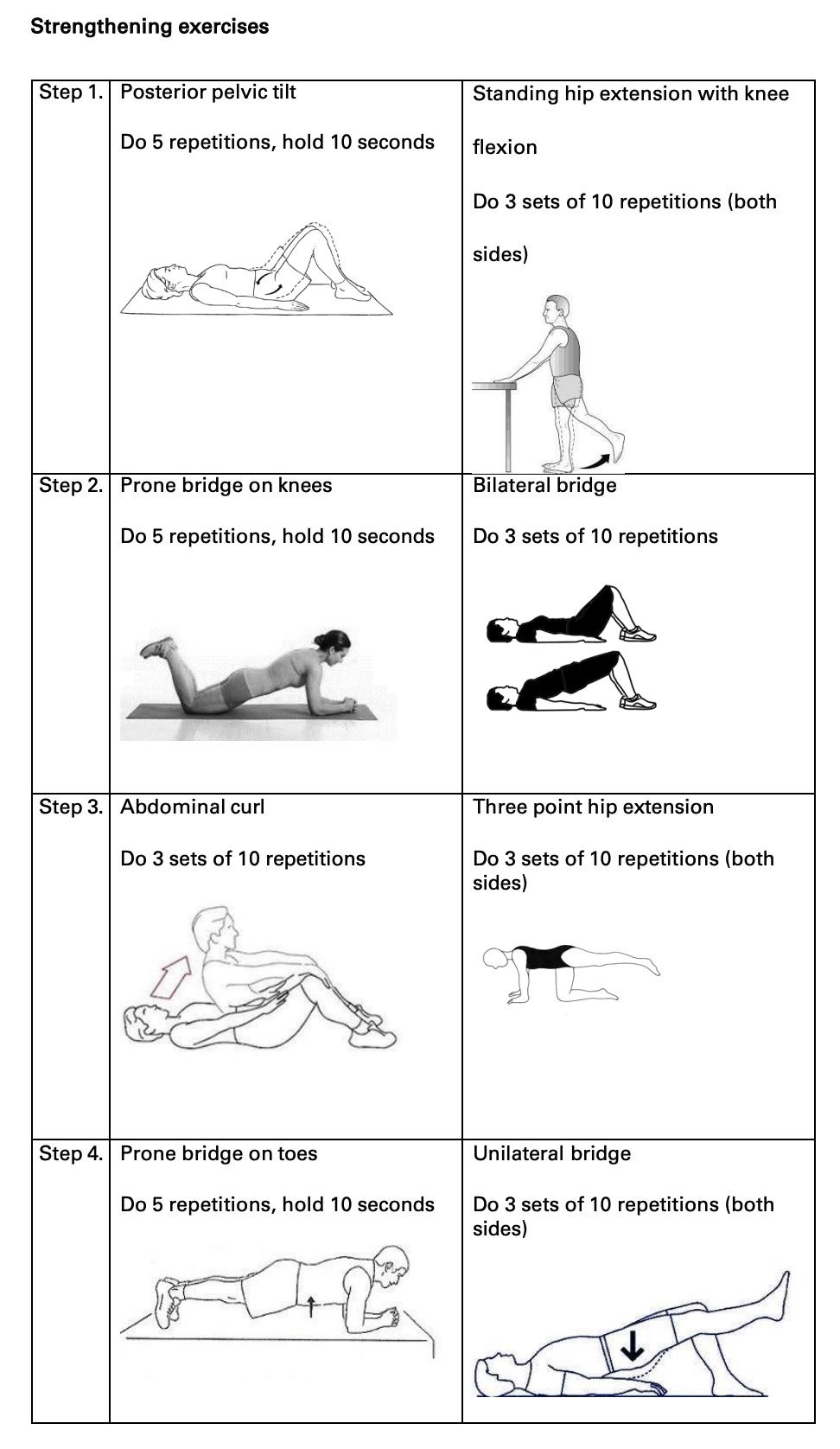
From: Pacheco-Brousseau et al., Bone & Joint Open (2025)
Stretching exercises
Three stretching exercises were provided and remained unchanged throughout the programme.
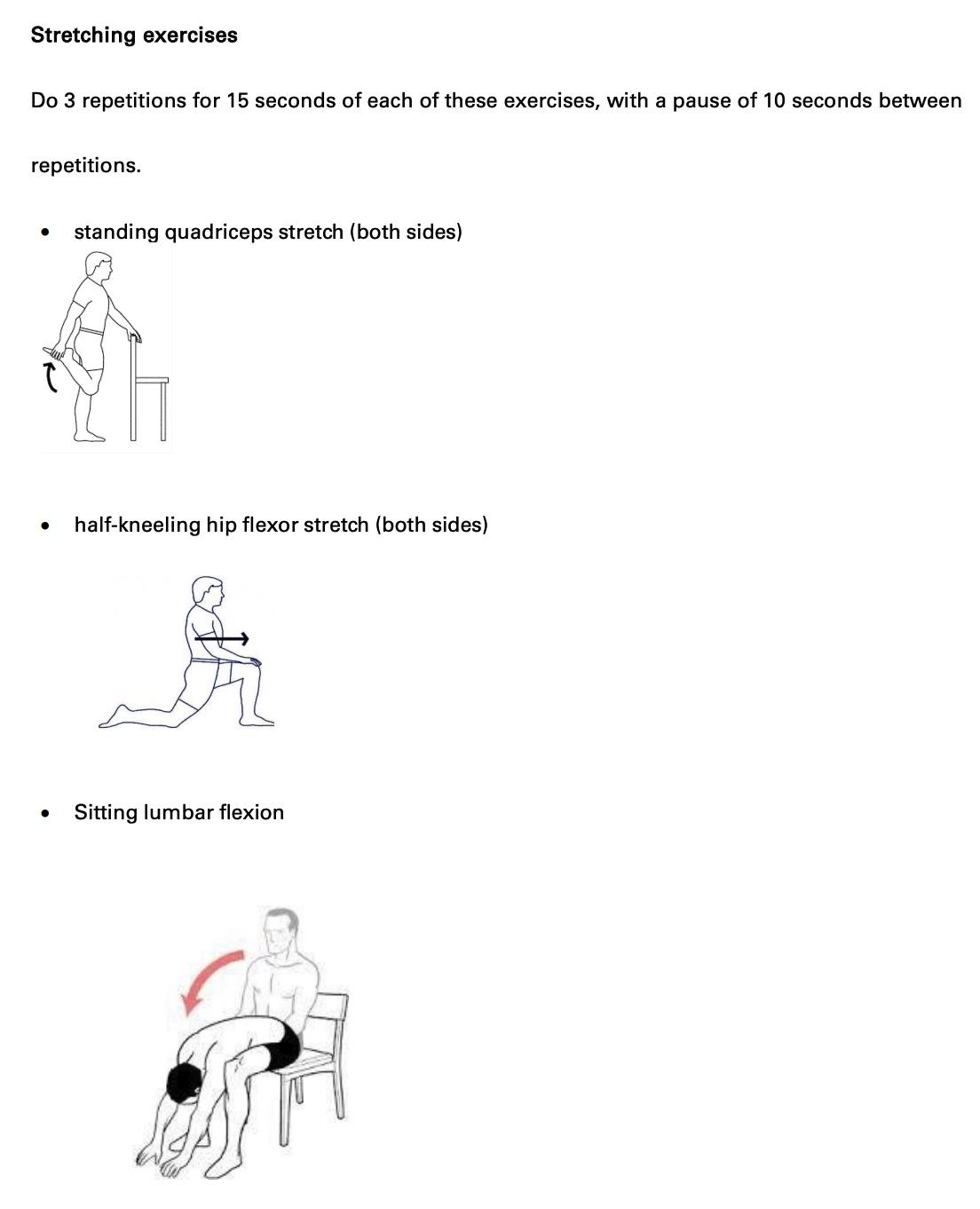
From: Pacheco-Brousseau et al., Bone & Joint Open (2025)
Participants were instructed to complete the exercises every other day for eight weeks, with a planned total of 32 exercise sessions.
Physiotherapy supervision
Participants received four individual telerehabilitation appointments, approximately two weeks apart. The initial appointment lasted approximately 30 minutes, while subsequent appointments lasted around 15 minutes.
During these sessions, the physiotherapist:
-
Demonstrated the exercises and observed their execution
-
Evaluated movement quality and exercise difficulty
-
Discussed adherence and any problems encountered
-
Adjusted strengthening exercises when appropriate
-
Provided the updated programme by email
The authors refer to supplementary material containing the complete exercise programme. However, the supplementary file does not provide the individual exercise descriptions, sets, repetitions, stretching durations, or detailed progression criteria. Consequently, although the overall treatment structure can be reproduced, the precise protocol cannot be fully replicated from the main article alone.
Control group: Usual care
Participants in the control group received the institution’s usual care, which included “traditional non-specific physiotherapy”, advice to reduce or avoid activities aggravating hip pain, and non-steroidal anti-inflammatory drugs as needed for a minimum of 2 weeks.
“Traditional non-specific physiotherapy” was described as approximately one to two sessions per week for six to eight weeks.
Outcome measures
Participants completed patient-reported outcome measures at baseline, nine weeks, and six months. The primary outcome was hip-related function, assessed using the 33-item International Hip Outcome Tool (iHOT-33). This questionnaire evaluates hip-related symptoms and their effects on everyday activities, sports, work, and quality of life. Scores range from 0 to 100, with higher scores indicating better outcomes. The minimal clinically important difference is 12 points in pre-arthritic patients, with a standard deviation of 18.
Secondary outcomes included:
-
Pain: Measured using a 10 cm visual analogue scale (VAS), where higher scores indicate greater pain.
-
Quality of life: Measured using the EuroQol five-dimension five-level questionnaire (EQ-5D-5L), including its health-status VAS and index value.
-
Exercise adherence: Recorded through a self-reported diary indicating which of the 32 planned sessions were completed.
Résultats
The study included 95 participants with symptomatic cam-type femoroacetabular impingement (FAI), of whom 55 (57.9%) were male. The mean age was 32 years (SD 8.5). Participants were randomized to the intervention group (n = 48) or usual care (n = 47), with comparable baseline characteristics.
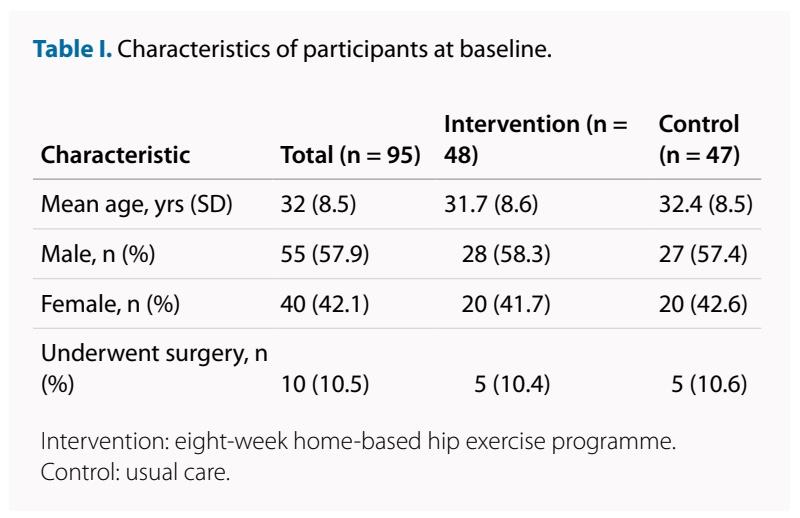
From: Pacheco-Brousseau et al., Bone & Joint Open (2025)
At baseline, participants reported moderate hip-related functional limitations, with mean iHOT-33 scores of 43.4/100 in the intervention group and 46.7/100 in the control group. Mean pain scores were 4.7/10 and 4.4/10, respectively. Quality of life was also comparable, with EQ-5D-5L health VAS scores of 66.2/100 versus 69.6/100 and index values of 0.663 versus 0.696. No statistically significant baseline differences were observed between groups.
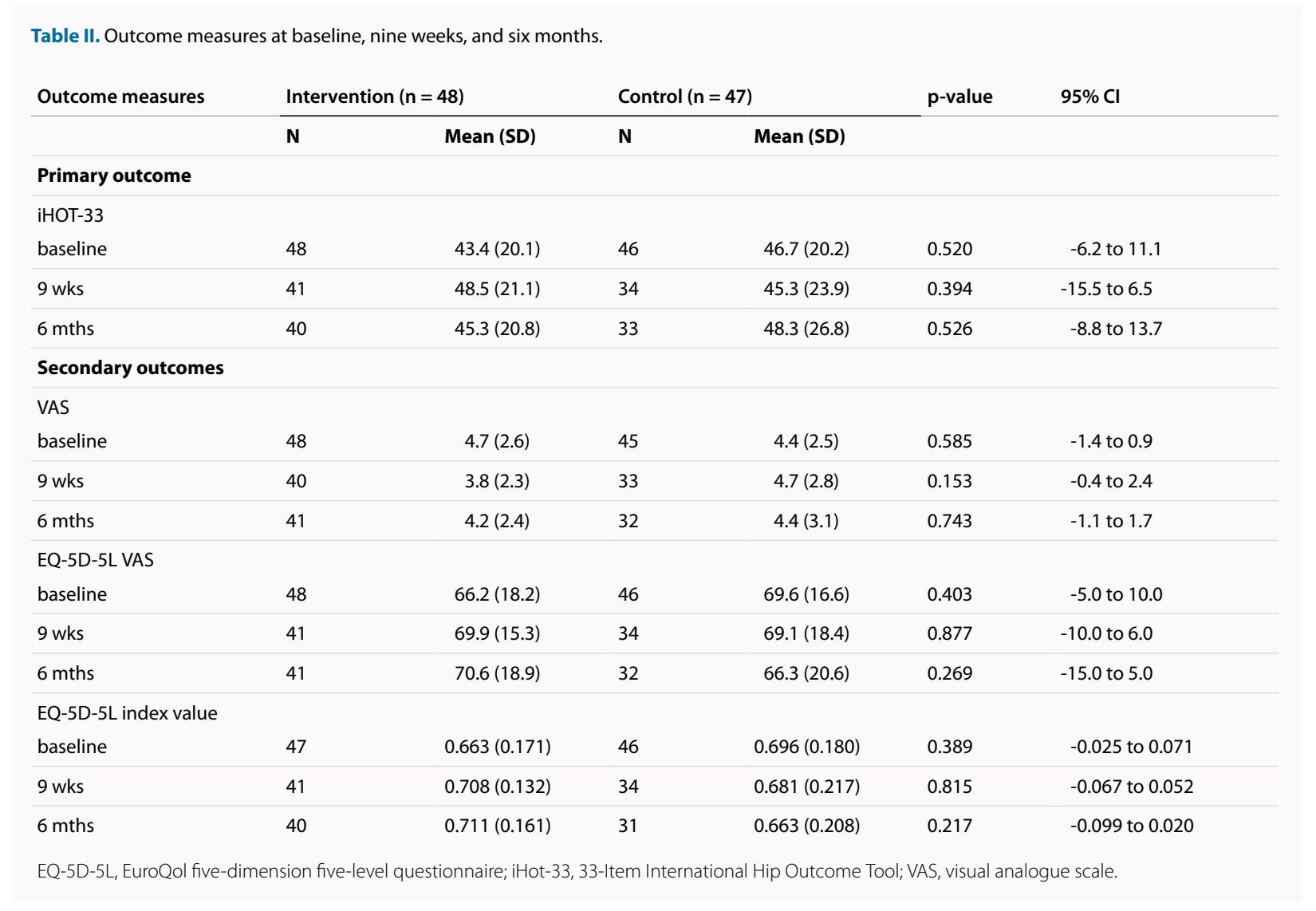
From: Pacheco-Brousseau et al., Bone & Joint Open (2025)
No statistically significant between-group differences were found for any outcome at either time point. Adherence in the intervention group averaged 84% (SD 18%), with participants completing on average 27 of 32 prescribed sessions. Loss to follow-up at 6 months was notably higher in the control group (29.8%) than the intervention group (14.6%), which compromised the trial’s statistical power to detect the pre-specified clinically important difference.
Questions et réflexions
Did the study test the effectiveness of physiotherapy, or only the added value of one specific programme?
This distinction is fundamental, as the intervention group received the targeted programme in addition to usual care, while both groups were permitted to continue physiotherapy, exercises, and other conservative treatments. Furthermore, the authors did not record these concurrent treatments. Patients in the control group may therefore have undertaken exercise or physiotherapy interventions that overlapped considerably with those in the experimental group.
If both groups received substantial amounts of rehabilitation, the between-group contrast could have been considerably smaller than intended. This means the findings cannot be generalized to conclude that physiotherapy is ineffective for symptomatic cam FAI. Instead, they indicate that this particular eight-week programme did not demonstrate additional benefits over the care participants otherwise received.
Can we conclude that posterior pelvic tilt exercises are ineffective?
The rationale behind the intervention was that posterior pelvic tilt could delay femoroacetabular contact during hip movement. Unfortunately, the study did not establish whether patients successfully changed their pelvic positioning. It is important to remember that targeting specific muscles does not automatically translate into altered movement strategies during functional tasks such as walking, squatting, or sports.
For example, the programme included strengthening and stretching, but the study does not describe a specific motor-control or task-based intervention aimed at practising posterior pelvic tilt during symptom-provoking activities. It sounds reasonable that including progressively challenging, functional movement tasks would be better suited than a generic exercise programme.
Was the exercise dose sufficient?
Next to the fact that the exercises remained very generic and not at all individualized, the study provides limited information about the actual exercise dosage. Although participants were instructed to exercise approximately four times per week over eight weeks, nothing is said about the number of sets, repetitions, resistance levels, or stretching durations. This makes it difficult to determine whether the training stimulus was sufficient to produce meaningful strength gains or the intended biomechanical adaptations.
While it was indicated that the physiotherapist adjusted the strengthening difficulty based on the patient’s exercise technique and RPE, all participants received the same five exercises, regardless of their individual impairments, functional limitations, or rehabilitation goals. The programme also focused on isolated strengthening and stretching rather than progressively exposing patients to functional tasks and symptom-provoking activities.
This raises an important question: Would a more comprehensive, individually tailored rehabilitation programme, with clearly defined exercise dosage and progression, have produced different outcomes? For a structural deformity like a cam lesion, which doesn’t remodel over time, it may simply be unrealistic to expect 8 weeks of strength and flexibility work to meaningfully change the mechanical conflict driving symptoms.
Although a standardized home-based programme may be practical and accessible, it should not be considered equivalent to comprehensive, individualized physiotherapy. Consequently, the absence of additional benefit from this particular intervention should not be generalized to exercise therapy for cam-type FAI as a whole.
Are we treating an impairment that was never identified?
There was no requirement for participants to demonstrate excessive anterior pelvic tilt, reduced pelvic mobility, or a particular movement impairment that could be addressed by the programme. This raises the possibility that some participants were receiving an intervention targeted at a biomechanical impairment they did not actually have.
For physiotherapists, this distinction is relevant: a theoretically modifiable impairment should ideally be demonstrated in the individual patient before it becomes the primary focus of treatment.
Is this a physiotherapy-representative sample?
The participants were included from a tertiary care setting, which may have important implications. This suggests that these patients had symptoms that were significant enough to warrant the assessment of an orthopedic surgeon. The fact that having a labral tear was one of the required inclusion criteria also increases the likelihood that their pathology was relatively worse. The results may therefore not apply equally to patients with less severe symptoms, those managed entirely in primary care, or those with FAI syndrome but no MRI-confirmed labral tear.
Patients who had previously received physiotherapy were also eligible, but previous treatment histories were not documented. This means the sample may have included a mixture of rehabilitation-naïve patients and patients who had already failed one or more conservative approaches.
What did the “traditional non-specific physiotherapy” consist of?
Unfortunately, the authors provide very little information about what “traditional non-specific physiotherapy” actually involved. Clear, well-defined experimental and control cohorts remain fundamental to the design of any robust randomized trial.
This is an important limitation because we cannot determine how much the physiotherapy received by the control group overlapped with the intervention programme. The study therefore does not establish whether targeted exercises were superior to non-specific physiotherapy in any meaningful sense. It only shows that adding the structured home-based programme to poorly documented usual care did not produce statistically significant additional benefits.
Parle-moi comme un intello
The trial was properly powered a priori: a sample size of 94 was calculated to detect the iHOT-33’s MCID of 12 points (SD ~18), accounting for 15% attrition. They ended up recruiting 95, so the target was technically met at baseline. The problem is differential attrition: by 6 months, only 14.6% of the intervention group was lost, but a striking 29.8% of the control group was lost, well above the anticipated 15%. This means the trial was underpowered at the point that mattered most (6-month follow-up), making it harder to rule out a true but smaller effect (type II error risk).
Other methodological notes: this was a pragmatic trial, so both groups could continue other treatments they were already using, and data on prior/concurrent conservative management wasn’t tracked. The authors acknowledge this could dilute any true effect of the home programme toward the null.
That said, the “usual care” control group wasn’t a passive comparator either; it included “non-specific physiotherapy”, activity advice, and NSAIDs. So this trial really answers a narrower question than “does exercise help cam FAI” – it answers “does this specific pelvic-tilt-focused programme add anything on top of standard conservative management”.
Finally, this was a single-centre trial (three surgeons, one hospital), which limits generalizability, and the intention-to-treat analysis included the 10 participants (5 per group) who underwent surgery before the 6-month follow-up, which is methodologically correct but worth keeping in mind when interpreting the 6-month results.
Messages à emporter
In patients with symptomatic cam FAI, an 8-week home-based hip exercise programme targeting posterior pelvic tilt, even with good adherence and physiotherapist telerehab support, did not outperform usual care for pain, function, or quality of life.
These findings suggest that simply adding a programme designed to promote posterior pelvic tilt may not be sufficient to improve clinical outcomes, at least in the patient population and treatment context investigated. However, the study does not demonstrate that physiotherapy is ineffective, nor does it establish that surgery is necessary.
One particularly important limitation is that the researchers did not measure whether the programme actually changed pelvic positioning. Without confirming that the intended biomechanical adaptation occurred, it is difficult to determine whether the proposed treatment mechanism was ineffective or whether the intervention failed to achieve that mechanism.
Référence

