


Research
Manual Therapy & Modalities
October 9, 2026
الصدمة الكهرومغناطيسية للحالات العضلية الهيكلية: توصيات مستخلصة من دراسة دلفي

Shockwave therapy research is riddled with heterogeneity: different devices, energy levels, and protocols make it hard to compare studies or build one clear clinical guideline
This international Delphi study surveyed 41 experts across 13 countries over three rounds and reached consensus on 69 of 118 statements covering terminology, indications, procedural parameters, contraindications and side effects
The panel agreed ESWT belongs in the treatment algorithm for several tendinopathies, plantar fasciopathy, bone stress injuries, and delayed/non-union fractures, but many procedural questions on bone pathology were left unresolved
مقدمة
Extracorporeal shockwave therapy (ESWT) is one of the tools sports medicine clinicians increasingly employ for a variety of musculoskeletal conditions, from tendinopathies to bone stress injuries. There is still uncertainty about the indications for when to or when not to use shockwave therapy, and one of the problems underlying that is a high variability in the evidence around this topic. The terminology “ESWT” in the literature can mean almost anything: focused or radial devices, low or high energy, three sessions or ten, with or without local anaesthesia. That heterogeneity makes it very hard to compare studies, let alone build one clear clinical protocol.
In a previous research review, we discussed a sham-controlled trial by Heide et al. (2024) that found no added benefit of radial ESWT, a sham procedure, or a structured exercise program over advice plus custom foot orthoses for plantar fasciopathy. Keep that finding in the back of your mind, because it’s a good example of how strong clinical belief in a treatment and strong trial evidence for that treatment don’t automatically line up.
So when an international panel of ESWT experts sits down to agree on how the treatment should actually be used, where does their shared clinical experience end and hard evidence begin, and what should you, as the treating clinician, actually change tomorrow?
الأساليب
This study used a three-stage modified Delphi method to build international expert consensus on ESWT terminology, indications, procedural parameters, contraindications, and related side effects. A steering committee first built candidate statements based on a systematic review of the ESWT literature, then recruited a panel using a scoring system based on authorship of relevant systematic reviews, meta-analyses and RCTs, supplemented by members of the International Society of Medical Shockwave Treatment (ISMST) and snowball recruitment.
Of 93 invited experts, 41 clinicians and researchers from 13 countries completed all three rounds (100% retention after round 1). The panel had substantial experience: an average of 21.5 years in practice and 11.5 years of clinical ESWT experience, mostly non-operative sports medicine physicians (54%), with orthopaedic surgeons, podiatrists and physiotherapists also represented. Two-thirds were based in the US, and 80% were male.
Each round mixed 5-point agreement scales, binary yes/no questions, and multiple-choice or free-text numeric questions. Statements reaching ≥75% agreement or disagreement were removed from the next round; everything else was refined and sent back out. In total, 118 statements were voted on across the three rounds.
النتائج
Consensus was reached on 69 of the 118 statements (58.5%).
Terminology and concepts of ESWT
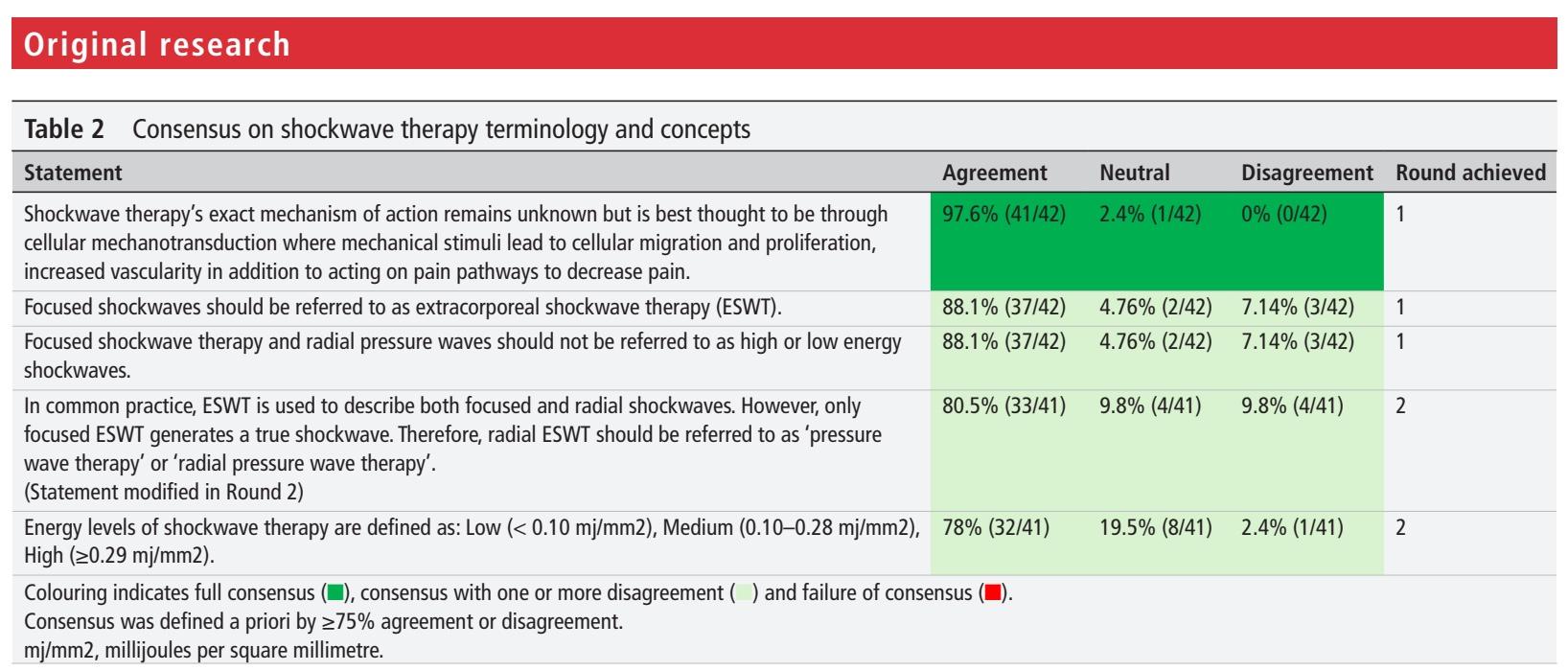
The experts reached consensus about what is thought to be happening when applying ESWT, but acknowledged that the exact mechanism of action remains unknown.
Indications for ESWT
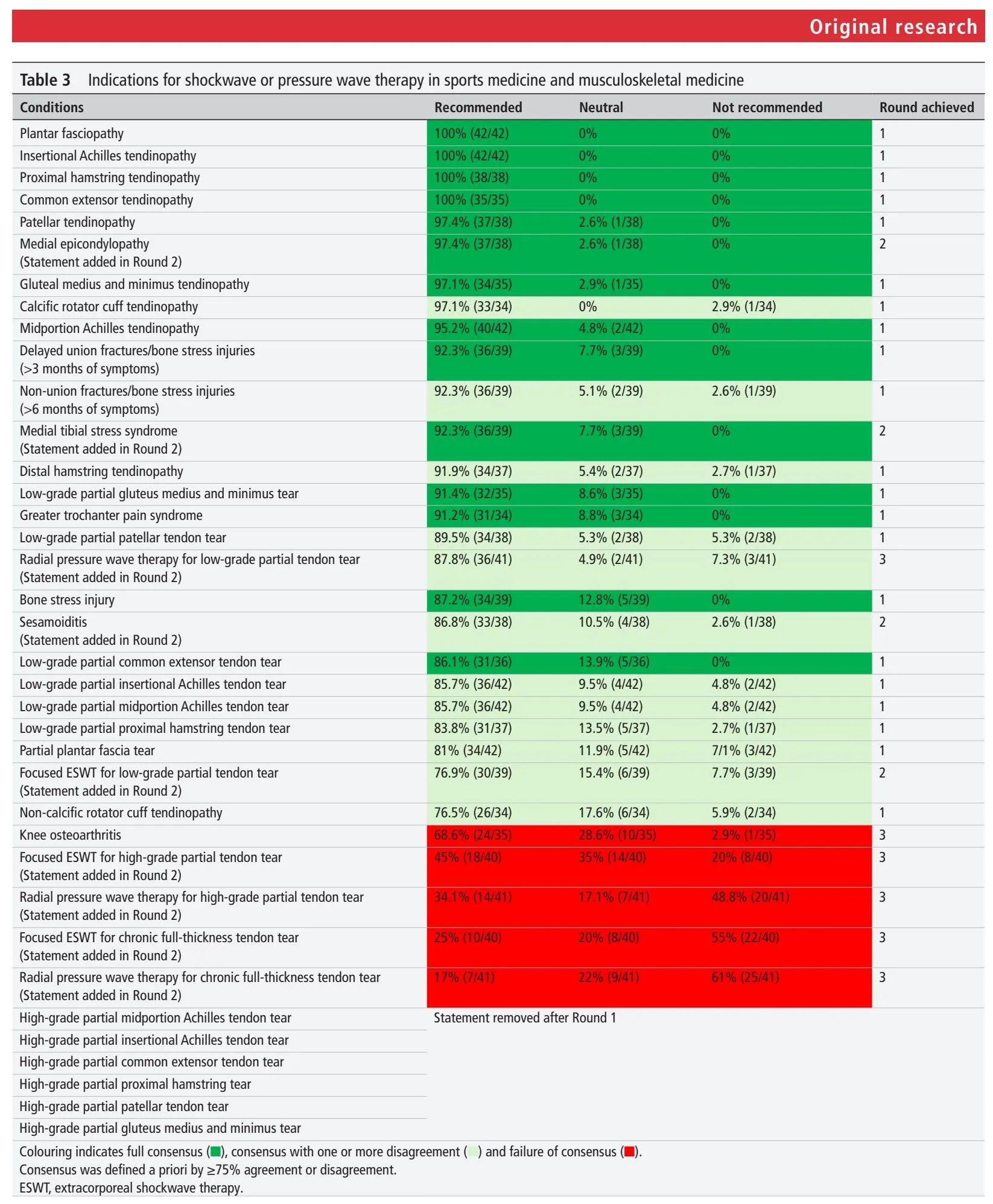
The clearest agreement was on which conditions belong in the treatment algorithm. Interestingly, the panel agreed ESWT is appropriate for low-grade partial tendon tears (89.5%), but consensus fell apart for high-grade partial tears and chronic full-thickness tears. At the same time, having a high-grade tear didn’t reach consensus as an outright contraindication either. In other words, the panel is telling you this remains a case-by-case judgement call, not a “yes” or “no.”
Procedural parameters for tendon
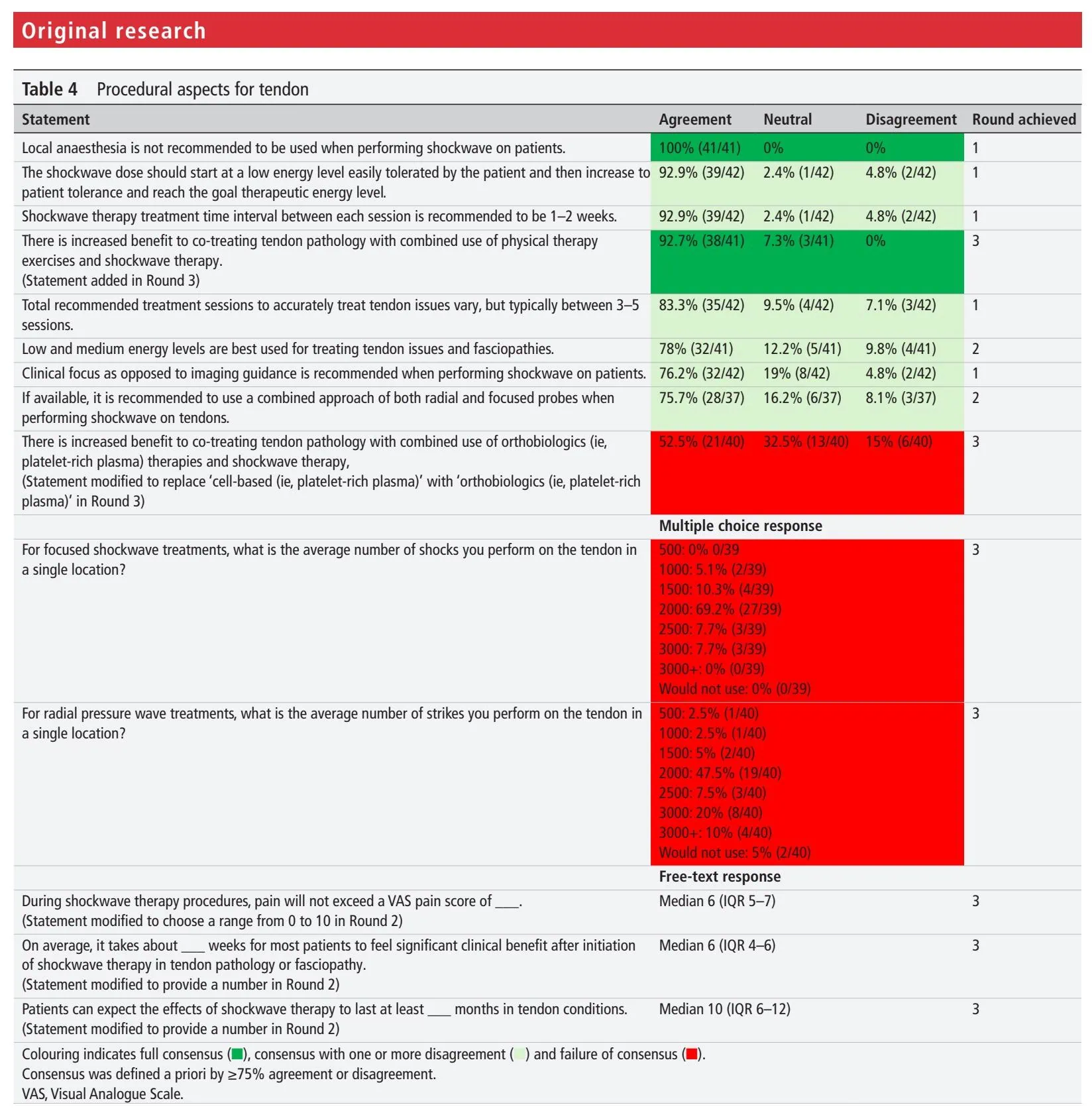
The panel agreed that local anaesthesia should not be used and that treatment should initially start at a low, tolerable energy and progressively increase toward the desired therapeutic dose. Sessions should generally be separated by 1–2 weeks, and treatment usually consists of around 3–5 sessions. Low and medium energy levels are preferred for tendon disorders and fasciopathies. The panel preferred clinical focusing over imaging guidance. Clinical focusing means using the patient’s area of maximal pain to guide treatment rather than aiming primarily according to ultrasound or another imaging modality.
If available, the panel also supported combining radial and focused devices when treating tendons, although agreement was only just above the consensus threshold at 75.7%.
Procedural parameters for bone
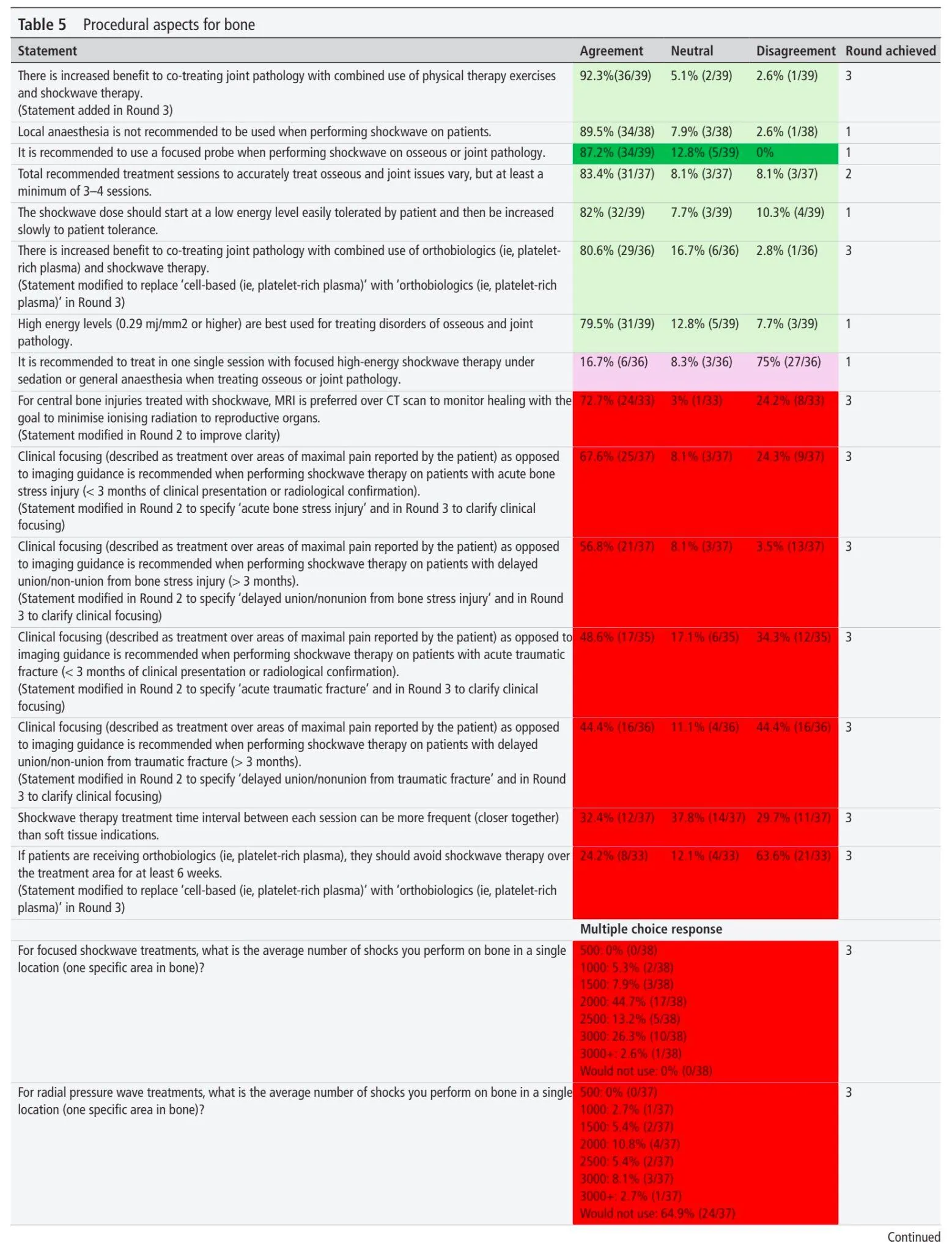
The panel supported ESWT for:
- bone stress injuries
- delayed-union fractures
- non-union fractures
- sesamoiditis
- medial tibial stress syndrome
The consensus about application leaned toward:
- focused ESWT rather than radial pressure waves
- a minimum of 3–4 sessions
- gradual progression from low energy toward tolerable treatment levels
- high energy ≥0.29 mJ/mm² for osseous and joint disorders
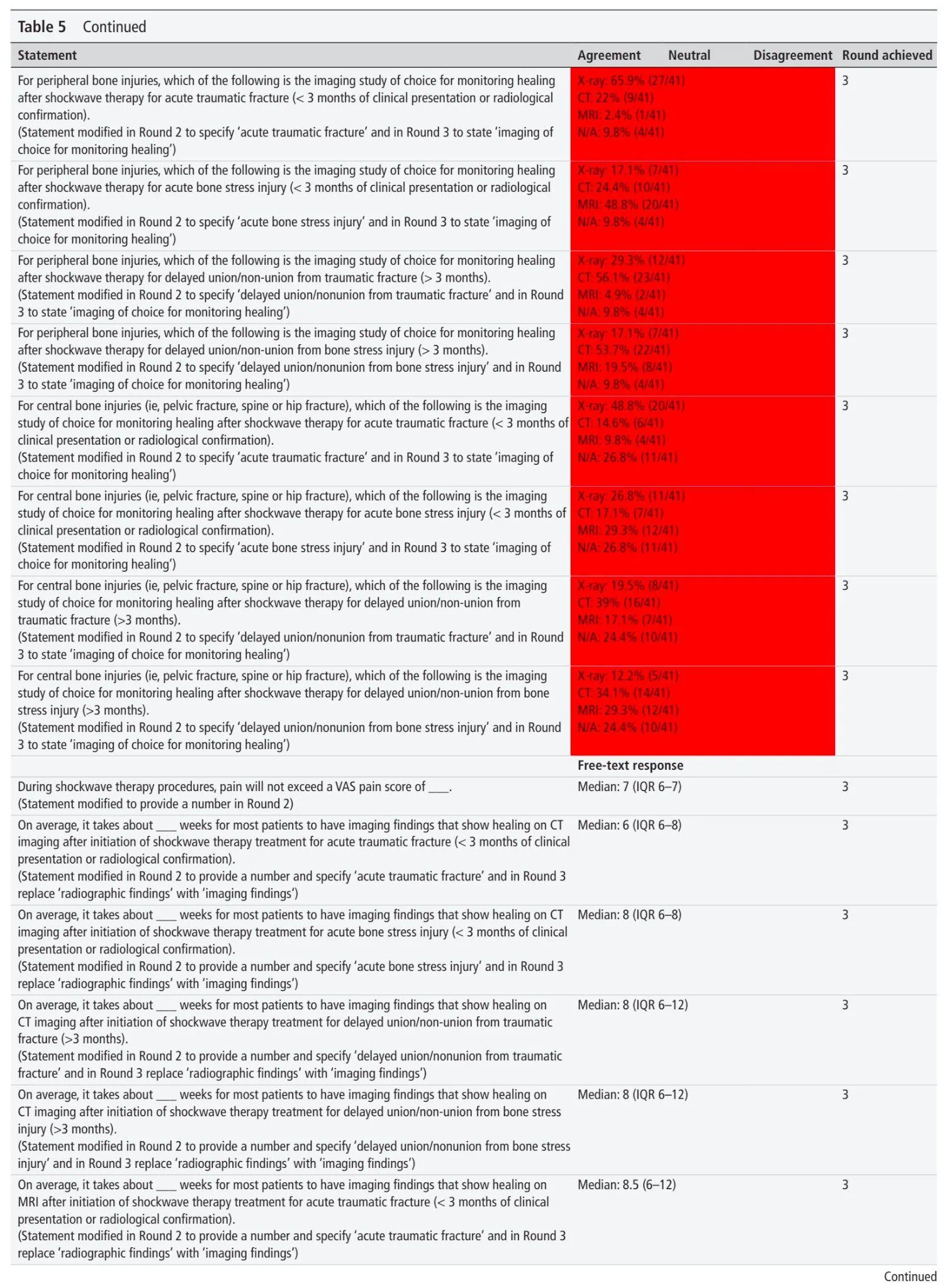
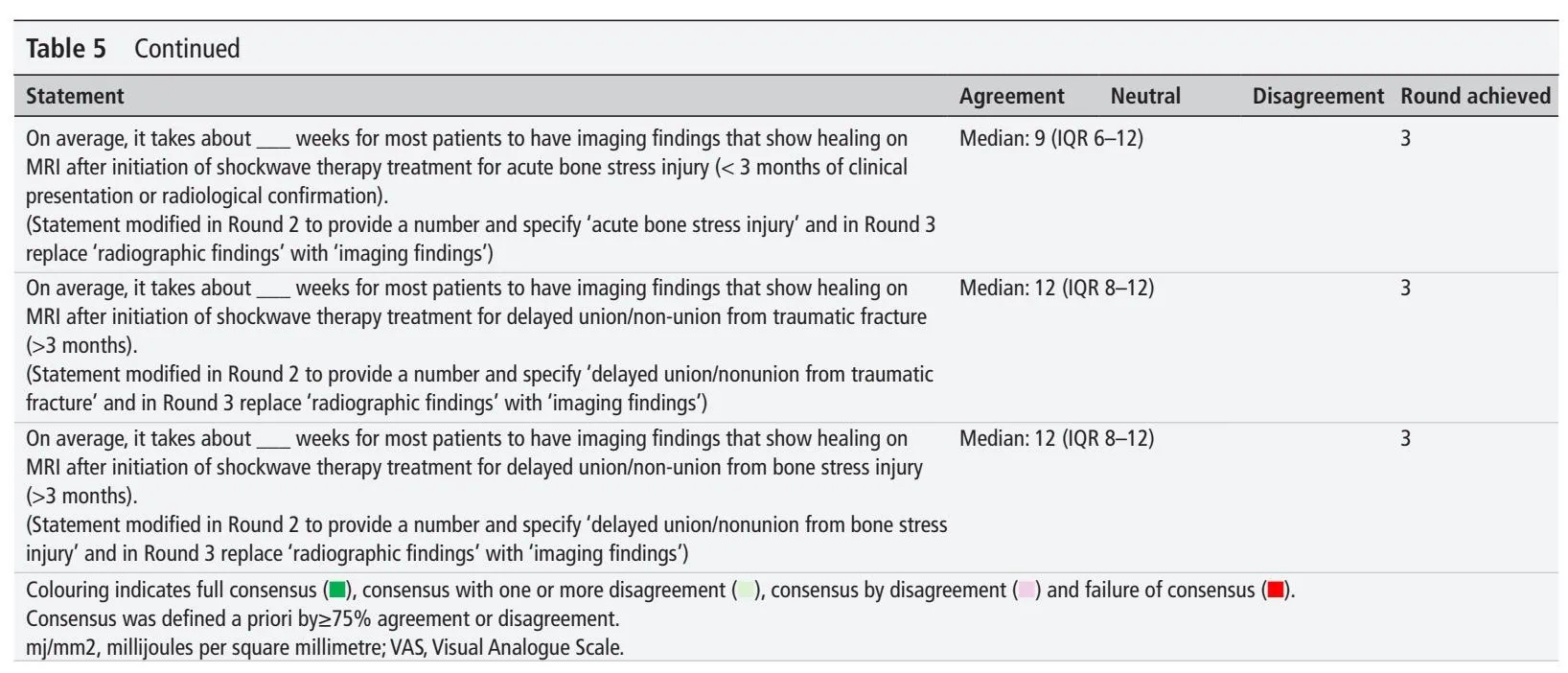
These recommendations are in contrast with a 2022 review on bone stress injuries, published in a Q1 Impact Factor Journal, where insufficient evidence supporting the use of ESWT in this type of injury was found. Moreover, numerous procedural questions concerning bone treatment failed to achieve consensus, including imaging guidance, monitoring modality, treatment intervals, and activity restrictions. This was the area where uncertainty was greatest. The authors themselves emphasize that research supporting bone indications is substantially less developed than that for tendons and fasciopathies.
Periprocedural and postprocedural considerations
The panel agreed NSAIDs should be avoided for the duration of treatment (paracetamol/acetaminophen is fine) and that fluoroquinolone antibiotics should be avoided, given their association with tendon rupture. After treatment, tendinopathies or fasciopathies do not require range-of-motion or weight-bearing restrictions, one practical selling point of ESWT for in-season athletes compared with, say, PRP injections.
Contraindications and side effects
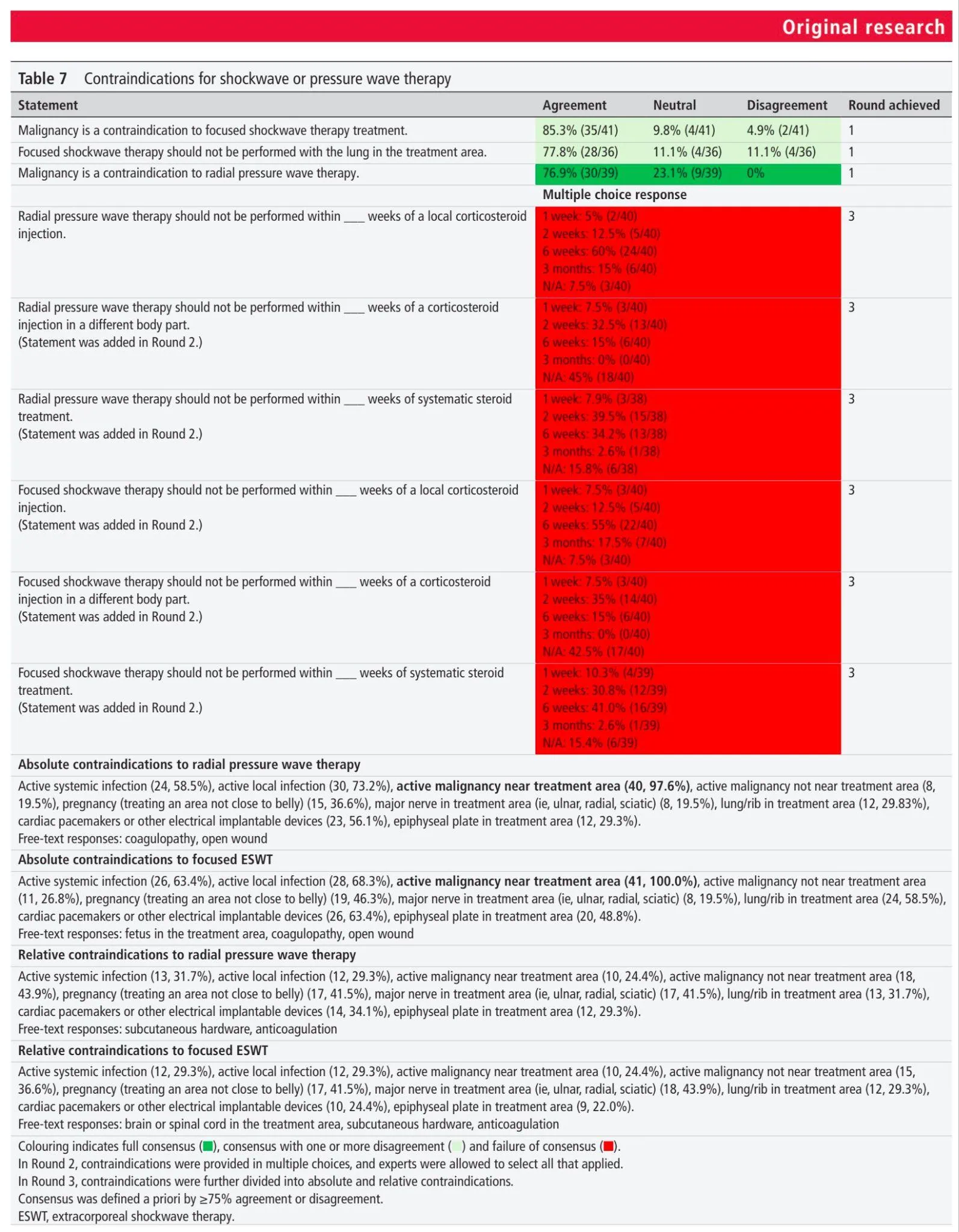
| Contraindication | Focused ESWT | Radial pressure wave |
|---|---|---|
| Active malignancy near treatment area (absolute) | 100% | 97.6% |
| Lung/rib in treatment area (focused = absolute) | 58.5% | 29.8% |
| Active systemic infection | 63.4% | 58.5% |
| Cardiac pacemaker/implantable device | 63.4% | 56.1% |
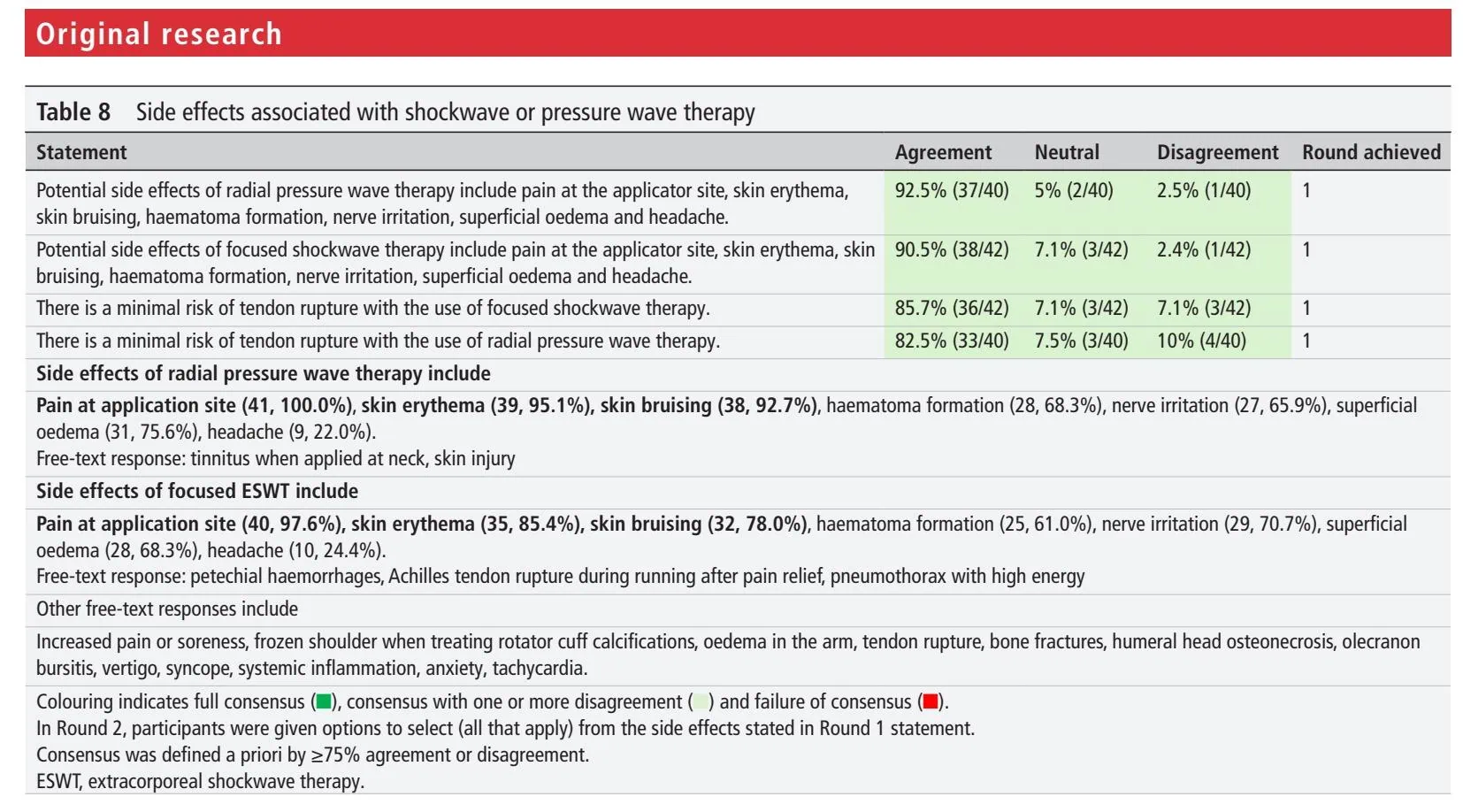
Common side effects reaching consensus: pain at the application site, skin erythema, skin bruising, superficial oedema, haematoma, nerve irritation and headache, for both device types. Minimal risk of tendon rupture was acknowledged for both. Rare but serious events surfaced only in free-text answers (not formally voted on): tendon rupture, pneumothorax with high-energy focused ESWT, and osteonecrosis.
أسئلة وأفكار
What is ESWT and how does it work?
A previous study from the lead author describes Shockwave as follows: “ESWT delivers a certain energy that is thought to exert biological effects at cellular, tissue, and organ levels. Some of the proposed mechanisms of action for ESWT include increased collagen synthesis [6], cellular proliferation and wound healing [7,8], pain reduction [9], and neovascularization [10].”, but references only animal studies. Therefore, it seems that not much is known about the mechanism of action.
Simplicio et al. (2020) explains that ESWT is thought to act primarily through mechanotransduction: mechanical pressure waves applied to tissue may be converted into cellular biochemical signals. Experimental studies suggest that this can influence cell proliferation, collagen synthesis, angiogenic signaling, inflammatory pathways and possibly sensory nerve activity. Proposed analgesic effects include modulation of substance P and CGRP as well as activation of descending pain-inhibitory mechanisms. In bone, shockwave exposure may stimulate angiogenic and osteogenic signaling, while in calcific tendinopathy a direct mechanical effect on calcium deposits may also contribute.
However, these mechanisms should be interpreted cautiously. Simplicio et al. (2020) is a narrative rather than systematic review, and much of the mechanistic evidence it discusses comes from in-vitro and animal research. Both papers therefore provide a useful biological framework for how ESWT may work, but do not (yet) establish which of these mechanisms actually explains clinical improvements in human musculoskeletal conditions.
Heterogeneity in the literature is a problem; how was this dealt with?
The authors tried to address the considerable heterogeneity in the ESWT literature by using a modified Delphi process to establish expert consensus on terminology, indications and treatment parameters. In particular, they attempted to standardize the distinction between focused shockwave therapy and radial pressure wave therapy and proposed common ranges for treatment energy, number and spacing of sessions, and other procedural aspects. However, the study did not resolve all variability. A substantial number of statements, especially those concerning bone pathology, failed to reach consensus, which highlights that important areas of ESWT practice remain insufficiently standardized.
What is the difference between radial and focused ESWT?
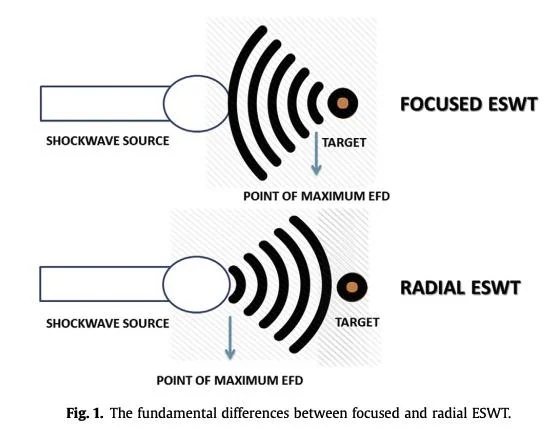
Based on Simplicio et al. (2020), the main difference is how the pressure wave is generated and where its maximum energy is delivered.
Focused ESWT (FSWT) generates a pressure field that converges on a specific focal point within the tissue. The maximum pressure is therefore reached at a selected depth, allowing the treatment to target deeper structures. Focused shockwaves are generated using electrohydraulic, electromagnetic, or piezoelectric systems, typically in water because the acoustic properties of water and biological tissue facilitate transmission into the body.
Radial shockwave therapy (RSWT) is different. A projectile is accelerated through a tube using compressed air and strikes an applicator. This creates a pressure wave that spreads outward from the applicator. Its maximum pressure occurs at the applicator surface, so the energy disperses more superficially rather than converging at a deeper focal point
The statements were derived from a systematic review; what did it conclude?
This particular systematic review included 56 articles, of which only 19 were randomized controlled trials, of which only 6 were rated as having a low risk of bias. More importantly, nearly half of the studies (n=25) were case series or case reports, further downplaying the evidence certainty. That said, the review concluded: “Based on limited high-level studies, ESWT, alone or as an adjunct to exercise treatment, may offer the potential to facilitate athletes and physically active individuals to return to sport or activity in selected injuries given its efficacy and safety profile. Further, large, high-quality studies are needed to identify the optimal indications and dose-response relationships.”
Were expert clinicians consulted?
The expert panel was multidisciplinary and included experienced clinicians and clinician-researchers. For example, physiotherapist and tendon researcher Karin Silbernagel was among the participating authors. However, physiotherapy representation overall was limited, with only 2 of the 41 panelists classified as physical therapists, which is an important limitation to our profession.
Are the findings from this Delphi study now to be considered as best-available evidence?
You could think so, but does the fact that 41 experienced clinicians agreeing on something mean it works? Not necessarily, and that’s exactly where this study gets interesting to read critically.
Take plantar fasciopathy: the panel reached 100% agreement that ESWT belongs in the treatment algorithm. But the best available sham-controlled evidence for that exact condition, the Heide et al. (2024) trial we reviewed previously, found that adding real ESWT gave patients no more benefit than adding a sham procedure, on top of advice and custom orthoses. Both things can be true at once. It doesn’t automatically mean ESWT “doesn’t work,” but it does mean that daily clinical experience with a treatment and a rigorous trial testing that same treatment can point in different directions. A Delphi panel captures the former, not the latter.
The bone pathology findings tell a similar, more honest story. The panel agreed ESWT belongs in the treatment of bone stress injuries and delayed/non-union fractures, but almost every procedural question that followed, imaging modality to monitor healing, treatment frequency, clinical vs imaging-guided targeting, failed to reach consensus. Even the people who use this modality on bone injuries every week don’t agree on how. That’s a useful signal for how much certainty to project to a patient who asks “how many sessions will I need.”
One practical detail worth carrying into your own practice: there are no activity restrictions after ESWT for tendon conditions, including for in-season athletes. That’s a real advantage over options like PRP injections, which typically require a period of relative rest. If keeping an athlete moving matters clinically, that difference is worth factoring into your treatment choice, not just efficacy.
Concluding, what information should we offer patients asking about ESWT?
Shockwave therapy is a non-invasive treatment that is often used alongside exercise rehabilitation for certain tendon and fascia problems. Treatment usually involves several sessions spaced over a number of weeks and can be uncomfortable during application. Most patients do not require special movement or weight-bearing restrictions afterward for uncomplicated tendon problems. Temporary pain, redness and bruising can occur. The exact treatment protocol depends on the condition and on whether focused shockwave or radial pressure wave therapy is used. Current recommendations are largely based on expert consensus, so not every aspect of treatment has been firmly established by clinical trials.
تحدثي إليّ بذكاء
The statements were partly derived from a systematic review, with limited high-level evidence studies, where no meta-analyses were conducted. One of the problems here is that this already brings up a lot of uncertainty. Another issue is the lack of assessment of possible publication bias, where negative results may not get published and thus not included in the conclusions.
A few methodological details are worth knowing before you quote this study as “the” ESWT guideline. First, the 75% agreement threshold that defines “consensus” here is a convention borrowed from earlier Delphi studies, not a statistically derived cutoff; a different threshold could plausibly have produced a different set of recommendations.
Second, and more importantly: all 41 panellists were self-selected regular users of ESWT. There were no sceptics, non-users, or patients on the panel. A Delphi study measures shared opinion among people who already use and believe in the treatment; it doesn’t measure whether the treatment outperforms sham in a trial. High agreement on “ESWT is appropriate for X” tells you these experts would use it for X, not that X responds better to ESWT than to a control condition.
Third, the panel was demographically lopsided: 80% male, two-thirds from the US, mostly academic or private practice settings in high-income countries. The authors acknowledge this themselves. That matters because access to ESWT, and the clinical experience that shaped these recommendations, isn’t evenly distributed globally.
Finally, for the numeric questions (sessions, shocks per location, weeks to benefit), the study reports medians and IQRs because individual answers varied too widely for a binary consensus. A median of “6 weeks to benefit” summarizes scattered opinions, not a validated dosing parameter from a controlled trial. So, use these numbers as a reasonable starting point for clinical reasoning, not a protocol to follow blindly.
الرسائل المستفادة
This Delphi study gives sports medicine clinicians a shared vocabulary and a practical starting framework for ESWT: which conditions to consider it for, how to titrate energy and sessions, what to avoid around treatment, and which contraindications matter most. What it cannot tell you is whether ESWT actually outperforms sham treatment for any specific condition, that’s a question for controlled trials, and the one rigorous trial on this list (plantar fasciopathy) found no such advantage.
Forty-one experts agreeing on how to use a treatment is not the same as forty-one trials proving that it works.
المرجع
Rhim HC, Singh M, Maffulli N, et al. Recommendations for use of extracorporeal shockwave therapy in sports medicine: an international modified Delphi study. Br J Sports Med. 2025. doi: 10.1136/bjsports-2024-109082

